
Banff National Park is famous for its diverse and accessible wildlife. Millions of visitors come to Banff each year hoping to catch a glimpse of a grizzly bear, spot bighorn sheep along the roadside, or see the beautiful antlers of a bull elk. For many, Banff wildlife species feel completely foreign, like animals they’ve only ever seen on Instagram, in documentaries, or enclosed in a zoo.
Knowing where to see wildlife in Banff can make the experience even more exciting, but it’s important to remember that wildlife sightings are often quick and never guaranteed. Hopefully, these Banff wildlife viewing tips will help you safely experience one of the things that makes Banff National Park so special.


| TRAVEL BANFF CANADA
────────────── • ──────────────
Have so many Banff ideas…
but not sure how they fit together?
You can save every post, read every comment, and still not know what’s realistic in one day. The Banff & Jasper Planning Hub helps you connect the lakes, hikes, shuttles, scenic drives, restaurants, and Jasper days into one clear plan.
Workshops
Itineraries
Shuttle help
Restaurants
Discounts
Explore the Banff & Jasper Planning Hub
What Wildlife Can You See in Banff National Park?
Banff National Park and the surrounding Bow Valley corridor are home to many wildlife species ranging from small rodents and birds of prey all the way up to big game predators like cougars and grizzly bears.
These are some of the animals you may see in and around Banff National Park, although some, like mountain goats, wolves and cougars, are much less commonly seen:
- Black bears
- Grizzly bears
- Bighorn sheep
- Mountain goats
- Elk
- Deer
- Coyotes
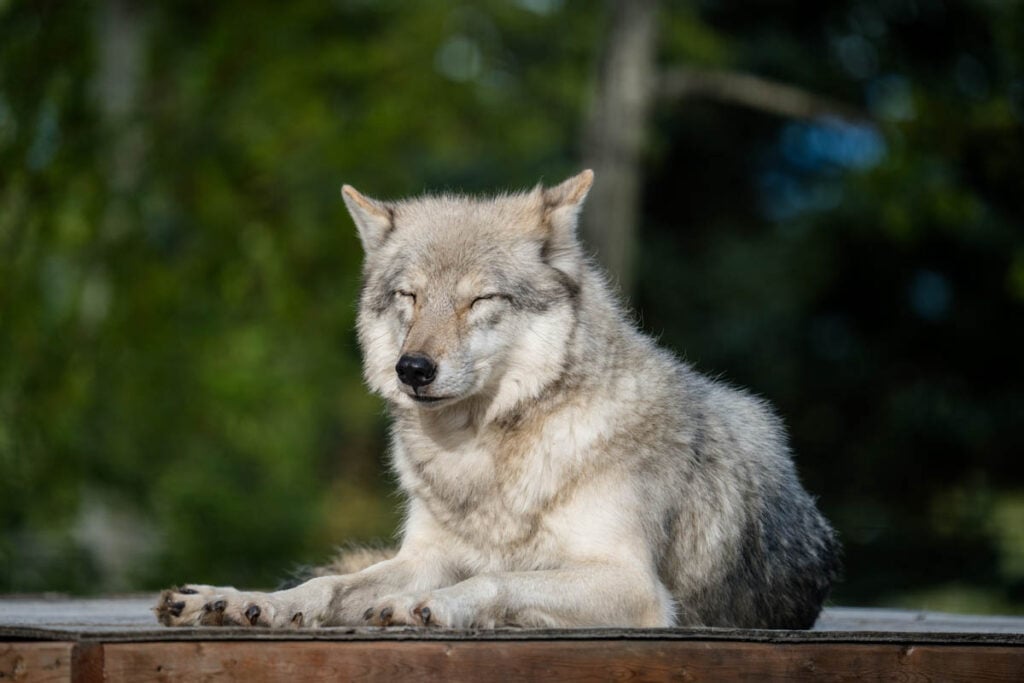
- Wolves
In very rare cases you may even spot a cougar or wolverine. Many people live here their whole lives without spotting one!
A Field Guide to Banff National Park: A Folding Pocket Guide to Familiar Plants & Animals

Best Places to See Wildlife in Banff
Wildlife can appear almost anywhere in Banff National Park, including townsites and roadsides. These scenic routes offer a good chance at spotting some Banff wildlife with the bonus of seeing some incredible Rocky Mountain scenery!
Take a Drive Along Spray Lakes Road
Just about every species of Banff wildlife can be seen along this beautiful stretch of road! Spray Lakes Road, also known as the Smith-Dorrien Trail, climbs above Canmore near Ha Ling Peak and the East End of Rundle, better known as EEOR. It then loops into the Kananaskis Valley eventually meeting up with Highway 40, creating an almost 2 hour loop through the backcountry.
This is one of my favourite scenic drives near Banff and Canmore for the chance of spotting wildlife such as bighorn sheep, coyotes, bears and, with luck, more elusive animals, like lynx and moose. Pay close attention near the base of Ha Ling and EEOR as bighorn sheep love to hang out on the rock faces right beside the road!
Note, that if you stop or park in Kananaskis Country, you’ll need a Kananaskis Conservation Pass.

Take a Drive Along the Bow Valley Parkway
The Bow Valley Parkway, also known as Highway 1A, runs between Banff and Lake Louise and is one of the classic scenic drives in Banff National Park. This scenic road has several pullouts and interpretive viewpoints along the way.
Not only is it a great opportunity for a self-guided tour, there are excellent chances to spot Banff National Park wildlife along the way. Keep your eyes peeled for bears eating berries alongside the road, and even moose can be seen grazing in the willow-filled meadows.
While there are often good chances to spot wildlife along the Bow Valley Parkway, it is only a narrow 2-lane highway. Only where it is safe and permitted, stay in your vehicle and move on if a wildlife jam develops.
To help protect the wildlife in this sensitive area, Parks Canada has implemented some travel restrictions on this road. We provide full details on these seasonal road closures in our post about the Bow Valley Parkway.


Recommended App
This GPS activated Canadian Rockies Audio Driving Tour is the perfect companion to your Banff vacation. It’s both entertaining and educational and will greatly enhance any drive in Banff National Park. Get 15% off with our Banff Discounts.
Lake Louise Summer Gondola
The Lake Louise Summer Gondola is one of the best places in the Canadian Rockies to safely view grizzly bears and other wildlife. We’ve even seen a lynx at the top of the Lake Louise Gondola; a once-in-a-lifetime wildlife spotting!
Roadside Bear Sightings in Banff
Most opportunities for viewing bears happen roadside along our highways. This is where bears often find bushes of wild berries and will graze for hours at a time in clear view. These situations often cause ‘bear jams,’ which are traffic jams created when too many people slow down or stop to watch a bear.
If you are lucky enough to spot a bear in Banff National Park, always stay in your vehicle and keep at least 100 m from bears. And never, ever feed a bear (or any wildlife) in Banff National Park.
If you find yourself in a bear-jam, it is best to stay in your vehicle. Pull over a safe distance from the bear, put your hazards on and turn off your vehicle. Never position your vehicle in a way that might impede the route of the animal.

Banff Wildlife Viewing Tips
Best Time to See Wildlife in Banff
Many animals in Banff National Park are more active early in the morning and later in the evening.
If you can manage to wake up before dawn not only will you catch wildlife at its most active time, but also witness what’s known as “alpenglow”; a phenomena that sets the mountain peaks aglow in beautiful orange sunlight.
Drive Slowly
You would be surprised at how easily a large animal like an elk or bear can seemingly “disappear” against the backdrop of Banff’s dark shadowy forests. Driving a little slower, when safe to do so, gives you more time to scan for wildlife and helps avoid spooking animals.

Have Patience
While Banff is known for its dense populations of beautiful animals, remember that Banff’s animals are wild and any opportunities for viewing them should happen on their terms. Trying to force an encounter never works and puts a lot of stress on the animal.
If you aren’t pressed for time, try parking your vehicle at a viewpoint, putting on a Banff podcast and just wait! Chances are, some kind of wildlife may eventually come into view.
If you’ve been sitting quietly and patiently, you might get to witness some behaviour that most people chasing after an animal never will!
Stay in Your Vehicle
In Canada’s national parks, it is illegal to feed, entice or disturb wildlife, and violators can be charged and fined. Never approach wildlife for a photo.
The best way to observe is to shut off your vehicle, turn on your hazard lights and watch quietly from a safe distance. This will also give you a chance to witness the most natural behaviour possible.
Disturbing wildlife is one of the biggest mistakes visitors make when visiting Banff.
Keep Your Distance
Parks Canada gives very specific guidance on how far you must keep from specific animal species in Banff National Park. You must keep at least 30 m (100 feet) from deer, elk, sheep and moose, and at least 100 m (330 feet) from bears, wolves, cougars and coyotes.

Planning and Education
Do a little research on what animals are in the areas you are visiting, as a little information will go a long way in helping locate them. What times are they active? What habitats do they frequent?
For example, bighorn sheep like higher elevations with steep rock faces that offer safety from predators, so driving the highway low in the valley will not likely yield any bighorn sightings.
Don’t Feed the Animals
Never feed wildlife. It is illegal to feed, entice or disturb wildlife in Banff National Park, and food-conditioning often ends very badly for both people and animals. Wild animals are a big part of what makes Banff special. Please help keep them wild and keep your food to yourself!
What to Do if You Do Not See Wildlife
If all else fails, head into the town of Banff to visit one of the several galleries, museums, or markets that feature great wildlife photography from several local artists!
If you are interested in Banff wildlife, the Banff Park Museum National Historic Site is an especially good option for you. It is filled with many mounted wildlife displays, giving you a chance to see even the most elusive of Banff’s wild animals.

Thanks for reading along with me. I hope these tips help you have a safer, more memorable wildlife-viewing experience in Banff!

Let me Help with Your Banff Itinerary?
We have a suite of Banff Travel Planning services that can take all the guesswork out of planning your trip! Book a 1 hour travel consultation or let me create a custom Banff Itinerary for you!
Jayden Daniels Wild Imagery
These Banff wildlife viewing tips were brought to you by local wildlife photographer Jayden Daniels. To see more of Jayden’s work or purchase prints of the Banff wildlife pictures in this article, please visit www.jdwildimagery.com or find him on Instagram.
Banff Wildlife Tours
A wildlife tour with a knowledgeable guide can improve your chances of spotting Banff wildlife. There are many great Banff wildlife spotting tours to choose from:
Evening Wildlife Safari
This 2-hour evening wildlife tour gives you one of the best chances to see Banff wildlife with a certified guide who knows where animals are most active around sunset. It’s a great option if you’d rather not drive around looking for wildlife yourself, with Banff hotel pickup, little to no walking, and the chance to learn how to watch animals safely and respectfully.
Discover Grizzly Bear Tour in Banff
This 10-hour Discover Grizzly Bears tour is a great option if you want a full-day wildlife and scenery experience, with a guided visit to see Boo the grizzly bear at the Kicking Horse Grizzly Bear Refuge, plus Emerald Lake, Takakkaw Falls when road access permits, gondola/chairlift rides and lunch at Eagle’s Eye Restaurant. It’s especially helpful if you want the chance to learn about grizzly bears up close without trying to find one from the roadside on your own.
Yamnuska Wolfdog Sanctuary Tour
The Yamnuska Wolfdog Sanctuary Intro Tour is a unique way to learn about wolfdogs from the people who care for them, with a 30-minute guided presentation and the chance to photograph one of the packs from inside the enclosure viewing area. It’s a great add-on for animal lovers travelling between Calgary, Canmore and Banff, especially if you want a meaningful wildlife-related experience that doesn’t depend on chance roadside sightings.
Support Human Created Content

Hi, we’re Dan & Celine Brewer, locals from just outside Banff National Park. Every article, itinerary, and recommendation we share is rooted in our real experiences and love for this place. If you’ve found our content helpful, please consider supporting us:
- Make a small donation: Your support directly fuels our work and keeps our stories genuine.
- Purchase a guide or itinerary: Essential tools that help plan your trip and support local creators at the same time.
- Book lodging or tours through our affiliate links: You pay the same price, but we earn a small commission that helps us keep producing content.
Thank you for valuing authentic, human-created content. Your support allows us to help even more Banff travellers!
Love our content? Sharing our post is the easiest way to support us!

Jayden Daniels
Jayden's images are taken only of wild Canadian animals in their natural environments. He takes special care to not entice animals towards the lens in any way; instead trying to capture the most organic behaviours.
One of the primary draws to living in western Canada is the proximity and immersion in wild landscapes. These landscapes are home to many incredible species. It is Jayden's hope that in a modern society that puts increasingly strong pressure on the few wild spaces we have left, that his images might inspire a greater appreciation for co-existence with the natural world.
To see more of Jayden's work or purchase prints of the Banff wildlife pictures in this article, please visit www.jdwildimagery.com.