Living in Canmore, we’re lucky to have an incredible variety of ways to get outside all year long. Fat biking in Banff, Canmore and Kananaskis has quickly become one of our favourite ways to enjoy the trails once the snow arrives. If you’re looking for active things to do in Banff in winter, fat biking is a ton of fun.
We were complete beginners when I signed up for a half-day fat biking clinic in Canmore a few years ago. I had no idea what to expect, but after just one chilly winter ride, I was hooked and immediately wanted a fat bike of my own. Since then, we’ve continued exploring fat bike trails around Banff, Canmore and Kananaskis and learning just how much snow conditions can affect your ride.
If you’re new to fat biking, don’t worry. You don’t need to be an expert mountain biker to give it a try, but choosing the right trail and the right conditions can make a huge difference. Hard-packed or groomed snow is much easier to ride than fresh, soft snow, and knowing where to go can help make your first ride far more enjoyable.
In this guide, we share our favourite places for fat biking in Banff, Canmore and Kananaskis, along with what to wear, what to bring and practical winter riding tips we’ve learned along the way. Whether you’re planning your first ride or looking for more Canmore fat bike trails and Kananaskis fat biking options, we hope this helps you get out and enjoy winter on two very wide tires.

This post contains compensated links.
Planning a Winter Trip to Banff?
The Banff & Jasper Planning Hub includes our Banff Winter Travel Guide, with practical winter advice, activity ideas, seasonal tips, and local guidance to help you plan your trip without feeling overwhelmed.
Best Fat Biking Trails in Banff, Canmore and Kananaskis
If there’s one thing we’ve learned about fat biking, it’s that snow conditions can make or break your ride. Hard-packed snow makes riding much easier, while soft snow can leave you pushing your bike as much as riding it.
For the best experience fat biking in Banff and area, don’t plan on going right after a large snowfall. Conditions are best when the snow is hard packed.
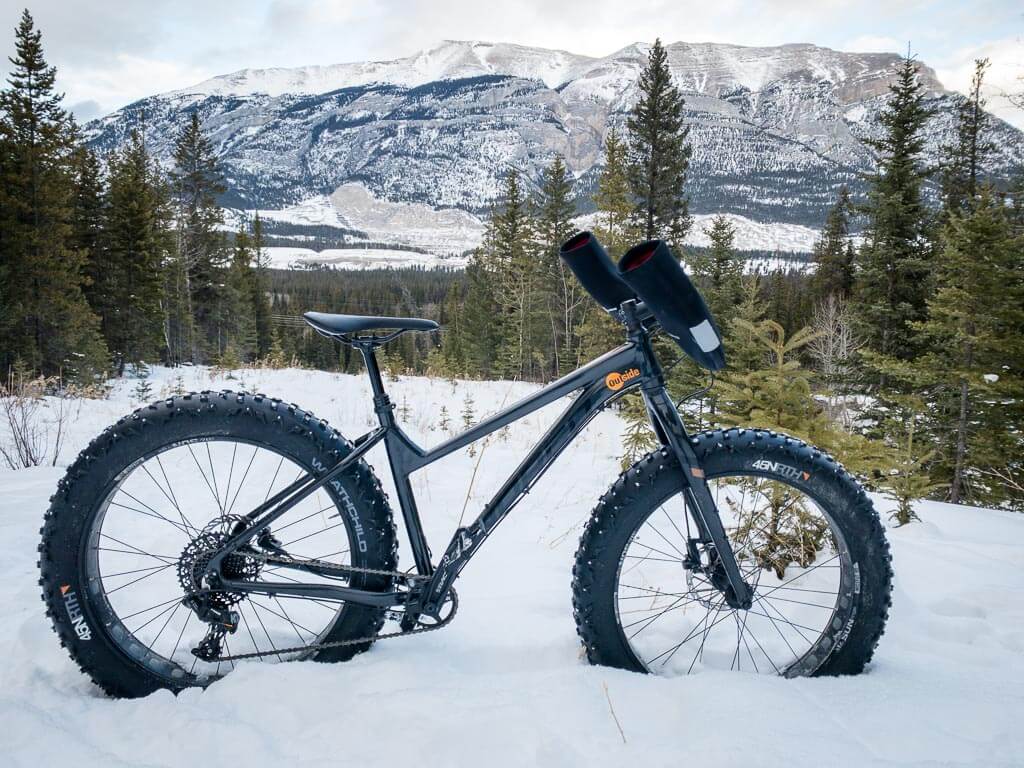
Don’t expect riding a fat bike to feel the same as summer mountain biking. Pedalling a heavy fat bike uphill is already hard work, and soft snow makes it even more challenging by reducing traction.
If you want a serious workout, you can be the first person out breaking trail. For beginners, though, deep or unpacked snow can quickly become frustrating. Look for hard-packed or groomed trails instead. There are plenty of trails that are hard packed by hikers and snowshoers.

So where can you go fat biking in the Canadian Rockies? Good options include designated bike trails, wide hiking trails, multi-use pathways and groomed winter trails.
Please respect all signs, especially those for cross-country ski trails that are not shared trails.
Fat Biking in Banff
There are several good options for fat biking in Banff, ranging from easy rides near town to longer and more challenging winter trails. Snow conditions make a big difference, so we recommend checking current trail conditions before heading out.

Fenland Trail and Vermilion Lakes Road
This is one of the easiest options for fat biking in Banff and a good choice for beginners. Combine the Fenland Trail with a ride along Vermilion Lakes Road for an easy winter outing close to town.
Spray River East Trail
For a longer Banff fat biking route, the Spray River East Trail is 11.4 km return to the Spray River bridge. The trail often gets packed down by snowshoers and other fat bikers, which can make for much better riding conditions.
Tunnel Bench Loop
The Tunnel Bench trails are a better option if you want something more challenging. Expect more climbing and a more technical ride than the easier fat bike trails near the Town of Banff.
Lake Minnewanka
Depending on recent snow and ice conditions, fat biking at Lake Minnewanka can be another great option. This ride is more exposed and remote than the trails close to town, so it is best suited to riders looking for a longer winter outing.
Healy Creek
Healy Creek is a shared winter trail that can be used for fat biking and cross-country skiing. It is a good option if you want a longer ride away from the busier trails around town.
Moraine Lake Road
In winter, Moraine Lake Road becomes a shared recreation route and can be used for fat biking when conditions are suitable. It is a long, steady uphill ride on the way out, followed by a much easier return. Do not venture beyond the avalanche warning sign.

Fat Bike Tour in Banff
If you are brand new to fat biking, we recommend doing a local tour with a guide who can give tips on riding in the snow and the best trails for your skill level.
In Banff, we recommend the BikEscape Fat Tire e-Bike Tour which will take you to all the highlights around the Banff Townsite. If you love touring on bikes, you’ll love this fat biking tour just as much!
Clare at BikEscape is my go-to mountain biking person. Not only is she passionate about biking, she’s extremely knowledgeable about biking and the Banff area. My kids have attended her summer bike camps and I’ve taken ladies skills sessions for mountain biking plus received amazing tips from her through group rides (both mountain biking and fat biking). I’ve also been on her fat biking tour around Banff, which is always a super fun outing!
Fat Biking in Canmore
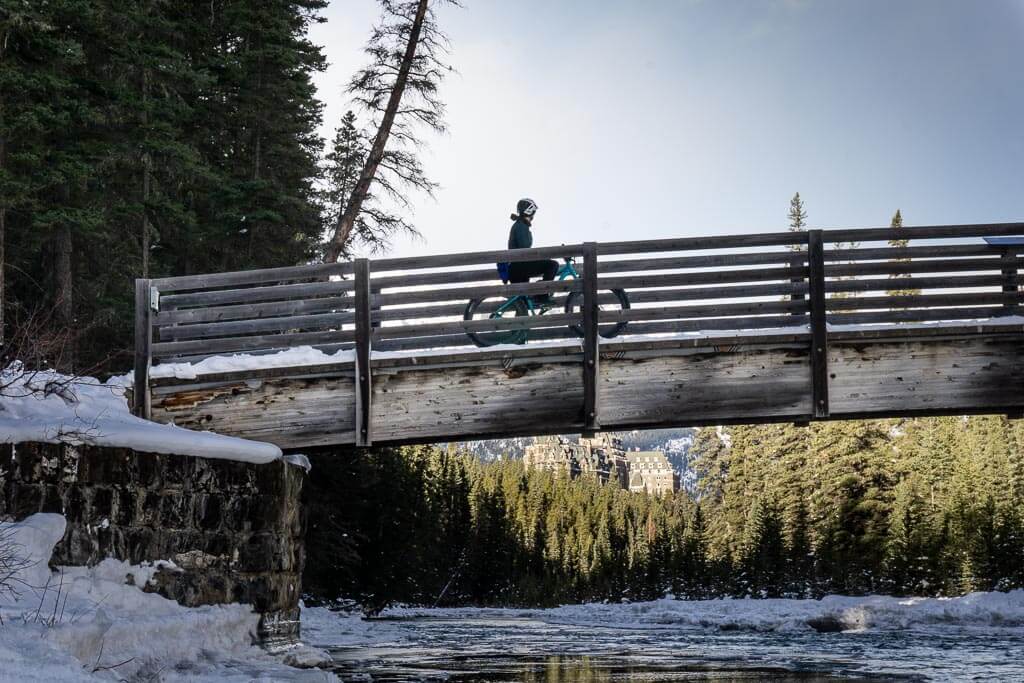
Fat biking is one of our favourite Canmore winter activities, and there are plenty of trail options for every skill level. From easy riverside pathways to groomed singletrack at the Nordic Centre, the variety of Canmore fat bike trails makes it easy to find a ride that suits your experience and the current snow conditions.

Bow River Pathways
For an easy ride, start near the Engine Bridge and follow the pathways along the Bow River toward Three Sisters. This is a good option for beginners or anyone looking for a relaxed fat bike ride close to town.
Canmore Nordic Centre
The Canmore Nordic Centre is one of our favourite places for fat biking in Canmore. Its groomed fat bike trails include familiar summer mountain biking routes such as EKG, Odyssey and Long Road to Ruin, and you can rent a fat bike from Trail Sports right at the Nordic Centre.
Rundle Forebay Reservoir
The trail along Rundle Forebay Reservoir gets plenty of foot traffic, which can help keep the snow packed down.
Quarry Lake and Mosquito Bite
The Quarry Lake area has a network of hard-packed winter trails, making it another good choice for fat biking in Canmore. Mosquito Bite is a fun singletrack option if you want something a little more interesting than the wider pathways.
Horseshoe Loop
Horseshoe Loop is one of the more popular Canmore fat bike trails for riders looking for singletrack. Conditions vary with recent snowfall, but regular bike and foot traffic can help keep the trail packed down.
Highline Trail
The Highline is another popular singletrack option for experienced riders. It offers a more challenging ride than the easy pathways around town, so it is best suited to confident fat bikers.
Guy Lafleur
Guy Lafleur is another Canmore singletrack trail commonly ridden in winter. As with the other natural-surface trails, snow conditions can make a big difference in how rideable it is.
For current conditions before you ride, check the latest fat bike trail conditions in Canmore from CAMBA.

Fat Biking in Kananaskis
There are plenty of good options for fat biking in Kananaskis, from shared winter trails near Kananaskis Village to longer rides in Peter Lougheed Provincial Park and Spray Valley Provincial Park. Snow conditions can make a big difference, so check current trail reports and activity designations before heading out.
Ribbon Creek
The Ribbon Creek area near Kananaskis Village has shared winter trails that can be good for fat biking when the snow is packed down. It is a convenient place to start if you want to stay close to the village.
Troll Falls
The Troll Falls trails are another popular winter option near Kananaskis Village. Fat biking here is best when the trail is well packed by other winter users. The main Troll Falls Trail is an extremely popular hiking trail, so if you wish to fat bike, go early.
Bill Milne Trail
The Bill Milne Trail is a wide, groomed winter route that is shared with cross-country skiers and fat bikers. It is a good choice if you prefer a less technical ride with plenty of room to pass other trail users.
High Rockies Trail
The High Rockies Trail is one of the best options for longer Kananaskis fat biking rides in Peter Lougheed Provincial Park. It also connects with several of our favourite easy snowshoe trails in Kananaskis, but keep in mind that the trail is closed through the Buller Slide Path from November 1 to May 1 for highway avalanche control.

Penstock Loop
The Penstock Loop connects with the High Rockies Trail and is another option for fat biking in the area. Its short loop makes it easy to combine with a longer ride.
Sawmill Loop
The Sawmill Loop is another shared winter trail connected to the High Rockies Trail. It is a more challenging option than some of the easier winter routes nearby.
Lower Kananaskis Lake
The Lower Kananaskis Lake trail can be combined with sections of the High Rockies Trail for a scenic winter ride. Conditions can vary significantly after fresh snow.
Watridge Lake Trail
In Spray Valley Provincial Park, the Watridge Lake winter trail is a popular cross-country ski trail in Kananaskis that is also used by fat bikers, hikers and snowshoers. You can ride to Watridge Lake, then leave your bike and continue on foot to Karst Spring.
West Bragg Creek
The West Bragg Creek trails are some of the most popular fat bike trails in Kananaskis, with groomed winter routes for a range of skill levels. If you ride there regularly, consider supporting the volunteer trail work with a donation.


Need Help Planning Your Banff Winter Itinerary?
The Banff & Jasper Planning Hub includes our 7-Day Banff Winter Itinerary, built from years of exploring Banff in winter to help you plan a realistic, well-paced trip.
What to Bring Fat Biking
Most important is the tires on your fat bike. Our winters with chinook winds cause a lot of freezing and thawing resulting in patches of ice on the trails. Studded tires for icy trails are a must as you never know when you’ll encounter patches of ice.

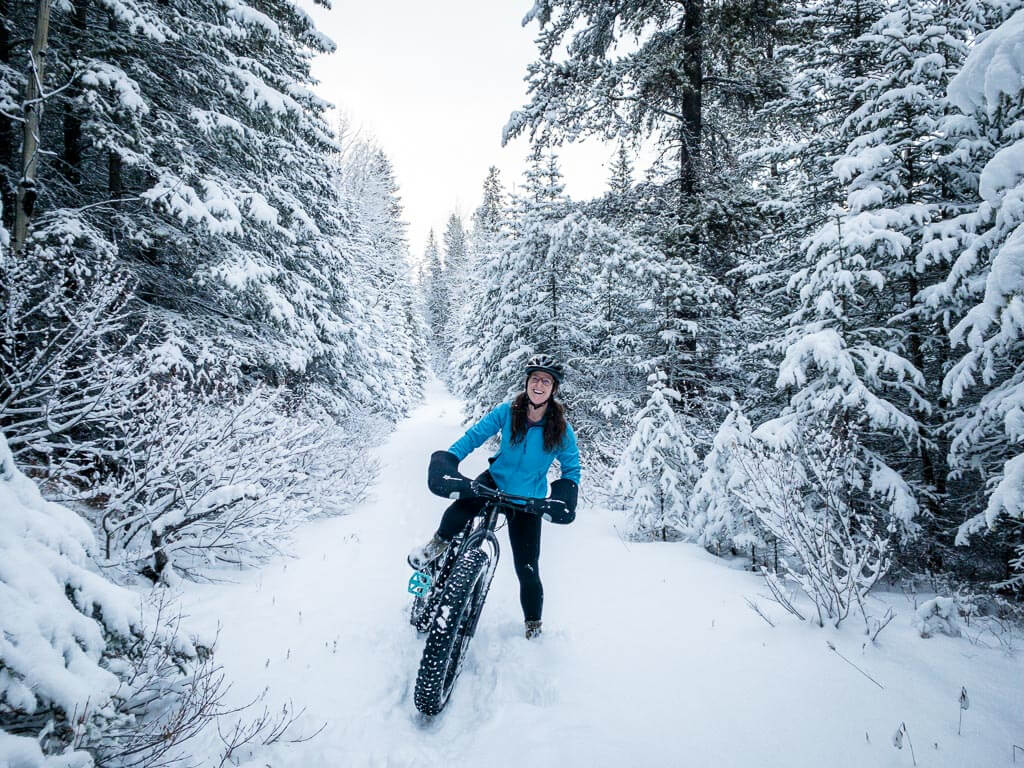
If you are new to fat bike riding in the winter, you’ll want to go to extra lengths to keep your hands and feet warm. I rarely struggle with cold toes, except when I’m fat biking, especially after a hard climb leaves my feet sweaty.
Toe warmers and pogies are an absolute must. Toe warmers have made a huge difference for my toes while being out on my fat bike. Pogies do an incredible job at keeping hands warm. Bulky gloves and mitts are much harder to bike in.
What the heck are pogies? They are neoprene pockets that fit over your handlebars cover your grips, brake levers and shifters. They offer protection from the wind and snow, keeping hands warm while riding. There are also varieties available for extreme cold like these.
Unless you are fat biking in the Town of Canmore, you will need either the Banff Park Pass or the Kananaskis Conservation Pass.

Here is what we recommend you bring when fat biking in Banff and area. Adjust it based on the length of your planned outing.
- Pogies
- Water
- Bear Spray
- Layers
- Snacks (high energy that won’t freeze)
- First aid kit
- Bike pump / repair kit
- Hand and toe warmers
- Helmet
- Winter survival gear (depending on length of your outing)
- An extra warmth layer, extra hand warmers and toe warmers
| TRAVEL BANFF CANADA
────────────── • ──────────────
Saved 27 Banff Posts…
and still not sure your itinerary works?
The problem isn’t a lack of information. It’s too much scattered advice. The Banff & Jasper Planning Hub helps you turn blog posts, shuttle info, Facebook tips, and itinerary ideas into one clear plan.
Workshops
Itineraries
Shuttle help
Restaurants
Discounts
Explore the Banff & Jasper Planning Hub
What to Wear Fat Biking in Banff
One of the things I struggle with most is what to wear on each fat bike outing, but I’m starting to figure it out.
Wear Layers
Layers are key, as you’ll be removing and adding layers depending on how difficult of a trail you are on. You’ll be amazed at how quickly you’ll start generating heat on a climb. Try not to get too sweaty as you’ll cool down fast on the downhill! You may need to readjust your layers as you go.
Not sure how to dress in layers for Banff winter weather? Our Banff winter packing list explains what to wear to stay warm and comfortable throughout your trip.

Protect Your Head
I typically wear my bike helmet along with a low profile toque or Buff. This is usually enough to keep my ears warm. If it’s extra cold out (-10°C or below), I’ll consider wearing my ski helmet instead.
Pogies for Hands
I have these pogies which are good enough in almost all the temperatures I’ve fat biked in. I’ll typically wear either my bike gloves or a thin pair of fleece gloves underneath. I’ll pack an extra pair of warmer gloves for stops or in case my hands get too cold.
Winter Boots
For my feet, I wear my winter boots with a pair of wool socks. I add on toe warmers before I leave the house, because my toes seem to get cold regardless of the temperature.
Shell Pants for Legs
I wear soft-shell pants that provide some protection from wind and snow while still allowing plenty of movement.
Shell Jacket and Mid-Layer
For my top, I start with a base layer. I’ll add a fleece and a soft shell jacket on most days. If it’s really cold, I’ll opt for a down mid-layer instead. On warmer days, I might just throw on my shell jacket. I also adjust this based on which trail I’m heading out on and the temperature. I always check the wind chill as well.
Fat Biking Etiquette
As with most outdoor activities, fat biking has its own set of etiquette rules. A lot of it is common sense, like yielding to other users on the trail and staying off any cross-country ski trails.
There’s definitely a debate about tire size and what is allowed in the winter. Skinny tires can leave ruts that will be there for the foreseeable future. If you are on a groomed fat bike trail, you’ll be expected to use a fat bike with tires over 3.7 inches wide and keep your tire pressure below 10psi.

When it gets warm out, even fat tires will leave ruts. If your tires are sinking more than 2.5 cm (1 inch), conditions are too soft for fat biking.
Most importantly, respect the work trail groomers put into maintaining winter trails and stay on designated routes. If the trail is only open to cross-country skiers, move on to another trail.
Hardtail Canada has some great tips on fat biking etiquette and how to be a good ambassador for this sport.

Staying Safe While Fat Biking in Banff
As with many outdoor winter activities, it’s important to take a few extra steps to ensure you return home safely.
- Plan Ahead: First and foremost, always know the terrain you are entering and avoid avalanche terrain if you aren’t trained or prepared. Check avalanche and trail reports before heading out.
- Download Maps: Familiarize yourself with the trail you plan to ride using an app such as Trailforks, and download the map before you leave in case you lose cell service.
- Ride in Groups: Whenever possible, ride with someone else. If you head out alone, tell someone where you’re going and when you expect to return.
- Check the Weather: Check the forecast before leaving and be prepared to turn around if conditions deteriorate. Give yourself plenty of daylight for the return trip, especially during the short winter days.
- Pack Extras: Pack extra layers, hand/toe warmers and extra snacks. It doesn’t hurt to throw in a headlamp and even a power bank.

Support Human Created Content

Hi, we’re Dan & Celine Brewer, locals from just outside Banff National Park. Every article, itinerary, and recommendation we share is rooted in our real experiences and love for this place. If you’ve found our content helpful, please consider supporting us:
- Make a small donation: Your support directly fuels our work and keeps our stories genuine.
- Purchase a guide or itinerary: Essential tools that help plan your trip and support local creators at the same time.
- Book lodging or tours through our affiliate links: You pay the same price, but we earn a small commission that helps us keep producing content.
Thank you for valuing authentic, human-created content. Your support allows us to help even more Banff travellers!
Love our content? Sharing our post is the easiest way to support us!


Celine Brewer, a local Canmore resident, is the co-owner of Travel Banff Canada. She has a passion for being out in the mountains any time of year. In the summer, you'll often find her hiking or mountain biking. In the winter, she enjoys cross-country skiing, snowshoeing and winter hiking the most.
As much as she loves the mountains, she also loves travel! When she's not playing outdoors at home, she's either traveling the world with her husband and two kids or working on their other two travel sites: Family Can Travel and Baby Can Travel.