
People around the world are drawn to Banff National Park for its wild mountain wilderness setting. Banff can maintain this rugged, isolated feeling as there are no major cities on its borders. While this pristine wilderness landscape is a huge part of what makes Banff special, it does mean that it takes a little work and planning to get there.
This guide covers how to get to Banff National Park from all the most popular gateways, including the Calgary Airport (YYC), Edmonton (YEG), Vancouver (YVR) and beyond.

This post contains compensated links.
Getting to Banff: With or Without a Car?
Most visitors to Banff National Park will fall into one of these two groups:
1) You are driving to Banff National Park
If you plan on driving your own car or a rental car to Banff National Park, this is the post for you. Below, I’ll cover the best driving routes to Banff, where the park gates are, seasonal road conditions, and what actually matters once you arrive.
2) You do not want to drive to Banff National Park
The great news for travellers who want a car-free trip to Banff is that there are an abundance of ways to get there. You’ll want to jump over to our post How to Get to Banff Without a Car, where we’ll discuss the various ways to get to Banff without a car, including airport shuttles, public buses, tours, private transfers and trains.
Due to its close proximity, most of the car-free ways to get to Banff are from Calgary, but we also discuss options from Edmonton and Vancouver too.
If you’re having a hard time deciding whether or not to visit Banff with a car, ask yourself one question:
Do you want to spend most of your time in the Banff townsite and taking day tours to the rest of the park, or do you want the freedom to bounce around the park on your own schedule?
Keep reading to the end of this post to get our best tips on driving a car for Banff, as well as winter driving tips.
Does Banff Have an Airport?
Despite being Canada’s most visited national park, Banff does not have its own commercial airport. If you are looking for the most common airport to use for a trip to Banff, the closest airport to Banff is in Calgary, Alberta (YYC).
It’s an important topic for those planning a trip to Banff, so we have written an entire article on The Closest Airport to Banff. If you’d prefer to fly into a different city, we also discuss the next closest airports to Banff and the pros and cons of flying into each.

Don’t miss out on ANYTHING in Banff!
Our comprehensive Banff Travel Guide has EVERYTHING you need to plan the best trip without feeling overwhelmed or that you’ll miss out.
Included as part of our Banff & Jasper Planning Hub, you’ll get access to all our itineraries, the Banff Guide, printable itineraries, live Q&A support and replays!
Where is Banff National Park Located?
Banff National Park is the premier mountain park in the Canadian Rockies. On the very western edge of Alberta, Banff National Park is approximately 130 km west of Calgary, about 400 km southwest of Edmonton, and about 850 km northeast of Vancouver.
Banff National Park is larger than most people think. For example, it’s roughly one hour drive between the Banff townsite and Lake Louise. In addition, the park stretches north along the Icefields Parkway (one of the most scenic drives in Banff) from Lake Louise towards Jasper.
The sheer size of Banff National Park matters to people planning on driving, as your travel day feels very different depending on where you start.
If you are unfamiliar with these locations, take a moment to visit our Banff Destinations page.
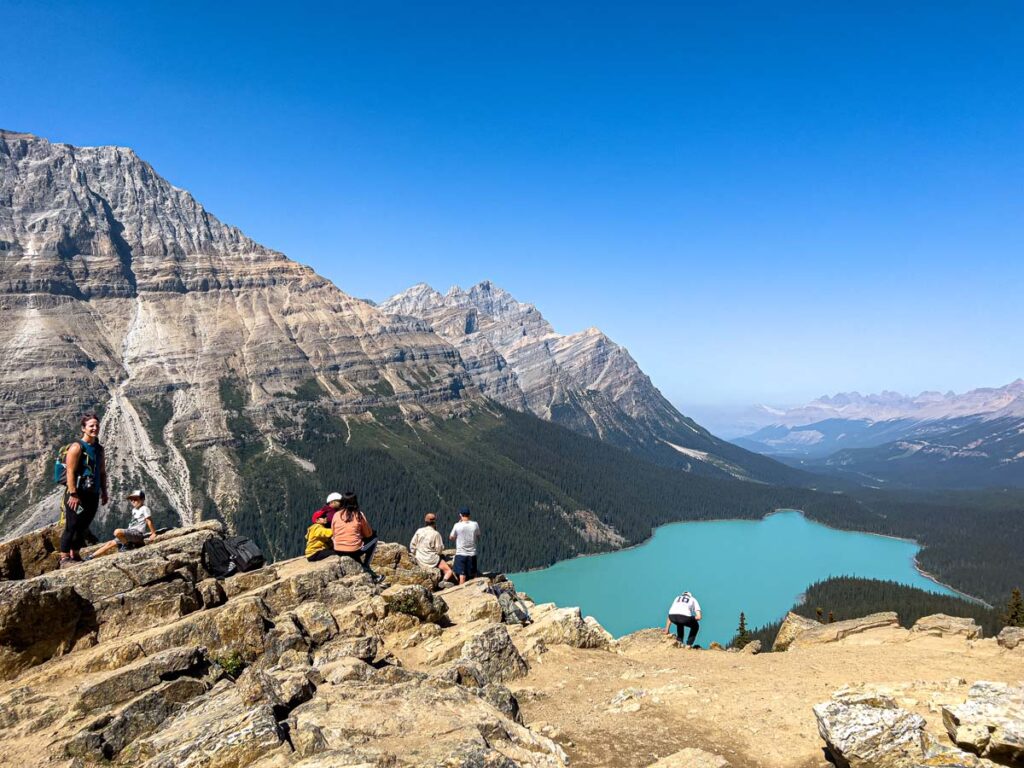
Driving to Banff National Park
One of the best things about driving to Banff National Park is that travel days are part of the adventure. Even the longer driving routes to Banff have real scenery and interesting stops to keep you interested along the way.
Below are the most common driving routes people take to Banff, along with some worthwhile highlights you can build into your plan.
Local’s Tip: To make your driving time even more enjoyable, why not invite an entertaining and educational tour guide into your car?

Recommended App
This GPS activated Canadian Rockies Audio Driving Tour is the perfect companion to your Banff vacation. It’s both entertaining and educational and will greatly enhance any drive in Banff National Park. Get 15% off with our Banff Discounts.
Driving from Calgary to Banff (The Classic First-Timer Route)
145 km / 90 miles — Driving Time: 1.5 – 2 hours
Google Maps – YYC to the Town of Banff
As the Calgary International Airport is the closest airport to Banff, this is the most common way to get to Banff National Park. The drive is straightforward, but has plenty of “wow” moments along the way.
Highlights Along the Calgary to Banff Route:
City driving: The first 25 minutes or so of your drive will be getting from YYC to the western edge of Calgary. Most of the drive will be on a relatively uninteresting freeway called Stoney Trail. As you are about to exit off Stoney Trail to the Trans-Canada Highway, look to your left to see the ski jumping facilities which were used during the 1988 Winter Olympics.
The foothills to mountain transition: As you begin to leave Calgary on the Trans-Canada Highway, the landscape is flat prairie. Before long, the landscape starts to become a little more hilly as you enter the foothills of the Canadian Rockies. And then, sudden with little warning, the Rockies suddenly appear! If you have first-time Banff travellers in the car, this is usually when the excitement kicks in.
Entering the Rocky Mountains: As you near the junction for Highway 40 (which leads to Kananaskis Country – a provincial park with amazing mountain scenery), the Rocky Mountains will be immediately in front of you.
As you first enter the mountains, you’ll begin driving through Bow Valley Provincial Park. The highway is particularly exciting here, and not just because this is the first moment you are inside the rugged Canadian Rockies. This is also one of the most fun stretches to drive as the highway becomes winding in many places as it navigates the tight space at the bottom of the Bow Valley.
There’s a popular pull-out stop at Lac des Arcs, which is very popular with first time visitors to Banff. It’s not the most scenic spot in the mountains and there is a massive cement plant on the far side of the water (sorry about that). But it’s a fun place to stop, stretch your legs and enjoy your first moments in the Rocky Mountains!
Canmore: Just minutes before you reach the Banff park gates, you’ll reach Canmore (my hometown). Although there are lot of fun things to do in Canmore, if this is your arrival day, you can pass through on your way to Banff.
In case you are unaware, Canmore is a popular alternative to staying in Banff. If you find the prices of Banff hotels a little steep, or you want something a little quieter, check out our comparison of staying in Canmore vs. Banff.
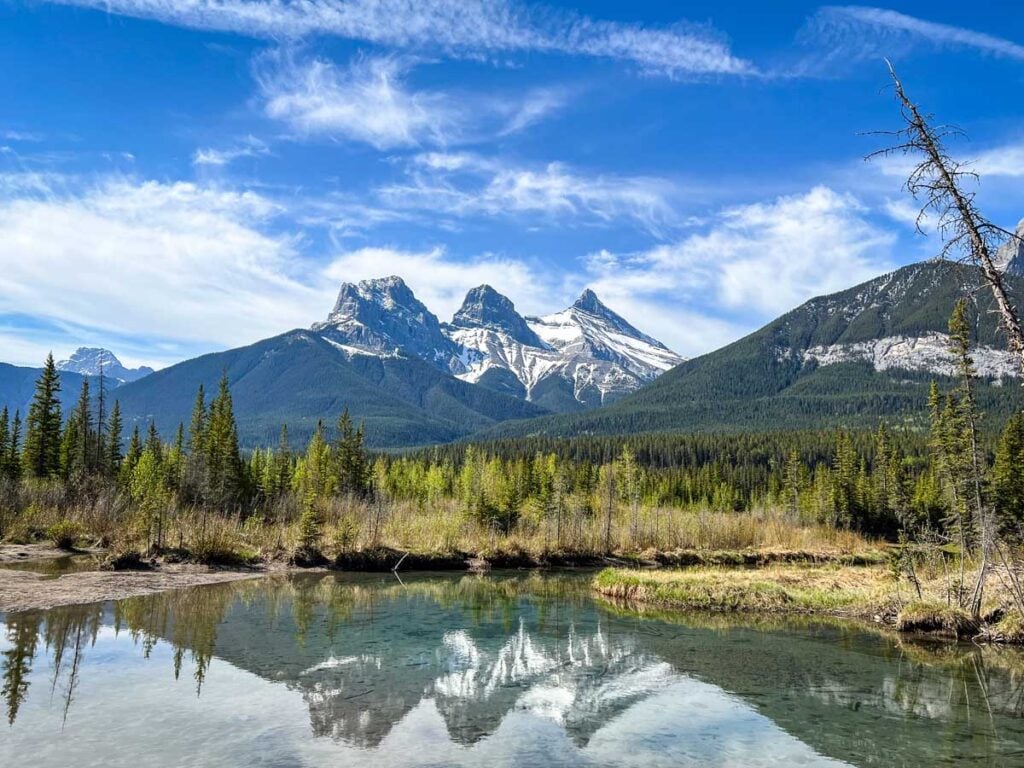
Banff Park Gates: The excitement continues to build as you pass the Banff Park Gates. You’ll start to notice tall wildlife fences on both sides of the highway, a sign you are now in real wilderness. Animals still get onto the highway, so please obey the posted speed limit.
As you near the Town of Banff, there are two notable mountains to look for:
Tunnel Mountain: The Stoney Nakoda Nations have long referred to Tunnel Mountain as ‘Sleeping Buffalo’. It’s not visible for long from the Trans-Canada Highway, but if you see it, you can really see why it earned that name. If you want a better look at Sleeping Buffalo, we have details in this post on the Best Banff Viewpoints.

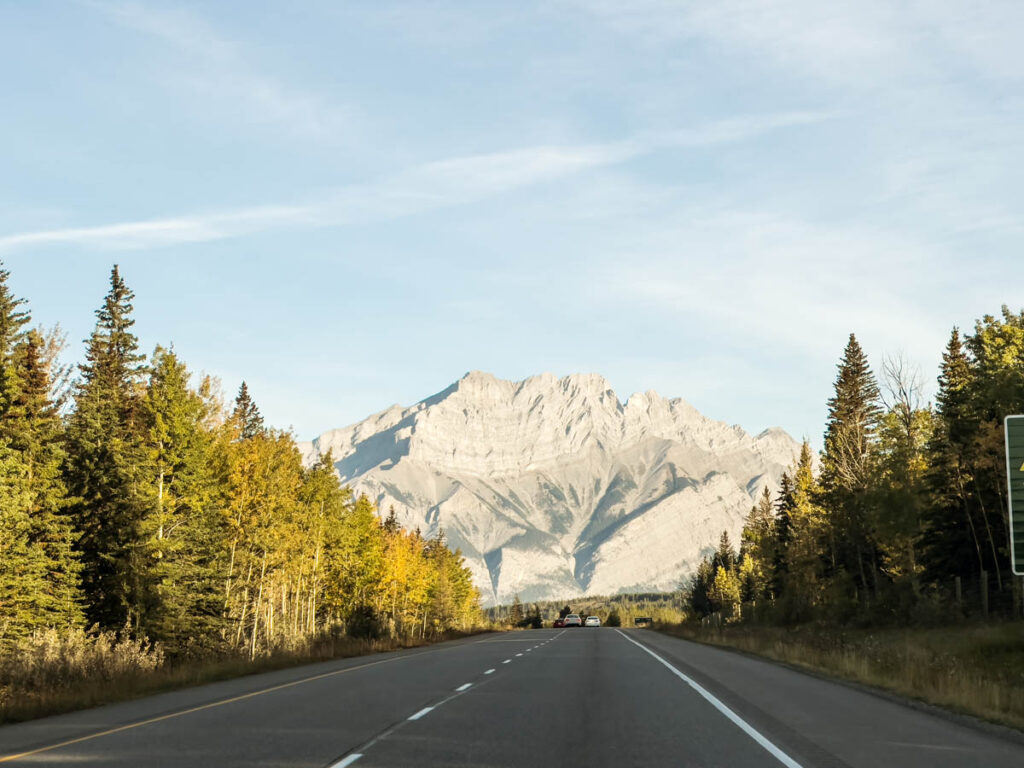
Cascade Mountain: There’s a famous photograph spot in the Town of Banff which shows a towering mountain just beyond downtown Banff. This is Cascade Mountain, and my favorite view of it occurs as you are approaching the final turnoff to the Town of Banff. I love how massive and imposing Cascade Mountain!
Calgary Airport Rental Cars
There are many rental car companies operating out of YYC, including all the usual international brands. Find the best deal for your Calgary airport rental car by browsing the offerings of all ten companies at once.

Let me Help with Your Banff Itinerary?
We have a suite of Banff Travel Planning services that can take all the guesswork out of planning your trip! Book a 1 hour travel consultation or let me create a custom Banff Itinerary for you!
Driving from Edmonton to Banff (Via Calgary)
390 km / 240 miles — Driving Time: 10+ hours
Google Maps – Edmonton International Airport to the Town of Banff
If you fly into Edmonton, Alberta’s capital city, you have two options on how to drive to Banff National Park. If you are tight on time, you can opt for the fast-and-easy route, or if you have the time, a very popular choice is to take the long way and visit Jasper National Park on your way to Banff.
If time is short and you don’t want to visit Jasper National Park, your fastest option is to make a beeline down the Queen Elizabeth II Highway (AB-2) from the Edmonton International Airport to Calgary. From here, it’s the same route described in the Driving From Calgary to Banff section above.
Highlights In-between Edmonton and Calgary:
I’ll be honest, the 250 km (155 mile) drive from the Edmonton Airport to Calgary is pretty uninteresting. It’s a straight shot through Canadian prairie between the provincial capital and Alberta’s biggest city.
Red Deer is the halfway point between Edmonton and Calgary. There’s plenty of restaurants to enjoy, but if you want to stretch your legs, the Kerry Wood Nature Centre is pretty nice.
Driving from Edmonton to Banff (Via Jasper – The Scenic Route)
680 km / 420 miles — Driving Time: 8+ hours
Google Maps – Edmonton to Jasper and Banff
If you have time, a popular, and significantly more scenic option is to turn your trip from Edmonton into a Canadian Rockies loop and connect it with Jasper National Park and the Icefields Parkway. This is not the fastest way to get to Banff from Edmonton, but it is the one people remember. If you’re building an itinerary and you’re tempted by the scenic version, it’s usually best as part of a longer trip, not something you force into a tight weekend.
Jasper National Park is another Canadian Rocky Mountain national park, immediately north of Banff National Park. It’s known for being more wild than Banff, and a little quieter.
The Icefields Parkway connects the Town of Jasper with Lake Louise in Banff National Park. The Icefields Parkway is home to the Columbia Icefield and is considered one of the most scenic drives in the world.
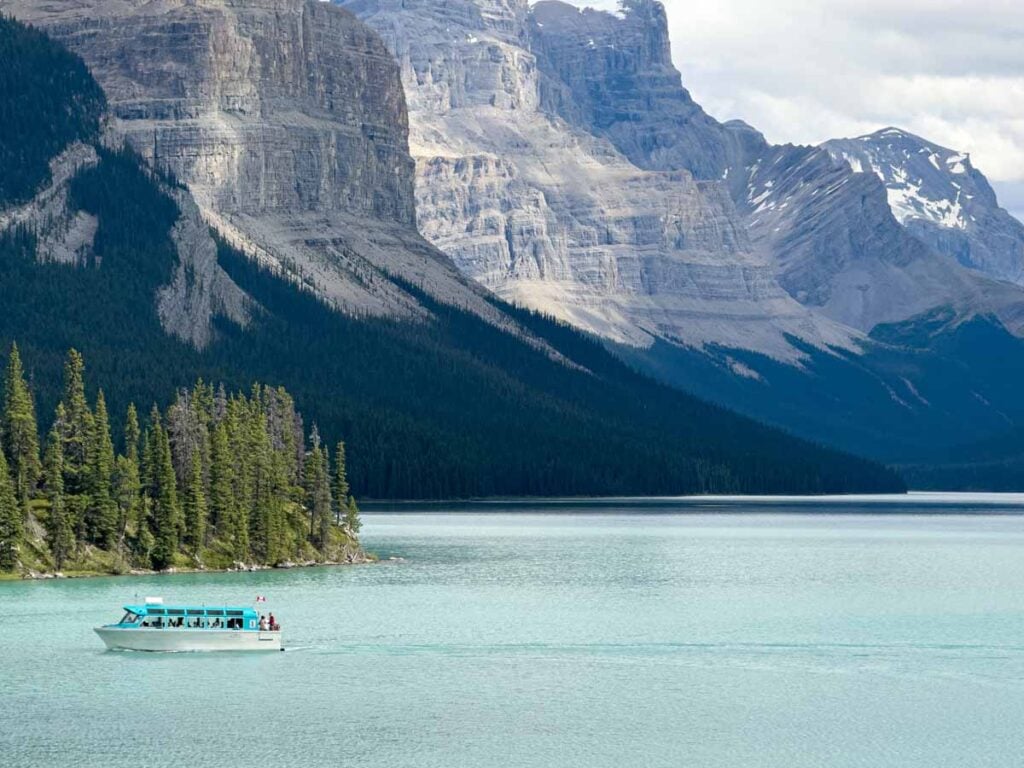
Highlights on the drive from Edmonton to Jasper to Banff:
This driving route introduces visits to both Jasper National Park and the Icefields Parkway, which in essence is doubling (or even tripling) the mountain scenery you’d see vs. just going to Banff. To do this route justice, I recommend you take the time to read our 7-Day Banff and Jasper itinerary.
Alternately, you could buy one of our pre-built itineraries. We have a varied selection of itineraries to choose from, but in this case, I’d recommend our 10-day Ultimate Banff and Jasper Itinerary.

Need Help with Your Banff Itinerary?
We’ve created expertly curated itineraries for Banff and area. Choose from our 3 Day “See It All” to our 10 Day Ultimate Banff and Jasper Itinerary.
Driving from Vancouver to Banff (the Bucket List Road Trip)
850 km / 520 miles — Driving Time: 10+ hours
Google Maps – Vancouver to the Town of Banff
One of my favourite road trips, the Vancouver to Banff drive is a true Western Canada classic. Starting in Vancouver, one of the world’s most beautiful cities, the road trip to Banff is long, but is filled with a ton of highlights, making it feel like an adventure.
If you are tight on time, the drive from Vancouver to Banff can be done in a single day, but if you have the option, slow down and enjoy the sights along the way.
Highlights Along the Vancouver to Banff Route:
Coastal Forests to Interior Landscapes: One thing I love most about the drive from Vancouver to Banff is how dramatically the scenery and landscape changes. This is especially true as you begin your drive through the coastal forests of BC and watching them change as you gain elevation driving towards the interior.
Lake Country: As pass Kamloops and start driving through the interior of BC, you’ll pass many beautiful lakes. If you are driving Vancouver to Banff in one shot, this area is a great place for a stop to stretch and refresh.
Revelstoke and the “real mountains”: Up until Revelstoke, the mountains along this drive largely feel more rounded and hilly. As you approach Revelstoke, the mountain landscape starts to change and you start to get a taste for the rugged Rocky Mountains of Canada. It’s just a taste of what’s to come.
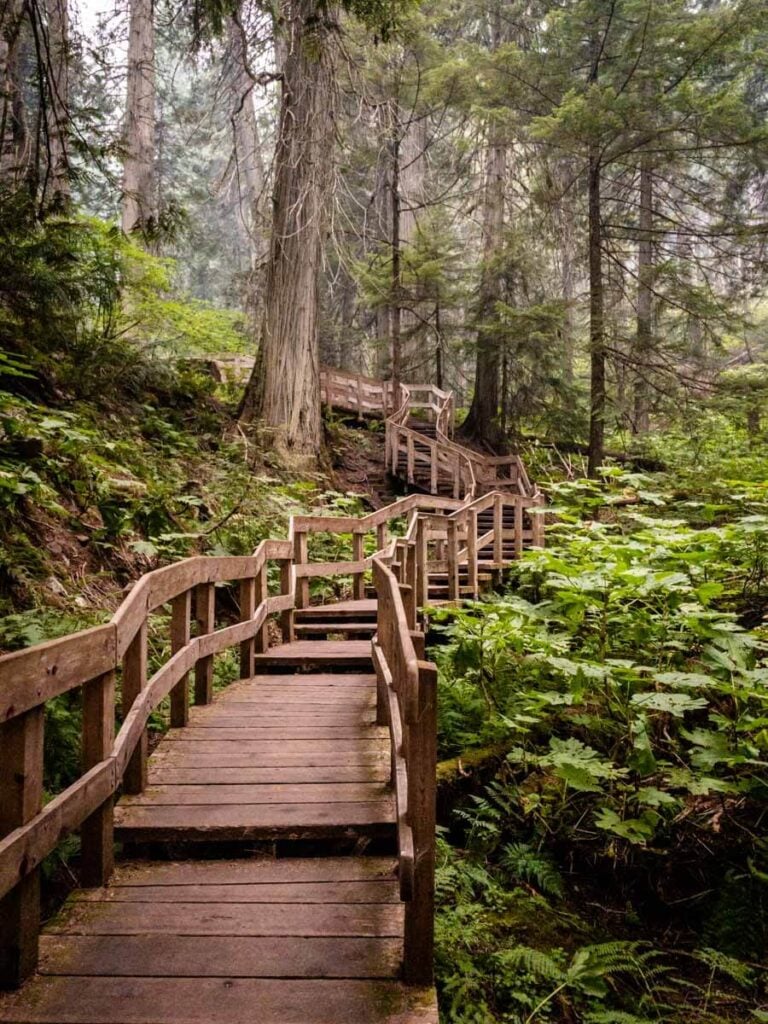
Rogers Pass: Designated a National Historic Site in 1971, Rogers Pass played an important role in connecting Canada by rail and later by road. Today, it is one of the most dramatic stretches of the drive between Vancouver and Banff.
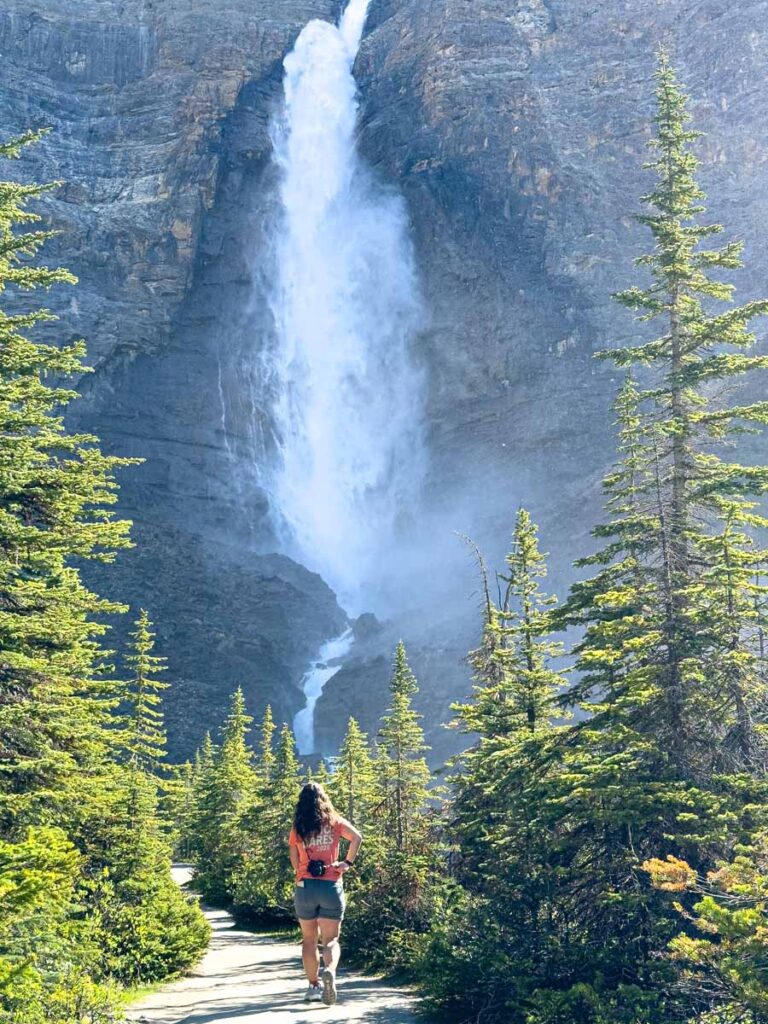
Yoho National Park: Another national park of the Canadian Rockies, Yoho National Park borders Banff National Park to the west. Yoho is jam-packed with stunning highlights, including Takakkaw Falls and Emerald Lake.
Driving to Banff from the USA (A Scenic Approach)
370 km / 230 miles — Driving Time: 4+ hours
Google Maps – Waterton to the Town of Banff
If you’re coming from the U.S., the best route for your drive to Banff depends on where you’re starting. That said, for maximum mountain scenery, many travellers either head up through southern Alberta or route toward Calgary and then drive west.
Highlights Worth Considering on a U.S. to Banff Drive:
Waterton-Glacier International Peace Park: Your mountain adventure begins with the two sister parks which share the U.S. – Canada border. Glacier National Park is one of the most scenic mountain parks in the U.S., while Waterton National Park is equally stunning.
Frank Slide: It’s a short detour off the most direct drive from Waterton to Banff, but it’s worth it to see the devastation of the rock slide which hit the town of Frank, Alberta in 1903.
Tips for Driving to Banff
Just because you are driving to Banff, don’t assume you can drive everywhere you want, anytime you want. As we discuss in the mistakes people make when visiting Banff, many people are unaware of the shuttle systems in place to visit Lake Louise and Moraine Lake – two of Banff’s top attractions. At this early stage of your trip planning, you should take a moment and learn about how to get to Lake Louise and how to get to Moraine Lake, so you are not scrambling when you arrive.
There is limited free parking in the Town of Banff, but due to the intense competition for these parking spots, make sure your Banff hotel has parking.
If you are travelling to Banff with 2 or more people, it’s often more affordable to rent a car vs. paying for bus or shuttle transfers for each member of the group.
If you are getting a rental car for your trip to Banff, book early in peak season. Summer and long weekends can get expensive fast.
If you are driving to Banff, you may also wish to consider staying in Canmore, which is a small mountain resort town just minutes outside Banff National Park. Despite sharing the same Rocky Mountain scenery, Canmore hotels tend to be cheaper than in Banff.

Winter Driving to Banff
To me, visiting Banff in winter is one of the most beautiful times of year. The snow-covered mountains in the Rockies are magical, but driving in winter also requires some careful advance planning.
The most important rule for driving in Banff in winter is to build in buffer time for your travel days. This is especially important when you are returning to the airport. In a winter storm, traffic often slows to 50 km/h on the Trans-Canada Highway (vs the typical 110 km/h). How much buffer you plan for is up to you, but we often plan on arriving at the airport about an hour earlier than normal conditions would dictate.
The weather in the mountains is unpredictable and hard to forecast. I recommend looking at several weather forecasts to get a sense for what may be coming. Also, make sure you look at the right locations – the weather forecasts in Lake Louise, the Town of Banff and Calgary can all be drastically different on the same day.

Don’t Forget Your Banff Park Pass
None of these options for getting from Calgary to Banff include admission to the Banff National Park. You will need to buy a Banff Park Pass at the Banff Visitor Centre, shortly after you arrive. Alternately, you can buy a National Park Pass online before your visit.
FAQ – Getting to Banff
Is there a Banff, Canada Airport?
Banff does not have its own commercial airport. The closest airport to Banff is in Calgary, Alberta (YYC). The drive from Calgary Airport to Banff is about 90 minutes.
What is the best way to get to Banff?
Banff National Park is huge. The best way to get to Banff is usually with a car rental. A rental car allows you the freedom to see the best of Banff National Park on your own schedule.
Do I need a car in Banff?
While having a car is the best way to get around Banff, you do not need a car in Banff. The Banff Townsite is small and very walkable, while the major tourist attractions in Banff, and many popular hiking trails are often served by public transportation.
Is Uber in Banff?
No, Uber does not operate in Banff. There are a variety of Banff taxi companies which will meet your Banff travel needs.
Is it easy to drive from Calgary to Banff?
Yes, it’s very easy to drive from Calgary to Banff. From the Calgary Airport to Banff, the very scenic 90 minute drive is almost all on freeways or highways, with very little city driving involved.
Is there a shuttle from Calgary to Banff?
Two companies offer a shuttle from Calgary to Banff: Banff Airporter and the Brewster Express. Both offer a shuttle from the Calgary Airport to Banff, while some offer pickup in downtown Calgary. In addition to Banff, each offers a drop-off in Canmore.
Is there a train from Calgary to Banff?
No, there currently is no train from Calgary to Banff. The idea of a train to Banff keeps resurfacing and may become reality in the future.
Support Human Created Content

Hi, we’re Dan & Celine Brewer, locals from just outside Banff National Park. Every article, itinerary, and recommendation we share is rooted in our real experiences and love for this place. If you’ve found our content helpful, please consider supporting us:
- Make a small donation: Your support directly fuels our work and keeps our stories genuine.
- Purchase a guide or itinerary: Essential tools that help plan your trip and support local creators at the same time.
- Book lodging or tours through our affiliate links: You pay the same price, but we earn a small commission that helps us keep producing content.
Thank you for valuing authentic, human-created content. Your support allows us to help even more Banff travellers!

Dan Brewer, a life-long Alberta resident, calls Canmore home along with his wife and two kids. He is the co-owner of Travel Banff Canada, where he gets to share his passion for the Canadian Rocky Mountains. Dan, along with his family, love being outdoors doing one of the many activities they enjoy in the mountains: hiking, mountain biking, paddleboarding, skiing, snowshoeing and cross-country skiing.
When he's not in Canmore enjoying one of his favourite local hikes, you can find him hopping on a plane to explore a new country with his family or working on one of their other two travel sites: Family Can Travel and Baby Can Travel.