Once the busy Christmas holidays are over, Banff settles into a quieter part of winter. Visiting Banff in January is a great opportunity to enjoy the snow-covered Canadian Rockies with fewer crowds, excellent winter activities and some of the best winter festivals of the year. It’s also one of the coldest months in Banff, but with the right preparation, there’s plenty to look forward to.
As Canmore locals, we spend a lot of time exploring Banff National Park throughout the winter, and January is a month we especially enjoy getting outside. Whether it’s skiing at Sunshine Village, snowshoeing through the deep snow in Kananaskis or skating on frozen Lake Louise, there’s no shortage of ways to enjoy the mountains. If you’re looking for even more inspiration, our guide to the best things to do in Banff in winter covers plenty of other activities worth considering.
There are a few things you’ll want to know before planning your January trip. Banff weather in January can be extremely cold, daylight hours are short and winter driving requires some preparation. In this guide, we’ll share what to expect from January temperatures and snowfall, our favourite things to do in Banff in January, where to stay, what to pack and the local tips we’ve learned from years of enjoying winter in the Canadian Rockies.
This post contains compensated links.
Is January a Good Time to Visit Banff?
January is an excellent time to visit Banff, especially if you love winter activities and want to experience the Canadian Rockies covered in snow. With the busy Christmas holidays behind us, Banff is generally quieter, and there’s plenty to enjoy both on and off the ski hills. If you’re visiting later in January, the Banff SnowDays Festival and Lake Louise Ice Magic add even more reasons to plan a trip.
By January, winter is well established in Banff National Park. It’s a great month for downhill skiing, cross-country skiing, snowshoeing, winter hiking and skating on frozen Lake Louise. Even if you’re not interested in winter sports, there’s plenty to enjoy, from frozen waterfalls and snowy mountain viewpoints to relaxing in the Banff Upper Hot Springs.
Of course, January is also one of the coldest months in Banff, so you’ll need to come prepared. Temperatures can drop well below -20°C, and the short daylight hours mean you’ll want to plan your activities carefully. If you’re hoping to see turquoise lakes or enjoy Banff’s famous summer hiking trails, take a look at our guide to the best time to visit Banff or compare your options in our Banff by season guide.
If you’re deciding between winter months, Banff in December has the added appeal of Christmas celebrations, although the holiday period can be busy. Visiting Banff in February offers similarly good winter activities, with slightly longer daylight hours and typically somewhat milder temperatures.
For travellers who don’t mind bundling up, January offers a wonderful combination of snowy scenery, excellent winter activities and fewer visitors after the holiday rush. It’s a month we enjoy getting outside ourselves, and with the right preparation, there’s no reason you can’t enjoy it too.

Banff Weather in January
January is one of the coldest months of the year in Banff, but don’t let that discourage you from visiting. With the right winter clothing, you can comfortably enjoy many of the outdoor activities Banff is known for. The key is to be prepared for changing conditions, as January weather in Banff can range from surprisingly mild days to periods of extreme cold.
Banff Temperatures in January
The average daily high temperature in Banff in January is -5°C (23°F), while the average daily low is -15°C (5°F). While these temperatures might sound cold, they are quite manageable if you dress in warm layers, especially when you’re active outdoors.
Keep in mind that these are historical monthly averages, and the actual temperatures during your visit can be very different. A warm Chinook wind can bring temperatures above freezing, while cold snaps can send daytime highs into the -20s or even -30s°C (-4°F to -22°F).
If you’re planning outdoor activities in January, we recommend keeping your itinerary flexible. Save longer winter hikes, snowshoeing or skiing for more comfortable days, and have a few indoor activities in mind in case the temperatures drop significantly.

Does It Snow in Banff in January?
One of the best things about visiting Banff in January is the beautiful snow-covered scenery. Banff receives an average of 38 cm (15 inches) of snowfall during January, making it the second snowiest month of the year after December, which averages 44 cm (17 inches).
Despite the monthly snowfall, it doesn’t necessarily snow every day. The historical daily chance of snowfall in January is approximately 7 to 11%, so you may experience several clear, sunny days during your visit.
By January, there is usually plenty of accumulated snow in Banff National Park, especially at higher elevations. This makes it an excellent time for downhill skiing, cross-country skiing and snowshoeing, although snow conditions can vary depending on the location and recent weather.
If you’re uncomfortable driving on snowy or icy roads, consider taking one of the Calgary Airport shuttles to Banff and exploring the area using local transportation or guided tours.

What January Weather Feels Like
One thing we’ve learned from spending so many winters in Banff is that the temperature alone doesn’t tell you how cold it will feel. Sunshine, wind and shade can make a surprisingly big difference.
For example, a sunny day at -5°C (23°F) with very little wind can feel quite pleasant, especially if you’re moving around. That same temperature can feel much colder when you’re standing in the shade or exposed to the wind.
Wind chill is particularly important during January. At -5°C (23°F), a wind speed of 10 km/h can make it feel like -9°C (16°F), while a 40 km/h wind can make it feel closer to -14°C (7°F).
We recommend dressing in layers so you can adjust throughout the day. Warm winter boots, insulated gloves, a toque and a windproof jacket are especially important if you’ll be spending time outdoors. Be sure to check our Banff Winter Packing List for more advice on what to bring.
Planning a Winter Trip to Banff?
The Banff & Jasper Planning Hub includes our Banff Winter Travel Guide, with practical winter advice, activity ideas, seasonal tips, and local guidance to help you plan your trip without feeling overwhelmed.
Things to Do in Banff in January
There’s no shortage of things to do in Banff in January, whether you love outdoor adventures or prefer more relaxed winter activities. We’ve included some of our favourites below, from skiing and snowshoeing to ice skating and winter festivals.
For even more ideas, check out our guide to the best things to do in Banff in winter. And if skiing isn’t on your itinerary, don’t worry! There are plenty of things to do in Banff for non-skiers too.

Banff SnowDays Festival
One of the best reasons to visit Banff in late January is the annual Banff SnowDays Festival. This popular winter festival brings snow sculptures, live entertainment and family-friendly activities to Banff and Lake Louise, with many events completely free to enjoy.
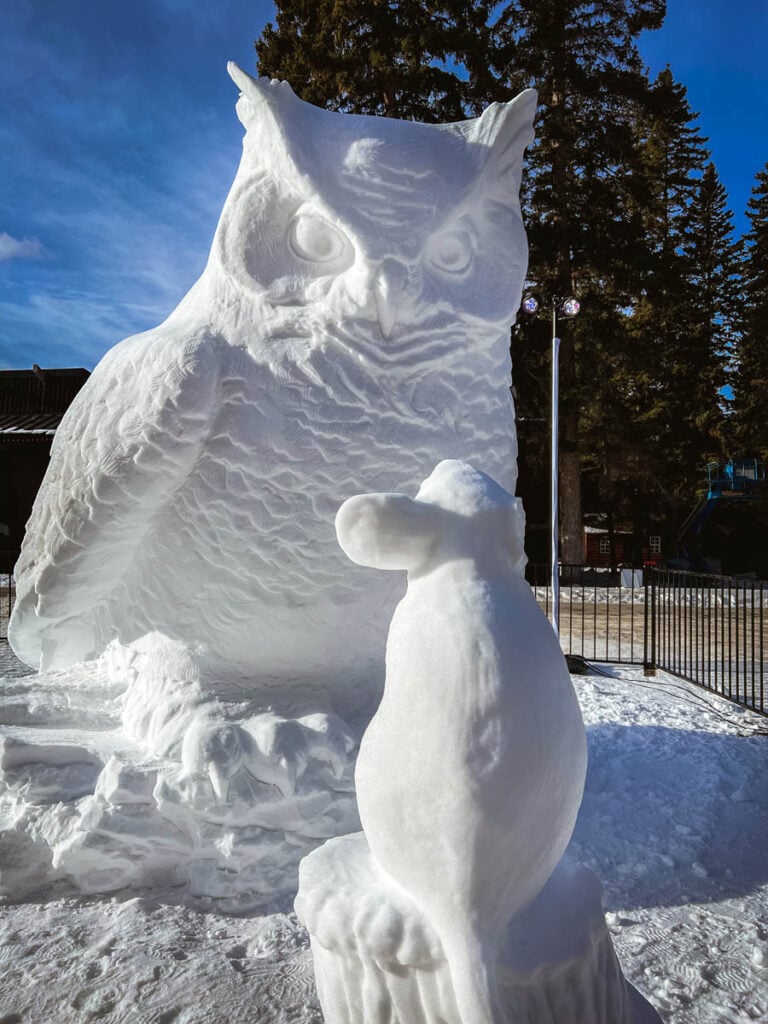
We’ve visited SnowDays many times over the years, and the snow sculptures are always a highlight. Talented artists transform enormous blocks of snow into incredibly detailed creations throughout downtown Banff. We love grabbing a hot chocolate and walking along Bear Street and through Central Park to see the sculptures. They’re also illuminated at night, making an evening walk through town well worth it.
If you’re visiting Banff with kids, be sure to check out the SnowDays Play Zone in Central Park, where families can try a variety of winter activities. The Play Zone is one of the most fun things to do in Banff in winter with kids.
The free Weekend of Wonder, is another great reason to visit, with hands-on activities and live performances on Bear Street.
Read More
There’s much more happening during this popular Banff winter festival, and some events only take place on specific dates. See our complete Banff SnowDays Festival guide for the 2027 event schedule, snow sculpture locations, family activities and our tips for making the most of your visit.
Lake Louise Ice Magic
If you love Banff winter festivals, you should know that the Lake Louise Ice Magic Festival takes place in early February. We’ve enjoyed visiting the impressive ice sculptures with our kids over the years, and it’s always amazing to see the intricate designs carved from enormous blocks of ice.

In 2027, Lake Louise Ice Magic runs from February 3 to 7, featuring an exhibition of ice sculptures at the Fairmont Chateau Lake Louise. Access is restricted to guests of participating hotels and eligible local residents, so you’ll need to plan ahead if you want to attend.
Read More
Our Lake Louise Ice Magic 2027 guide explains how to get tickets, where to stay and what to expect from this popular winter event.
Lake Louise in January
A visit to Lake Louise in January is well worth it, even if you don’t plan on skiing. By this point in winter, the lake is completely frozen and surrounded by snow-covered mountains. There are plenty of ways to enjoy the scenery, whether you prefer an easy winter walk or something a little more adventurous.
We always recommend walking along the Lake Louise Lakeshore Trail, one of our favourite easy walks in Banff. The trail is 2.3 km one way, with beautiful views across the frozen lake and surrounding mountains. It’s generally well packed from other visitors, so good winter boots are often sufficient, although microspikes can be helpful when it’s icy.
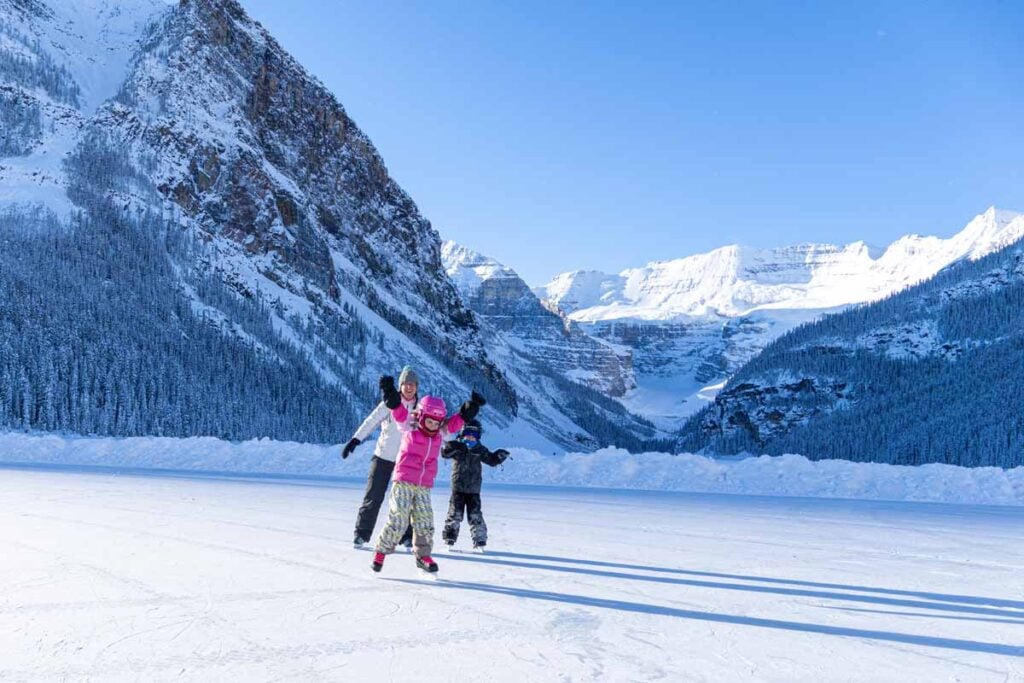
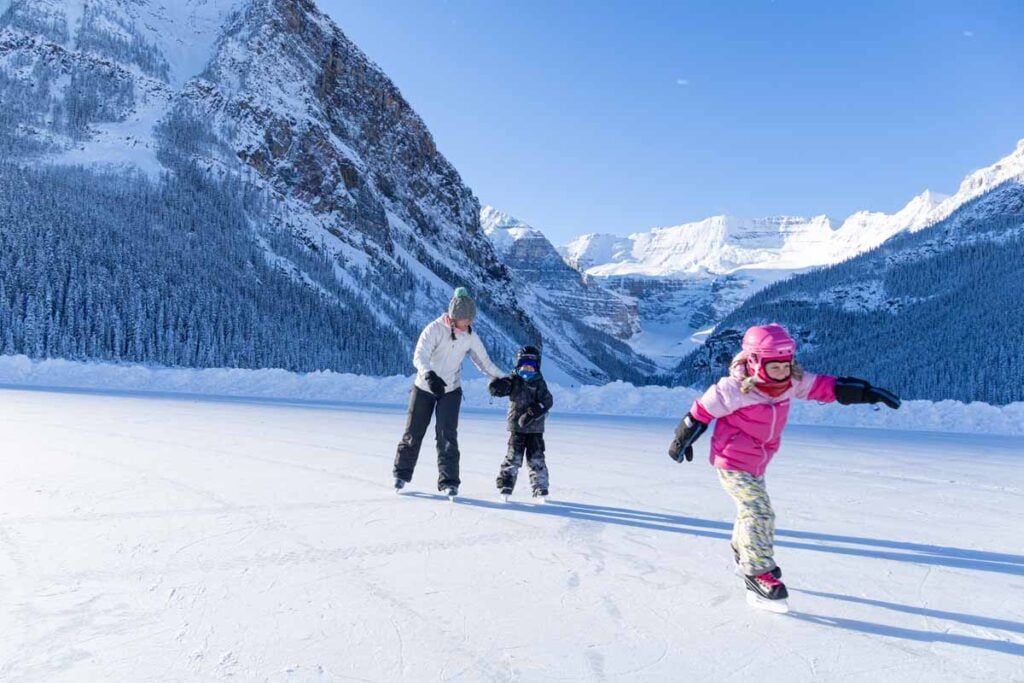
One of our favourite things to do in Banff in January is ice skating on Lake Louise. A large skating area is maintained in front of the Fairmont Chateau Lake Louise, often with a separate area for hockey. We’ve enjoyed skating here with our kids many times, and it’s hard to beat the mountain scenery.


CAPTURE YOUR BANFF TRIP
Turn your Banff memories into photos you’ll actually want to frame. Save $25 on your first Flytographer photoshoot.
If you’d like to explore a little further, there are several excellent Lake Louise snowshoe trails. One of our favourites is the Fairview Lookout snowshoe trail, a relatively short outing with a great payoff. From the viewpoint, you’re rewarded with beautiful views over frozen Lake Louise towards the Chateau. Be aware that some trails around Lake Louise cross avalanche terrain and are not safe winter hiking options.
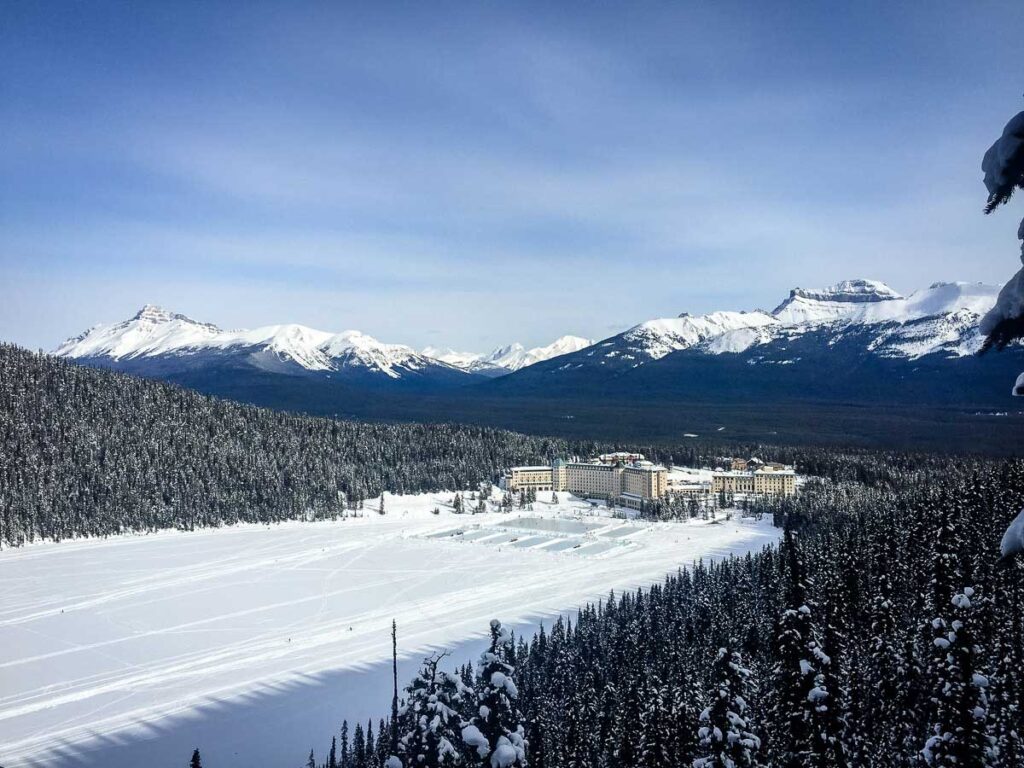
For a more relaxed experience, consider a horse-drawn sleigh ride at Lake Louise, which takes you along the lakeshore through the snowy forest. If you’re looking for more adventure, dog sledding near Lake Louise is another memorable winter activity worth considering.

The nearby Lake Louise Ski Resort also offers activities for non-skiers, including snow tubing and sightseeing gondola rides. It’s a great option for families who want to enjoy the mountains without spending the day skiing.
Local Tip
January is usually quieter than the Christmas holiday period, but parking at Lake Louise can still fill up on busy weekends. We recommend arriving earlier in the day, especially if you want to combine skating with a walk or snowshoe outing. If you’d rather leave the winter driving to someone else, consider a guided winter tour to Lake Louise from Banff.
Downhill Skiing
January is an excellent month for downhill skiing in Banff. By this point in the winter, the three Banff ski resorts, collectively known as SkiBig3, are usually operating most of their lifts and runs. Snow conditions are generally well established, especially at higher elevations, although it’s always worth checking the latest resort reports before heading out.
Another advantage of skiing in Banff in January is that the slopes are often less busy once the Christmas holidays are over. Weekends can still be popular, but if you have some flexibility, skiing midweek is a great option.
Each of the three Banff ski resorts offers something different, so it’s worth choosing the one that best suits your skiing ability and the type of experience you’re looking for.

Sunshine Village Ski Resort
Of the three Banff ski resorts, Sunshine Village is my favourite. I love skiing the wide-open runs above the treeline, surrounded by the incredible mountain scenery. We’ve spent many memorable days skiing here as a family, and it’s especially enjoyable when the sun is shining and you can see the surrounding peaks.
Sunshine Village sits high on the Continental Divide, where its elevation helps it receive plenty of natural snowfall. By January, the resort is typically operating most of its lifts, giving skiers access to a wide variety of terrain. There’s something for all abilities, although intermediate skiers will find an especially good selection of runs.
One of the reasons we love Sunshine is that conditions can be quite different from the Town of Banff. Even when there’s relatively little snow at lower elevations, you can often enjoy excellent skiing higher up at Sunshine Village. Just be prepared for cold temperatures and wind on exposed runs, especially during January cold snaps.
If you’re learning to ski or prefer easier terrain, our guide to the best green runs at Sunshine Village will help you choose where to start.

Lake Louise Ski Resort
The Lake Louise Ski Resort is another excellent choice for skiing in Banff in January. With more than 4,200 acres of skiable terrain spread across four mountain faces, it’s one of the largest ski resorts in North America. There’s a good mix of beginner, intermediate and advanced runs, making it especially appealing to families or groups with different skiing abilities.
We’ve enjoyed many family ski days at Lake Louise, and the mountain scenery is always a highlight. Some of the views from the upper slopes are incredible, so be sure to take a few breaks to enjoy your surroundings.
January is a great time to explore the resort, as the ski season is well underway and there’s usually a good selection of open terrain. Keep in mind that Lake Louise is a large mountain, so beginners should pay attention to the trail map and choose their runs carefully.
If you’re relatively new to downhill skiing, we’ve put together a guide to the best green runs at Lake Louise Ski Resort to help you plan your day.

Banff Norquay
If you’re staying in the Town of Banff and don’t want to travel far, Banff Norquay is a convenient option. Located just a short drive from downtown Banff, Norquay is popular with local families and is a great place to learn to ski.
Our kids take ski lessons at Norquay almost every year, and it’s a good option for families who want a smaller mountain experience. There are beginner-friendly slopes, but don’t let the resort’s size fool you. Norquay also has plenty of challenging terrain, with a significant portion of its runs rated black diamond.
One thing that makes Norquay different from the other Banff ski resorts is its night skiing. If you’re visiting during January’s shorter days, an evening on the slopes can be a fun way to fit in some extra skiing. Just be sure to check the current night skiing schedule, as it’s only offered on select dates.
Read More: Not sure which mountain to choose? Our complete guide to the Banff ski resorts will help you compare Sunshine Village, Lake Louise and Norquay.

Ski Resorts Near Banff National Park
If you’re staying in Canmore or planning a longer Canadian Rockies ski vacation, there are several other ski resorts worth considering outside Banff National Park.
Nakiska Ski Area: Located in Kananaskis Country, Nakiska is especially convenient for visitors staying in Canmore or travelling from Calgary. It hosted the alpine skiing events during the 1988 Calgary Winter Olympics and is a popular choice for families and intermediate skiers.
Kicking Horse Mountain Resort: Located approximately 150 km west of Banff in Golden, BC, Kicking Horse is best known for its steep terrain and impressive vertical drop. It’s particularly appealing to confident intermediate and advanced skiers looking for a challenge. You can also book a shuttle and lift ticket package from Banff.
Panorama Mountain Resort: Approximately 170 km west of Banff, Panorama offers a large ski area with a welcoming mountain village. It’s a great option for families or groups who want a full-service ski resort with accommodations close to the slopes.
If you’re planning to ski outside Banff National Park in January, remember that mountain highways can be challenging in winter. Check road conditions before leaving, and allow extra travel time after snowfall.


Need Help Planning Your Banff Winter Itinerary?
The Banff & Jasper Planning Hub includes our 7-Day Banff Winter Itinerary, built from years of exploring Banff in winter to help you plan a realistic, well-paced trip.
Cross-Country Skiing
January is one of the best months for cross-country skiing in Banff National Park. By this time of winter, there’s usually enough snow for many of the popular cross-country ski trails to be groomed and track-set. Some of the best places to ski are around Lake Louise and the Town of Banff, with excellent options for beginners and more experienced skiers.
One of our favourite places to cross-country ski with our kids is the Pipestone trail network near Lake Louise. We especially enjoy the Hector Trail to Pipestone Pond, which is a manageable option for families and newer skiers. The peaceful forest and beautiful mountain scenery make it a great place to spend a few hours enjoying winter in Banff.
If you’ve never tried cross-country skiing before, January is a great time to give it a go. You can book a cross-country ski lesson at Lake Louise or choose an easy trail from our guide to the best cross-country ski trails in Banff.

Cross-Country Skiing in Canmore and Kananaskis
For even more cross-country skiing opportunities, we highly recommend visiting the Canmore Nordic Centre. Built for the 1988 Calgary Winter Olympics, the Nordic Centre is still used by Canada’s top cross-country ski athletes. It’s pretty exciting to be out skiing on the same trails where elite athletes train!

We’re recreational cross-country skiers, so we tend to stick to the easier trails. One of our favourites is the Banff Loop, a wide, groomed trail with separate tracks for skiers travelling in each direction. We love that beginners can enjoy the same beautiful setting as the more experienced skiers without having to tackle difficult terrain.
There’s also excellent cross-country skiing in Kananaskis Country, with an extensive network of groomed trails. Two family-friendly options we’ve enjoyed are the Watridge Lake Trail from Mt. Shark and the Wedge Connector near Kananaskis Village. Both offer enjoyable skiing through the forest with beautiful mountain views.
Local Tip
Trail conditions can vary quite a bit between Banff, Lake Louise and Kananaskis, even in January. Be sure to check the latest grooming reports before heading out. If there’s not enough snow around the Town of Banff, the higher-elevation trails near Lake Louise or in Kananaskis are often worth considering.
Winter Hiking in Banff
Winter hiking is one of our favourite free activities in Banff in January. You don’t need to be an experienced winter adventurer to get out on the trails, and there are plenty of shorter hikes where you can enjoy beautiful snowy scenery without a major climb.
Some of our favourite easy winter hikes in Banff are close to town. The Banff Hoodoos Trail is a great example, as you can choose how far you want to walk. From the Hoodoos parking lot, it’s only a few hundred metres to the viewpoints, where you’ll be rewarded with views of the snow-covered hoodoos, Mount Rundle and Tunnel Mountain. If you’d prefer a longer winter hike, the approximately 5 km trail from Surprise Corner follows the Bow River along the base of Tunnel Mountain.

Another favourite is the Johnson Lake Trail, an easy 3 km loop around one of Banff’s prettiest lakes. We’ve enjoyed this trail many times, and it’s especially nice in January when the evergreen forest and lake are covered in snow. Be sure to stop at the southeastern end of the lake for beautiful views of Cascade Mountain.
There are also many excellent easy winter hikes in Kananaskis Country. We highly recommend the family-friendly Troll Falls Trail which follows a relatively wide trail through the forest to a frozen waterfall. It’s a popular snowshoeing destination, but we’ve found that the trail is often so well packed from other hikers that microspikes are more useful than snowshoes.

Winter Hiking Safety
Even easy winter hikes in Banff require some preparation. Popular trails can become extremely icy, especially after periods of warmer weather followed by freezing temperatures. I learned this lesson the hard way when I slipped and injured my shoulder while winter hiking Upper Stoney Lookout. The frustrating part was that I had my microspikes in my backpack!
We strongly recommend bringing winter traction devices on your January hikes and putting them on whenever conditions warrant. Deep snow can also make some trails difficult to follow, so don’t assume a popular summer hiking trail will be an easy winter outing.

Most importantly, some hiking trails in Banff National Park cross avalanche terrain and should be avoided unless you have the appropriate training and equipment. Always check current trail conditions, avalanche warnings and closures before heading out. Our essential Banff hiking tips are a good place to start when preparing for your hike.
Snowshoeing in Banff and Kananaskis
Snowshoeing is one of our favourite winter activities, and January is an excellent time to get out and explore the snow-covered trails around Banff. While there are some great snowshoe trails in Banff and Lake Louise, we especially love heading into Kananaskis Country, where there’s often deeper snow and an excellent selection of trails.
By January, there’s usually a good snowpack along the southern sections of the Smith-Dorrien Highway, making this one of our go-to areas for snowshoeing. Even when there’s not much snow around Canmore or the Town of Banff, we can often find excellent conditions here.

Snowshoeing in Kananaskis Country
One of our all-time favourites is the Chester Lake Snowshoe Trail. The first 2 km involves a steady climb through a dense evergreen forest, but the effort is well worth it. The trail then opens into beautiful meadows, where we’ve enjoyed snowshoeing through deep, fluffy snow surrounded by impressive mountain peaks. It’s a great choice for active visitors looking for a moderate winter adventure.

For something easier, we recommend the Hogarth Lakes Snowshoe Trail. This relatively flat, 3.9 km loop winds through a snowy forest and around several small frozen lakes. It’s an enjoyable introduction to snowshoeing in Kananaskis and a good option for families who don’t want a long or strenuous outing.
You don’t need to tackle a challenging mountain trail to enjoy snowshoeing near Banff in January. There are plenty of easy snowshoe trails in Kananaskis that are manageable for beginners and families. Just remember that snow conditions can change quickly, and some routes enter avalanche terrain. Check current trail conditions and avalanche information before heading out, and stick to designated winter routes appropriate for your experience.
Ice Skating in Banff
Ice skating is one of the most enjoyable winter activities in Banff, and January offers some excellent opportunities to skate surrounded by snowy mountain scenery. While the famous wild ice skating season is often over by this point in winter, there are several maintained outdoor skating rinks where you can enjoy this classic Canadian activity.
One of the best places to go ice skating in Banff in January is Lake Louise. The skating rink in front of the Fairmont Chateau Lake Louise is usually well established by January, and skating on the frozen lake with Victoria Glacier in the background is an experience we never get tired of. We’ve enjoyed many family skating outings here over the years, and it’s one of our top recommendations for visitors.
If you’re staying closer to the Town of Banff, you can also enjoy outdoor skating at the Fenlands Recreation Centre, where a maintained outdoor rink is typically available during winter, weather permitting.
Ice Skating in Canmore and Kananaskis
One of our favourite winter activities in Canmore is the Canmore Nordic Centre. The large outdoor skating rink is maintained throughout winter and has beautiful views of Ha Ling Peak, Mount Lawrence Grassi and the Three Sisters. It’s conveniently located near the main parking lot, and skating is free, although you’ll need a Kananaskis Conservation Pass for your vehicle.
For more skating options, including natural lakes when conditions are suitable, see our guide to ice skating in Canmore and Kananaskis.

Wild Ice Skating in January
We’ve been fortunate to enjoy some amazing wild ice skating experiences on frozen lakes around Banff, including Lake Minnewanka. Because it’s such a large, deep lake, Minnewanka is often one of the last lakes in Banff National Park to freeze. In some years, clear ice suitable for skating can develop in late December or early January.
However, wild ice skating is highly dependent on weather conditions. Once the lakes are covered in snow, the opportunity to skate on natural ice is often gone for the season. I wouldn’t recommend planning a January trip around wild ice skating, but if conditions happen to be right, it can be an incredible experience.

Safety Tip: Never assume a frozen lake is safe just because you see other people skating. Ice thickness can vary significantly, especially on large lakes like Lake Minnewanka, where wind and currents can create dangerous conditions.
Read More
Our guides to ice skating in Banff National Park and ice skating in Canmore and Kananaskis cover the best places to skate, along with useful local advice for planning your outing.
Ice Walks in Banff and Canmore
If you’re looking for a unique winter activity in Banff in January, we highly recommend trying an ice walk. There’s something so much fun about walking through a narrow canyon surrounded by frozen waterfalls and towering walls of ice. We’ve enjoyed ice walking many times over the years, and it’s an activity we never get tired of.
Our personal favourite is the Grotto Canyon ice walk near Canmore. Unlike a typical winter hike, much of the route follows a frozen creek bed through a narrow canyon. Walking directly on the ice is a fun experience, and the frozen waterfalls make it even more rewarding. We’ve done this ice walk with our kids many times, and it’s one we’d happily recommend to families who are comfortable walking on uneven, icy terrain.
If you’d prefer to have someone show you the way, consider booking a guided Grotto Canyon ice walk. A local guide helps you navigate the icy canyon, and the tour provides the necessary traction equipment. It’s a great option if you’re visiting Banff without your own winter hiking gear.

The other popular option is the Johnston Canyon ice walk in Banff National Park. This experience is quite different from Grotto Canyon. Rather than walking along a frozen creek, you’ll follow a trail with elevated walkways through a beautiful limestone canyon, stopping to admire the impressive frozen waterfalls. We’ve visited Johnston Canyon many times in winter, and seeing the enormous columns of ice at the Upper Falls is always a highlight.
A guided Johnston Canyon ice walk is especially appealing if you’re staying in Banff and want an easy way to experience one of the park’s most popular winter attractions. With transportation on applicable tours, winter traction equipment and an experienced guide taking care of the details, you can focus on enjoying the canyon rather than worrying about icy trails or winter driving.

Local Tip
We often do both ice walks independently using our Kahtoola MICROspikes, but the trails can be extremely slippery in January. If you don’t have proper winter traction equipment, we strongly recommend booking a guided ice walk instead. Be sure to reserve ahead of time, especially if you’re visiting over a weekend.
Fat Biking in Banff
Fat biking is a fun way to explore Banff in January, especially if you enjoy cycling and want to try something different during your winter visit. With their oversized tires designed for riding on snow, fat bikes allow you to explore winter trails that would be difficult to ride on a regular mountain bike.
We’ve enjoyed fat biking on the Healy Creek Trail in Banff National Park, which is a great option for getting out into the snowy forest. By January, many of the popular winter trails have a packed snow surface, making them suitable for fat biking when conditions are right. Fresh snowfall can make riding more difficult, so it’s worth checking trail conditions before heading out.

Parks Canada has several designated fat biking trails in Banff National Park, with options for beginner and intermediate riders. There are even more fat biking trails in Kananaskis Country, including routes around the Canmore Nordic Centre.
Many winter trails are shared with hikers and snowshoers, so be considerate of other users and avoid riding on groomed cross-country ski tracks. If you’d like to give it a try, our guide to fat biking in Banff, Canmore and Kananaskis includes recommended trails, rental information and tips for planning your ride.

Wildlife Viewing in Banff in January
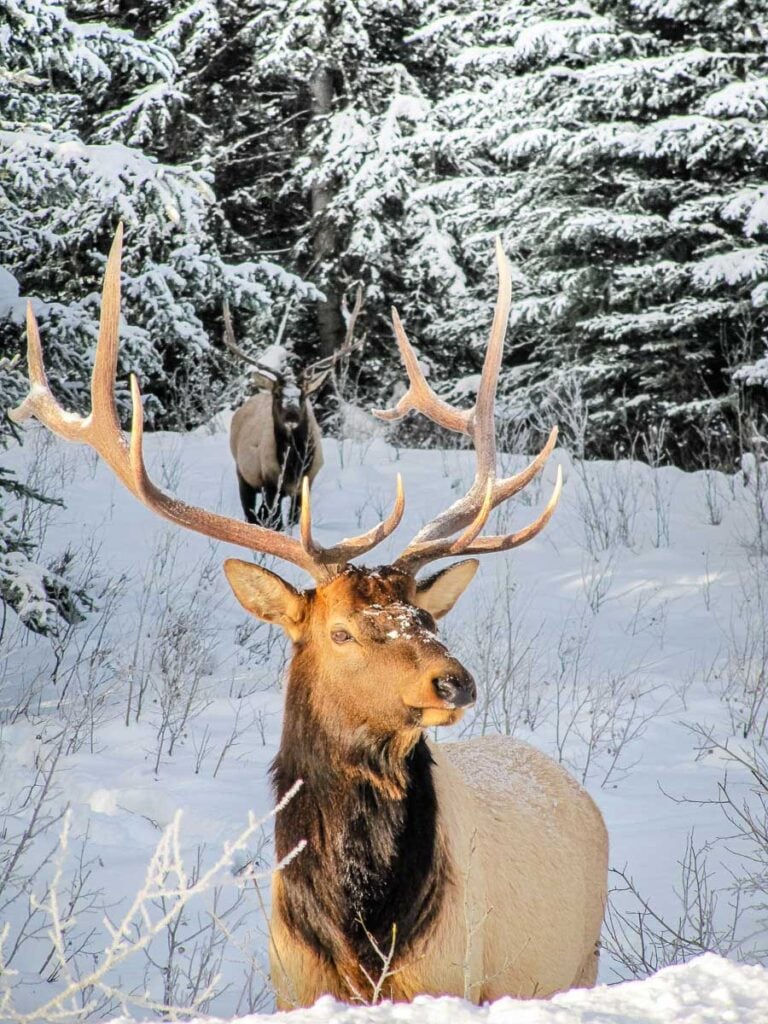
You don’t need to visit Banff in summer to enjoy some excellent wildlife viewing opportunities. Although bears are hibernating in January, animals such as elk, deer, bighorn sheep and coyotes remain active throughout the winter. We’ve been fortunate to see plenty of wildlife during our years exploring Banff National Park, and spotting animals against the snowy mountain scenery is always a highlight.
Winter can actually make certain animals easier to spot, particularly when they’re feeding in open areas or moving through the snow. The Lake Minnewanka Scenic Drive and Bow Valley Parkway are two places worth exploring, although wildlife sightings are never guaranteed. If you’d like to look for animals on your own, our guide to spotting wildlife in Banff shares practical advice from a local wildlife photographer.
If seeing wildlife is a priority during your January visit, we recommend considering a guided Banff wildlife safari. Experienced local guides know where to look for different animals and how to recognize signs of wildlife activity that most visitors would miss. It’s also a great way to learn about how animals survive the harsh Canadian Rockies winter.
A guided tour is especially appealing if you’re visiting Banff without a rental car or would prefer not to drive on winter roads. You’ll have someone familiar with the area taking care of the route, leaving you free to enjoy the scenery and keep an eye out for wildlife. While no tour can guarantee sightings, having an experienced guide can make your wildlife viewing experience much more rewarding.
Local Tip
Looking for discounts on Banff tours and attractions? We have negotiated a wide variety of discounts on many top Banff tours and attractions. For more details, hop on over to our Banff Deals page.
Where to Stay in Banff in January
Choosing where to stay in Banff in January depends on how you plan to spend your winter vacation. If you want easy access to restaurants, shops and SnowDays festivities, staying in downtown Banff is a great option. If skiing, skating and other outdoor activities are your priority, you may prefer staying closer to Lake Louise or in Canmore.
With the Christmas holidays behind us, January can also be a good time to find better hotel rates, especially if you can travel midweek. We recommend starting with our guide to the best hotels in Banff, but here are four excellent places to consider for your January visit.
Banff Springs Hotel
I’ve been fortunate to stay at the Fairmont Banff Springs Hotel several times during winter, and it’s always a special experience. The famous Castle in the Rockies looks incredible surrounded by snow, and there’s something so enjoyable about returning to this beautiful hotel after a cold day exploring Banff National Park.
The Banff Springs is a great choice for travellers looking for a winter getaway at a Banff luxury hotel. Between the heated outdoor pool, extensive spa facilities and excellent dining options, you could easily spend a relaxing day at the hotel when January temperatures are particularly cold. You’re also close to the Banff Upper Hot Springs, the Banff Gondola and the hiking trails around Bow Falls.
If you’re considering a special winter getaway, check rates and availability at the Fairmont Banff Springs. Before booking, be sure to read our Fairmont Banff Springs Hotel review for a closer look at what it’s like to stay at this iconic Banff hotel.

Chateau Lake Louise
Lake Louise is one of our favourite places to visit in January, with so many winter activities right outside the hotel. From skating on the frozen lake and snowshoeing to cross-country skiing and sleigh rides, you won’t have to go far to enjoy some of the best winter experiences in Banff National Park.
For an unforgettable winter stay, it’s hard to beat the Fairmont Chateau Lake Louise. The hotel’s lakeside location is its biggest advantage, especially in January when the lake is frozen and surrounded by snow-covered peaks. We love visiting Lake Louise in winter, and staying at the Chateau would allow you to enjoy the peaceful early mornings and evenings after many day visitors have left.
The Chateau is particularly appealing for couples planning a romantic winter getaway or families who want easy access to outdoor activities without driving between locations throughout the day. It’s also a convenient base for skiing at the nearby Lake Louise Ski Resort.
If you’re tempted by a lakeside stay, check prices and availability at the Fairmont Chateau Lake Louise. Our Fairmont Chateau Lake Louise review will help you decide whether the experience is worth the splurge. You can also explore our recommendations for other Lake Louise hotels.

Moose Hotel and Suites
If you want to stay right in downtown Banff, the Moose Hotel & Suites is an excellent choice. Located on Banff Avenue, it’s within easy walking distance of restaurants, shops and the downtown SnowDays activities. This is especially convenient in January when you might not want to spend too much time outside walking between attractions.
One of the best features of the Moose Hotel is its rooftop hot tubs, where you can relax in the warm water while enjoying views of the surrounding mountains. There’s also an indoor pool, a full-service spa and comfortable rooms and suites, making it a great option for couples and families.
If having everything within walking distance is important to you, check availability at the Moose Hotel & Suites. Its central location makes it easy to enjoy Banff in January without needing to drive every time you want to go out for dinner or explore downtown.

The Malcolm Hotel in Canmore
If you’re considering staying outside Banff National Park, the Malcolm Hotel in Canmore is one of our top recommendations. Located beside Policeman’s Creek, it’s just a short walk from Canmore’s charming downtown, with plenty of excellent restaurants, cafés and shops nearby.
Policeman’s Creek is one of my favourite places for a winter walk in Canmore, and staying at the Malcolm gives you easy access to the scenic boardwalk along the creek. After a day of skiing or snowshoeing, you can return to the hotel’s heated outdoor rooftop pool and hot tubs, with beautiful views towards the Three Sisters.
The Malcolm is an excellent choice for travellers who want to explore both Banff National Park and Kananaskis Country. It’s particularly convenient for activities around Canmore, including cross-country skiing at the Canmore Nordic Centre and snowshoeing in Kananaskis.
If you like the idea of staying in Canmore, check rates at the Malcolm Hotel. It’s worth comparing prices with hotels in Banff, as Canmore can sometimes offer better value, especially after the Christmas holiday period.

Of course, these are just a few of the places to stay in Banff in January. For more options, explore our recommendations for the best affordable hotels in Banff, family-friendly Banff hotels and pet-friendly hotels in Banff.
When we travel as a family, we often prefer vacation rentals for the extra space and convenience of having a kitchen. If you’d rather stay in a condo or vacation home, you can browse Banff vacation rentals or Canmore vacation rentals to find something that suits your group.
| TRAVEL BANFF CANADA
────────────── • ──────────────
Have so many Banff ideas…
but not sure how they fit together?
You can save every post, read every comment, and still not know what’s realistic in one day. The Banff & Jasper Planning Hub helps you connect the lakes, hikes, shuttles, scenic drives, restaurants, and Jasper days into one clear plan.
Workshops
Itineraries
Shuttle help
Restaurants
Discounts
Explore the Banff & Jasper Planning Hub
What to Pack for Banff in January
With such a wide variety of winter activities and widely variable January weather in Banff, it’s hard to know what to bring for your visit. I’m fortunate enough to live near Banff, but we travel widely and have expertise on packing efficiently. Here is what we recommend you pack for a trip to Banff in January:
Warm Clothing
It’s such a cliché, but wearing layers is key to being comfortable in Banff in winter. We cover laying strategies in our post on how to pack for Banff in winter.
In addition to your layers of clothing, you’ll need winter boots, warm socks, winter gloves, a good toque and sunglasses.

Winter Gear
Once you’ve got your layers all sorted, don’t forget to bring along a large hiking daybag to store your layers you don’t need at the moment.

I like to pack light, which for me often means renting equipment instead of bringing my own. There are tons of gear rental shops in Calgary, Canmore and Banff to meet all your equipment needs.
A few small, but useful items I’d recommend you bring to Banff are a thermos, microspikes and hand warmers.
Find Good Snow around Banff in January
When people think of Banff in January, they often think of deep, dark winter. But, in fact, January is still early in the Banff winter season and it can sometimes be hard to find good snow for the many fun winter activities in Banff.
When the ground is lacking snow around the Town of Banff and Canmore, we have a few go-to places to find good snow for some winter fun. In Banff National Park, you’ll often find great snow conditions around Lake Louise.
While in Kananaskis Country, you’ll typically find superior snow pack around the Kananaskis Lakes and the southern reaches of the Smith-Dorrien Highway, especially around the Chester Lake area.

Driving in Banff in January
If you’re planning to rent a car for your visit to Banff in January, be prepared for winter driving conditions. While the Trans-Canada Highway between Calgary and Banff is well maintained and often clear, snowstorms and periods of extreme cold can make driving more challenging. Roads that look clear can also have icy sections, especially early in the morning or after temperatures drop overnight.
We drive around Banff and Kananaskis throughout the winter, and one of our biggest recommendations is to keep your plans flexible. Check the latest road conditions on 511 Alberta before heading out, allow extra driving time and don’t hesitate to change your plans if conditions are poor. If you’re renting a car, we strongly recommend requesting proper winter tires rather than relying on standard all-season tires.
Winter tire requirements are especially important if you’re planning to drive the Icefields Parkway. Tires marked M+S (mud and snow) or with the mountain snowflake symbol, or chains, are required from November 1 to March 31. The Icefields Parkway can be particularly challenging in January, with blowing snow, limited services and occasional road closures.
If you’re visiting Emerald Lake in Yoho National Park or Marble Canyon in Kootenay National Park, you’ll be driving into British Columbia. Approved winter tires or chains are also required on these routes, with winter tire regulations beginning October 1.
If you’d like to avoid winter driving altogether, there are several Calgary airport shuttles to Banff to choose from.

Recommended App
This GPS activated Canadian Rockies Audio Driving Tour is the perfect companion to your Banff vacation. It’s both entertaining and educational and will greatly enhance any drive in Banff National Park. Get 15% off with our Banff Discounts.
Read More
If you’re not comfortable driving on snowy mountain roads, don’t worry. You can still enjoy many of the best winter activities in Banff without renting a car. Our guides to getting to Banff without a car and getting around Banff without a car will help you plan your trip using airport shuttles, public transportation and guided tours.
Park Passes for Banff and Kananaskis
A Banff Park Pass, also known as the Parks Canada Discovery Pass, is required for exploring Banff National Park. You can pick it up as you enter at the Banff Park Gates.
For any of the areas around Canmore and Kananaskis you require a Kananaskis Conservation Pass. This includes the parking lots closest to Canmore like the Canmore Nordic Centre and Grassi Lakes.
Support Human Created Content

Hi, we’re Dan & Celine Brewer, locals from just outside Banff National Park. Every article, itinerary, and recommendation we share is rooted in our real experiences and love for this place. If you’ve found our content helpful, please consider supporting us:
- Make a small donation: Your support directly fuels our work and keeps our stories genuine.
- Purchase a guide or itinerary: Essential tools that help plan your trip and support local creators at the same time.
- Book lodging or tours through our affiliate links: You pay the same price, but we earn a small commission that helps us keep producing content.
Thank you for valuing authentic, human-created content. Your support allows us to help even more Banff travellers!
Love our content? Sharing our post is the easiest way to support us!


Dan Brewer, a life-long Alberta resident, calls Canmore home along with his wife and two kids. He is the co-owner of Travel Banff Canada, where he gets to share his passion for the Canadian Rocky Mountains. Dan, along with his family, love being outdoors doing one of the many activities they enjoy in the mountains: hiking, mountain biking, paddleboarding, skiing, snowshoeing and cross-country skiing.
When he's not in Canmore enjoying one of his favourite local hikes, you can find him hopping on a plane to explore a new country with his family or working on one of their other two travel sites: Family Can Travel and Baby Can Travel.