Winter in Banff is beautiful, but staying comfortable means being prepared for cold temperatures and changing mountain weather. A good Banff winter packing list will help you stay warm and comfortable whether you’re sightseeing around town, walking on snowy trails or spending full days outside. If you’re still deciding how to spend your trip, start with our favourite things to do in Banff in winter.
We are locals who live just outside Banff in Canmore, and winter is one of our favourite seasons in the Canadian Rockies. In fact, we think it’s one of the best times of year to visit Banff, especially if you enjoy snow-covered mountain scenery and winter activities. Our family spends a lot of time outside cross-country skiing, snowshoeing, downhill skiing and enjoying the best winter hikes in Banff, so we’ve learned what actually works for staying warm in Banff winter weather.
In this guide, we’re sharing what we wear and pack ourselves, including the warm layers, winter boots, traction devices and other cold-weather gear we rely on throughout the season. If you’re wondering what to wear in Banff in winter, this list will help you decide what you really need to pack, what you may already own and which winter essentials are worth bringing for the activities you have planned.

This post contains compensated links.
Planning a Winter Trip to Banff?
The Banff & Jasper Planning Hub includes our Banff Winter Travel Guide, with practical winter advice, activity ideas, seasonal tips, and local guidance to help you plan your trip without feeling overwhelmed.
Banff Winter Weather: What to Expect
First, let’s look at the weather you can expect when visiting Banff National Park in winter.
Winter weather in Banff can vary dramatically. Temperatures can fall below -30°C (-22°F) during cold snaps, while Chinook winds can bring much warmer, dry air and rapid temperature changes. Chinook winds are warm and dry, and its warm air can bring a sudden increase in temperature. Wind chill is also a big factor, as the wind can cause temperatures to feel much colder than they are.
Keep in mind that different areas of Banff National Park can also experience different temperatures and precipitation, especially between the town of Banff and higher elevations.

Winter in Banff is a long season, with cold temperatures, snow and winter conditions lasting for several months. Conditions can vary quite a bit throughout the season, so what you experience in November can be very different from a trip in January or March. If you’re still deciding when to visit, see our Banff monthly guides for a closer look at what to expect each month, including weather, seasonal conditions and things to do.
Here are some approximate average temperatures for each of the months from November through March:
November: Highs typically range from 0°C to 6°C (32°F to 43°F). Lows typically range from -8°C to -2°C (18°F to 28°F).
December: Highs range from -7°C to 0°C (19°F to 32°F). Lows range from -13°C to -7°C (9°F to 19°F).
January: Highs range from -8°C to -1°C (17°F to 30°F). Lows range from -15°C to -10°C (5°F to 14°F).
February: Highs range from -5°C to 1°C (23°F to 34°F). Lows range from -13°C to -8°C (9°F to 18°F).
March: Highs range from -1°C to 6°C (30°F to 43°F). Lows range from -10°C to -5°C (14°F to 23°F).
It’s always a good idea to check the Banff weather forecast closer to your travel date for the most accurate and up-to-date information.
What to Wear in Banff in Winter
Banff winters can be cold and unpredictable, which makes a good layering system essential. Layers make it easier to stay warm while adjusting to changing temperatures and activity levels. The basics of a good layering system are a base layer that wicks moisture away, a middle insulating layer and an outer layer to protect from wind, rain or snow.
Here’s a list of essential items for your Banff winter packing list that we recommend to be well-prepared for cold temperatures and snowy conditions:

1. Insulated Waterproof Winter Jacket
A warm winter jacket is one of the most important things to pack for Banff in winter. The right jacket will depend on how you plan to spend your days, since what works well for walking around town or riding the Banff Gondola may feel too warm or bulky for snowshoeing, winter hiking or cross-country skiing.
For most travellers, a warm insulated jacket that works for a range of activities is the easiest choice. A ski or snowboard jacket can work well if you’ll be spending time on the slopes, while a longer parka is great for sightseeing and slower-paced days when you’ll be outside in the cold for longer periods. For more active winter adventures, a lighter insulated jacket or shell combination can be more comfortable.
If you’re only bringing one winter jacket, we recommend choosing the option that will work for most of your plans. I love a long parka for walking around Banff on a cold day, but I would not choose one for snowshoeing or winter hiking, where I’m much more likely to warm up once I get moving.
Down Parka
If you plan to spend most of your time sightseeing around the Banff townsite, up the Banff Gondola, visiting Lake Louise in winter, and other similar activities, you’ll probably want to go with a nice long parka that will keep you warm. Look for one that is longer and has a hood to keep you warm.
If you want a warm winter coat without spending a fortune, the Isla II Womens Long Down Jacket from Mountain Warehouse is a good budget-friendly option for sightseeing and everyday winter wear. The Decathlon Women’s Waterproof Winter Parka is another affordable choice, especially if you want something practical for snowy days around Banff.
If you get cold easily or want a much warmer coat for long periods outside, the Fjallraven Expedition Long Down Parka is the premium option I’d look at. It’s considerably more expensive, and it may be more jacket than you need on milder winter days, but it’s a better fit for travellers who prioritize warmth above everything else.
For men, Mountain Warehouse also has a good selection of warm, affordable winter jackets that are worth checking if you want something suitable for Banff without moving into premium-price territory.

Read More
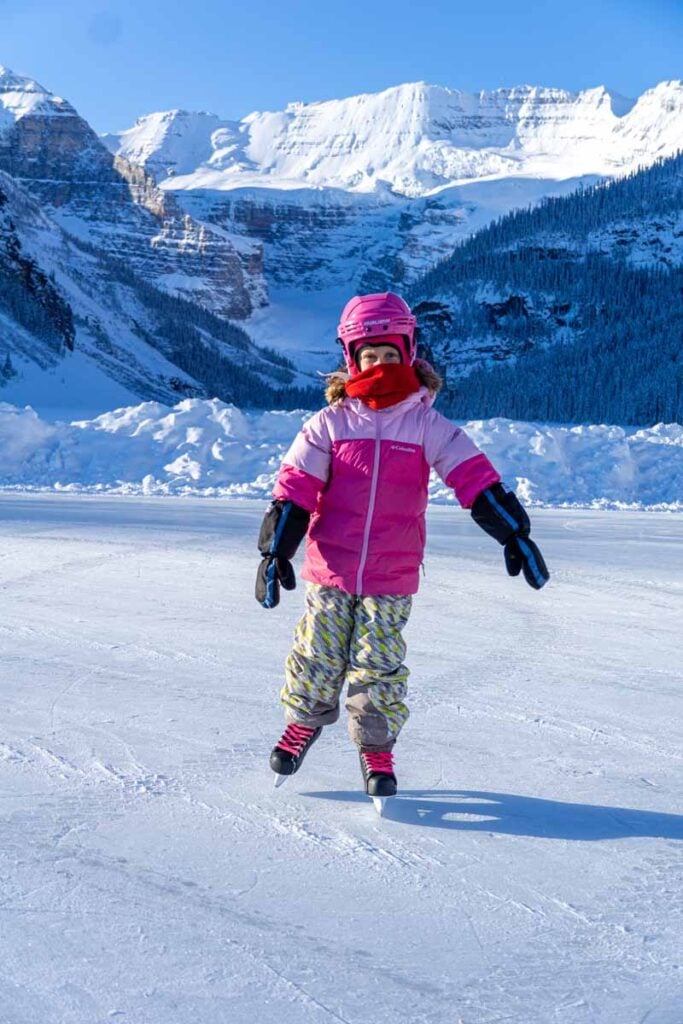
Wild ice skating is one of my family’s favourite winter activities. If you’d like to try it during your winter trip to Banff, don’t miss my guide to ice skating in Banff.
Insulated Jackets & Shells
For more active winter days, I usually prefer a lighter layering system instead of one very warm jacket. I’ll wear an insulated jacket with a windproof shell over top, which gives me much more flexibility for snowshoeing, winter hiking or cross-country skiing. If I start to get too warm, I can remove the insulated layer and keep the shell on for protection from the wind, then put the warmer layer back on when I stop.
If you need to buy winter layers for your Banff trip, Canadian readers can shop insulated jackets and winter shells at MEC, while U.S. readers can shop insulated jackets at REI. Both are good places to compare warm insulated layers, shells and technical winter clothing if you want quality gear you’ll continue using after your Banff trip.
If you don’t live in a cold climate and don’t want to spend a lot on winter gear you may only use occasionally, Amazon can be a good place to look for affordable insulated jackets and winter shells. There are plenty of lower-cost options, so it’s worth comparing warmth, waterproofing and customer reviews before you buy.

2. Insulated Waterproof Pants
Similarly, you’ll want insulated waterproof pants for days on the slopes or for heading out on a snowshoe adventure. You’ll want them to be warm and waterproof. Some added features to look for are venting (especially important if you’ll be sweating) and built-in gaiters to keep snow out of your boots and pockets!
Again, the type of pants you choose will depend entirely on your activity. If I’m skiing or out playing with the kids in the snow, I might go for fully insulated, waterproof pants.
For walking around town, skating or even a short hike, a pair of fleece lined leggings might be good enough if it’s not too cold out. If I’m heading out snowshoeing or cross-country skiing, I’ll probably wear base layers with shell pants over top.

3. Thermal Base Layers
For winter weather, it’s usually better to opt for clothing made from materials specifically designed for cold and wet conditions. Wool and synthetic materials are generally better choices for winter clothing because they insulate well and help manage moisture.
Cotton is not a good choice as it has a tendency to absorb and retain moisture, including sweat. In winter, when staying dry is crucial for warmth and comfort, cotton’s moisture-absorbing properties can lead to dampness and discomfort. Wet clothing can make you feel much colder in cold weather because it draws heat away from your body.
Pack a wool or synthetic base layer as part of your layering system, including tops and bottoms. These can go under your regular clothes, or even under your winter jacket and snow pants. You may want to use a mid-layer for added warmth depending on the weather.
Our whole family wears base layers for winter activities. They help keep us warm while wicking away sweat when we’re working hard, so they’re one piece of winter gear we use constantly.
Kari Traa, Smartwool and Icebreaker are some of my favourite brands for women’s base layer tops and base layer bottoms.
Similarly, for men you can find Smartwool and Icebreaker base layer tops and base layer bottoms.

4. Mid-Layer for Warmth
While you don’t want it to be too bulky, packing a fleece or lightweight down jacket that can be worn under your winter jacket is a good idea for those especially cold days. This insulating layer in combination with your base layer and winter jacket is the best layering system for those extra cold days.
If you are doing something active like snowshoeing, you can remove your top waterproof layer so you don’t overheat. You’ll have it ready to put back on when you stop for a break or if the weather changes.

5. Waterproof, Insulated Gloves or Mittens
Keeping your hands warm is essential. Pack a pair of waterproof, insulated gloves or mitts for everyone. I prefer mitts over gloves because keeping your fingers together helps them stay warmer. If you will be taking a lot of pictures, I recommend getting a pair of glove liners so you can keep your fingers warm while changing the settings on your camera.
For activities like fat biking in Banff, gloves are the only way to go since I need to be able to operate the controls on my bike!
Heated gloves can be a great investment if you struggle with cold hands. Dan gets really cold hands in winter, so he uses his heated gloves all the time for activities like skiing, fat biking and other cold-weather outings.
The downside is that they are more expensive, and I’ve found that some heated gloves are not especially warm once the heat is turned off. Battery life can also be limited. On a recent fat bike outing, my batteries lasted about 2.5–3 hours, so if you plan to be outside for a full day, I highly recommend carrying a spare battery.
For anyone who regularly ends up with really cold fingers, though, heated gloves can make winter activities much more comfortable and are well worth considering.


Need Help Planning Your Banff Winter Itinerary?
The Banff & Jasper Planning Hub includes our 7-Day Banff Winter Itinerary, built from years of exploring Banff in winter to help you plan a realistic, well-paced trip.
6. Wool or Synthetic Thermal Socks
Avoid cotton socks in winter, since they absorb moisture and can leave your feet feeling cold and damp. Wool is a much better choice because it helps manage moisture and can still keep your feet warm even if it gets wet.
We have several brands of socks that we really like. My favourite by far are the Darn Tough socks. I have several pairs ranging from thick socks that I use for winter hiking to thinner options for summer hiking. They are so well made that I’ve never worn out a pair!
I’ve also recently been trying out Silverlight winter socks and so far I’m pretty happy with them. I’ve worn them on a few winter walks and they don’t move around at all while keeping my feet warm. They worked well at keeping my feet warm during a fat bike ride and while cross-country skiing.
Another favourite brand of mine is Smartwool. We all have a pair of Smartwool socks for skiing, except my husband who has recently been enjoying his heated socks.

7. Waterproof, Insulated Winter Boots
Also very important is a pair of waterproof, insulated boots. On those extra cold days, you want to be able to continue exploring with warm, dry feet. There’s nothing worse than when your toes start to hurt from being so cold!
I’m currently wearing a pair of Keen Revel IV High Polar Waterproof Winter Boots. They work so well for all my activities. The wide toe box gives me enough room for heavy socks, and the boot is stiff enough that tightening my snowshoes doesn’t hurt my toes. They’re also high enough to help keep snow out and work well for both winter hiking and fat biking.

8. Gaiters
If you aren’t going to wear waterproof, insulated pants on your adventures, then you’ll want a pair of gaiters to keep snow out of your boots. Gaiters will go over your boots to just below your knee. They are perfect for keeping snow out of your boots!
9. Microspikes (Ice Cleats)
For most packed winter trails around Banff, microspikes are one of the most useful traction devices you can bring. We use our Kahtoola MICROspikes so often that we keep them in the car all winter, and I highly recommend them for icy winter hikes and ice walks.

Snowshoes are better right after a big snowfall or on deeper, less-packed trails. Once popular trails are packed down, microspikes are usually much easier and more comfortable to walk in.
For icy sidewalks around town, you may only need a lighter traction device rather than full microspikes. If you’re not sure which option is right for your trip, see our guide to the best winter traction devices.

10. Warm Hat (Toque)
While we know the myth that you lose most of your heat through your head isn’t true, it’s still important to keep your head and ears warm with a warm hat (or toque, as we Canadians call it).
While I love a nice fashion toque, keep in mind that anything with a pom-pom won’t work under a helmet if you plan to ski or even go on a fat bike tour. So bring a backup to keep your ears warm for more active adventures.

11. Hand and Foot Warmers
Hand and foot warmers are an easy way to add a little extra warmth on cold Banff winter days, especially when you’ll be outside for long periods or doing activities with lots of stops.
We still use disposable hand and toe warmers, but in recent years we’ve started using rechargeable hand warmers much more often. They’re great for keeping in a jacket pocket and warming your hands between activities, and we like that they can be used again and again instead of being thrown away after one use.
For your feet, disposable toe warmers are still the easiest option. They fit inside your boots and can make a big difference on especially cold days. I always put some on my kid’ feet before they begin their ski lessons.
12. Scarf or Neck Gaiter (Buff)
On a cold winter day, the number one item that always gets packed in my bag is a buff. A scarf would certainly work as well, but I find that a buff is so small, yet versatile. I can use it just to keep wind from getting in my jacket, as a face covering or even to replace my toque if it doesn’t fit under a helmet.
My favourite for winter is a polar Buff. One side is fleece, which I prefer as a face covering because it’s looser and easier to breathe through. Every member of our family has one of these and we use them frequently!
This is one of those items that I highly recommend you pack. Even if you don’t end up using it, it won’t take up a lot of space.

13. Sunglasses
The snow on a sunny day is blinding! Fresh white snow can reflect more than 80% of the sun’s UV rays, which can nearly double your UV exposure on bright winter days. Protect your eyes with a good pair of sunglasses and ski goggles for skiing.

14. Sunscreen
Similarly, you’ll want to protect any exposed skin from those UV rays reflecting off the snow. After a full day on the slopes without sun protection, you will be sunburned!

15. Lotion and Lip balm
Trust me when I say you’ll feel the dry air as soon as you land in Calgary. Pack lip balm with SPF, because you’ll be using it daily in our dry winter air. If your hands get dry, you’ll want to pack some hand lotion too.

| TRAVEL BANFF CANADA
────────────── • ──────────────
Saved 27 Banff Posts…
and still not sure your itinerary works?
The problem isn’t a lack of information. It’s too much scattered advice. The Banff & Jasper Planning Hub helps you turn blog posts, shuttle info, Facebook tips, and itinerary ideas into one clear plan.
Workshops
Itineraries
Shuttle help
Restaurants
Discounts
Explore the Banff & Jasper Planning Hub
Other Banff Winter Packing Essentials
16. Day Pack
Bring a day pack to carry your winter essentials, such as water, snacks, and extra layers. Having an extra layer for when you stop for lunch along the trail can keep you from getting too cold. It’s also nice to have a place for your layers when you get too hot while snowshoeing or enjoying a winter hike.
Local Tip
I also pack foam sitting pads for lunch stops to avoid getting wet from sitting in the snow. It’s nice to be able to sit for lunch and still stay warm.

17. Insulated Water Bottle or Thermos
Stay hydrated during your winter activities with an insulated water bottle that helps prevent your water from freezing. We also like bringing a thermos of tea or hot chocolate. Small collapsible silicone cups like these work well for hot beverages, as you can easily hold on to them even filled with a hot drink!
Don’t forget the snacks! High-energy snacks (trail mix, energy bars) are the best for on-the-go fuel.

18. Portable Charger
You’ll be surprised how much faster your phone will lose battery power on those extra cold days. Pack a portable charger so you don’t have to worry about your phone battery dying while you’re out for the day
19. Camera and Extra Batteries
The mountain scenery is so spectacular, you’ll want to pack your camera and lenses. Pack spare camera batteries, and carry an extra one on your daily outings. Batteries can drain faster in cold weather. Also pack a weatherproof camera cover and a lightweight tripod (especially if you want any night or long exposure shots).

20. Swimsuit
At the end of a day playing out in the snow, there’s nothing better than a visit to the Upper Hot Springs or getting into the hot tub at your hotel. Don’t forget to pack a swimsuit!
Related: Banff Hotels with Private Hot Tubs

Winter Driving Essentials for Banff
Whether you are driving to Banff National Park or renting a car, keep a winter safety kit in the vehicle with water, high-energy snacks, candles and matches, extra winter clothing and blankets or sleeping bags. A flashlight and snow brush with an ice scraper are also useful.
Depending on where your adventures will take you, you might want to invest in some maps and guidebooks for the area. If your adventures will take you well outside cell service, a satellite communicator can be worth carrying (or know how to use Emergency SOS via satellite if you have an iPhone 14 or later). You never know when you might find yourself in need of assistance.
Winter tires or chains are mandatory on the Icefields Parkway (Highway 93N) and Highway 93S (Banff-Windermere Highway) from November 1 to March 31, or whenever those highways are covered in snow or ice.

Renting Winter Gear in Banff
Most of the winter gear you’ll need (snowshoes, microspikes, skis/boots) can be rented right in Banff or Canmore, depending on where you are staying. If you have the gear and are driving, you can pack your own.
Support Human Created Content

Hi, we’re Dan & Celine Brewer, locals from just outside Banff National Park. Every article, itinerary, and recommendation we share is rooted in our real experiences and love for this place. If you’ve found our content helpful, please consider supporting us:
- Make a small donation: Your support directly fuels our work and keeps our stories genuine.
- Purchase a guide or itinerary: Essential tools that help plan your trip and support local creators at the same time.
- Book lodging or tours through our affiliate links: You pay the same price, but we earn a small commission that helps us keep producing content.
Thank you for valuing authentic, human-created content. Your support allows us to help even more Banff travellers!

Celine Brewer, a local Canmore resident, is the co-owner of Travel Banff Canada. She has a passion for being out in the mountains any time of year. In the summer, you'll often find her hiking or mountain biking. In the winter, she enjoys cross-country skiing, snowshoeing and winter hiking the most.
As much as she loves the mountains, she also loves travel! When she's not playing outdoors at home, she's either traveling the world with her husband and two kids or working on their other two travel sites: Family Can Travel and Baby Can Travel.