If you’ve never visited Banff in winter, you might be wondering whether it’s really worth the trip. As Canmore locals who spend a lot of time in Banff year-round, our answer is an easy yes. There are so many things to do in Banff in winter, from skating on frozen lakes and skiing to snowshoeing, winter hiking, gondola rides, wildlife watching and seasonal festivals.
What we love most about Banff in winter is the variety. You can spend one day outside in the snow and the next taking it easy with a scenic drive, hot springs or a walk through town. You definitely don’t need to be a skier to enjoy a winter trip, and many of the best Banff winter activities are easy to add to a sightseeing itinerary.
In this guide, we’re sharing the best things to do in Banff in winter, starting with the experiences we think most visitors will enjoy first. We’ll also cover more outdoor adventures, relaxing winter activities, seasonal events and festivals and things to do near Banff, along with practical advice to help you make the most of your trip.
Just come prepared for winter conditions. The right clothing and footwear can make a huge difference, especially if you plan to spend most of your days outside enjoying the snow.
This post contains compensated links.
Planning a Winter Trip to Banff?
The Banff & Jasper Planning Hub includes our Banff Winter Travel Guide, with practical winter advice, activity ideas, seasonal tips, and local guidance to help you plan your trip without feeling overwhelmed.
10 Best Things to Do in Banff in Winter
1. Visit Lake Louise
Lake Louise is one of the places you won’t want to miss on a winter trip to Banff. The famous turquoise water may be hidden beneath snow and ice, but the frozen lake surrounded by snow-covered mountains and Victoria Glacier is every bit as impressive in winter.
There is also much more to do here than simply take in the view. Our guide to Lake Louise in winter covers all the best things to do, along with practical tips to help you plan your visit.
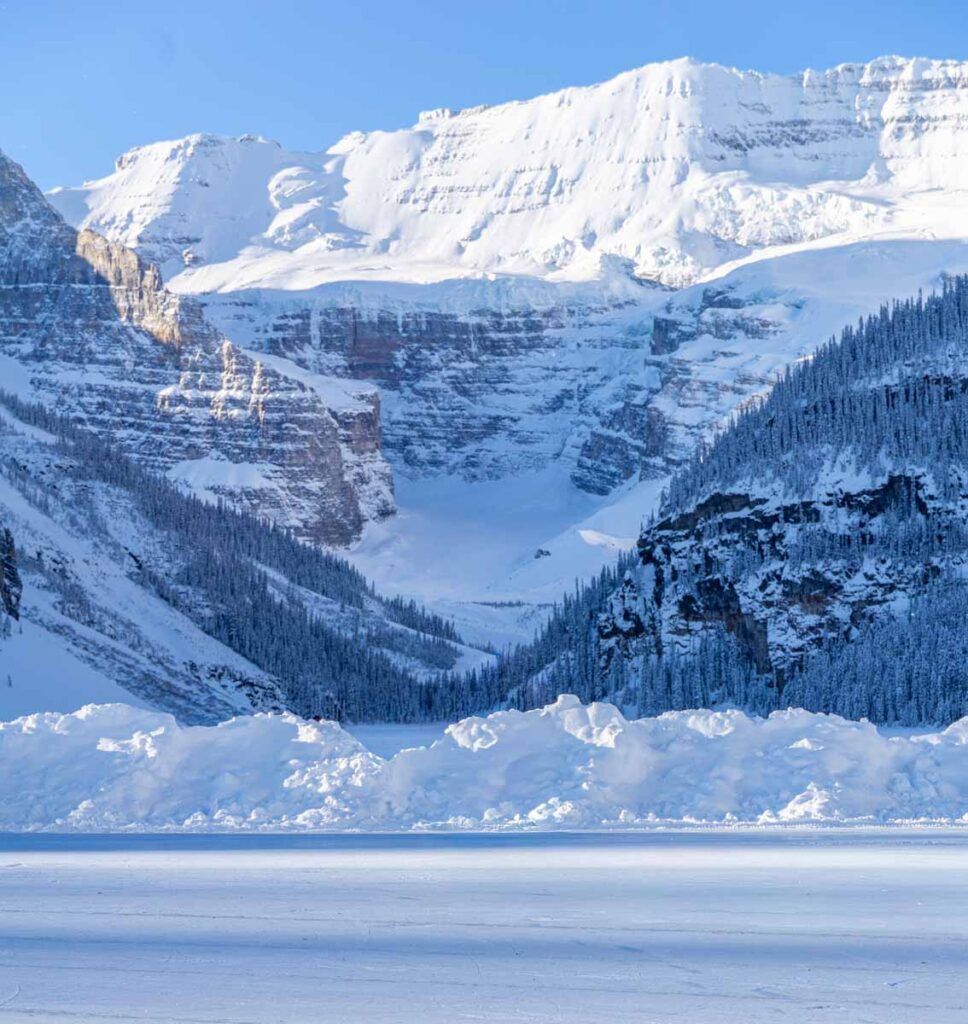
Rather than just stopping for a few quick photos, we recommend giving yourself some time to enjoy Lake Louise. One of the easiest ways to explore is the Lake Louise Lakeshore Trail, which is also one of the best easy hikes in Banff. The mostly flat trail follows the shoreline, giving you beautiful views back toward the Fairmont Chateau Lake Louise and across the frozen lake to the surrounding mountains.
Depending on when you visit, you may also be able to skate on Lake Louise, take a horse-drawn sleigh ride or simply spend some time walking around the lake and enjoying the winter scenery. We cover skating and sleigh rides in more detail below, but even without adding another activity, Lake Louise is well worth including in your Banff winter itinerary.

Lake Louise Winter Tour Recommendation
If you’d rather leave the winter driving to someone else, this Lake Louise and Yoho winter tour by Discover Banff Tours is a great option from Banff. You’ll visit Lake Louise and Emerald Lake, with a scenic drive along the Bow Valley Parkway, lunch at Emerald Lake Lodge and stops that may include Natural Bridge.
2. Ski or Snowboard at Banff’s Ski Resorts
Banff is one of the best places in Canada for a ski trip, with three very different ski resorts inside Banff National Park. Whether you are a complete beginner, travelling with kids or looking for more challenging terrain, there is a good option for almost every type of skier or snowboarder.
Banff’s Three Ski Resorts
Banff Sunshine Village is known for its long season, high elevation and wide range of terrain spread across three mountains. Beginners will find plenty of approachable terrain, and we have a full guide to the best runs for beginners at Sunshine Village if you want help deciding where to start.

Lake Louise Ski Resort is the largest of Banff’s three ski resorts and has an excellent mix of beginner, intermediate and advanced terrain. One thing we really like about Lake Louise is that beginners are not limited to the base area, with green runs at Lake Louise that let newer skiers experience more of the mountain.

Mt. Norquay is the smallest and closest ski resort to the Banff townsite. Its smaller size can make it a great option for a shorter ski day, families and anyone who does not necessarily want to spend an entire day on the slopes.
If skiing is a major part of your trip, our guide to skiing in Banff compares the three resorts in more detail and can help you decide which one is the best fit for your group.
Ski Lessons
If you are new to skiing or snowboarding, taking a lesson can make your first day much more enjoyable. All three Banff ski resorts offer lessons, and they are also worth considering for intermediate skiers who want to improve their technique or feel more confident on unfamiliar mountain terrain.
For families, a lesson can also give kids time with an instructor while parents get a few runs on their own. Just be sure to book ahead during busy holiday periods and weekends.

Night Skiing at Mt. Norquay
Mt. Norquay offers one of the more unusual skiing experiences in Banff with night skiing on select winter evenings. A limited section of the mountain stays open after dark, giving you the chance to ski under the lights with views toward the Banff townsite below.
Heated Chairlifts
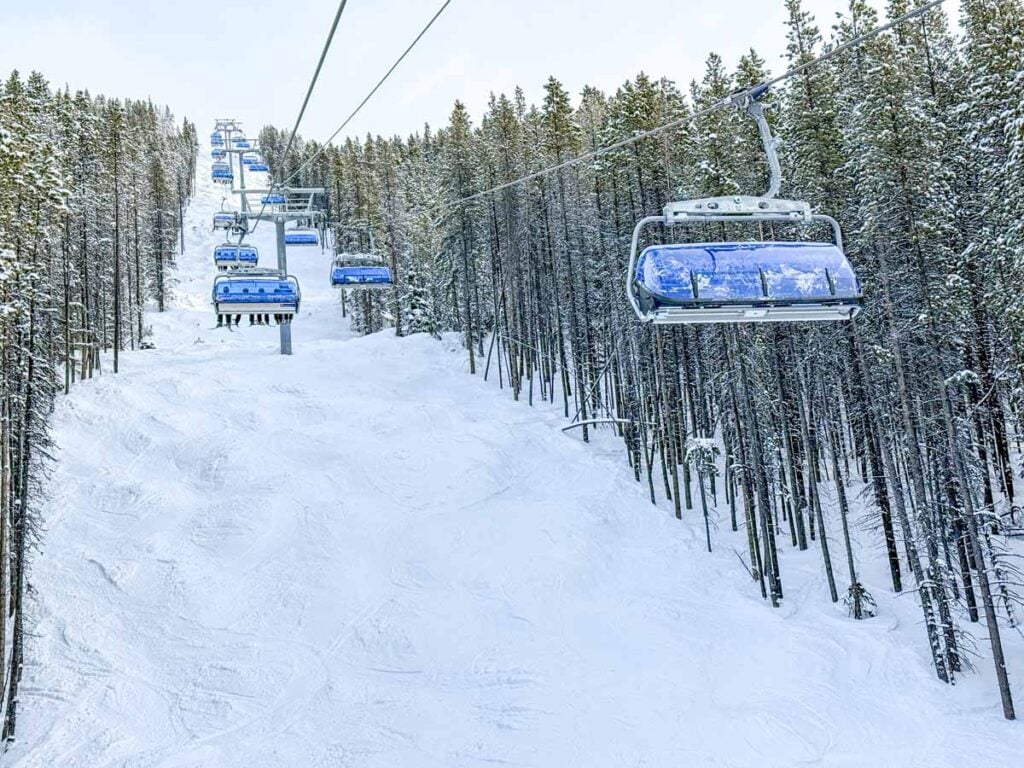
One small luxury we really appreciate on cold ski days is a heated chairlift. Banff Sunshine Village has two heated lifts, TeePee Town LX and Super Angel Luxury Express, both serving terrain on Lookout Mountain.
Lake Louise Ski Resort also has Pipestone Express, a six-person bubble chair with heated seats. While heated lifts are certainly not a reason to choose a ski resort on their own, they are a very welcome bonus when the temperature drops.
3. Skate on Lake Louise or a Frozen Lake
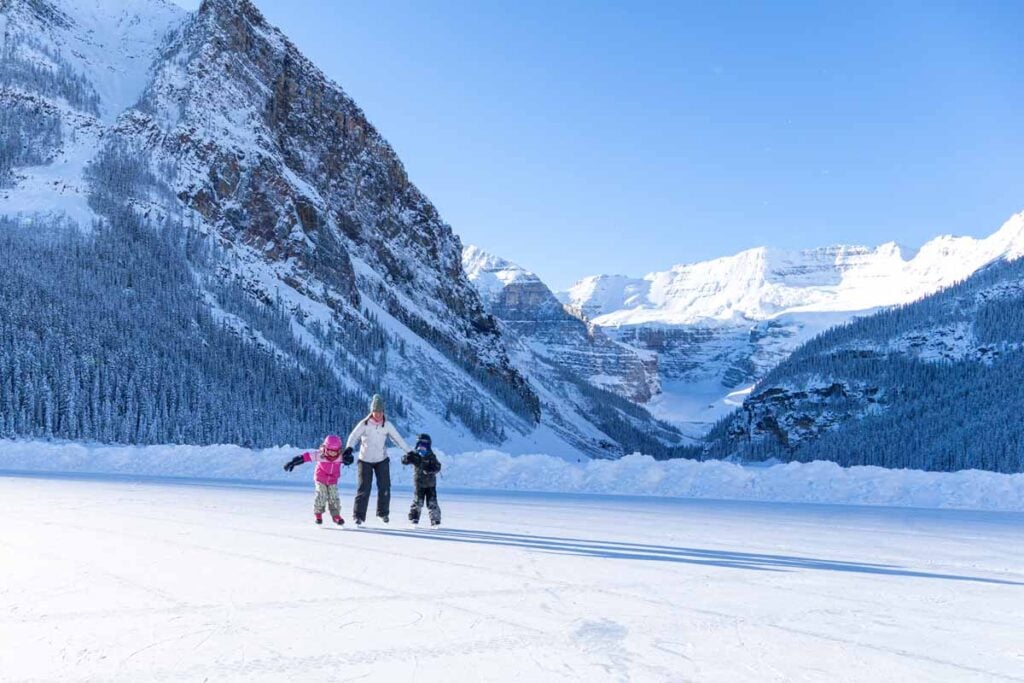
Skating outdoors is one of our favourite winter activities in Banff, especially when you can do it surrounded by snow-covered mountains. The most reliable and popular option is skating on Lake Louise, where a maintained skating area is cleared on the frozen lake once conditions are suitable.
Lake Louise is quite different from skating on natural wild ice. At Lake Louise, the skating area is maintained and conditions are monitored, while lakes such as Johnson Lake are completely natural and can only be skated when the ice is thick enough, smooth enough and free of snow. When those conditions line up, wild ice skating can be incredible, but it is never something we recommend building your trip around.
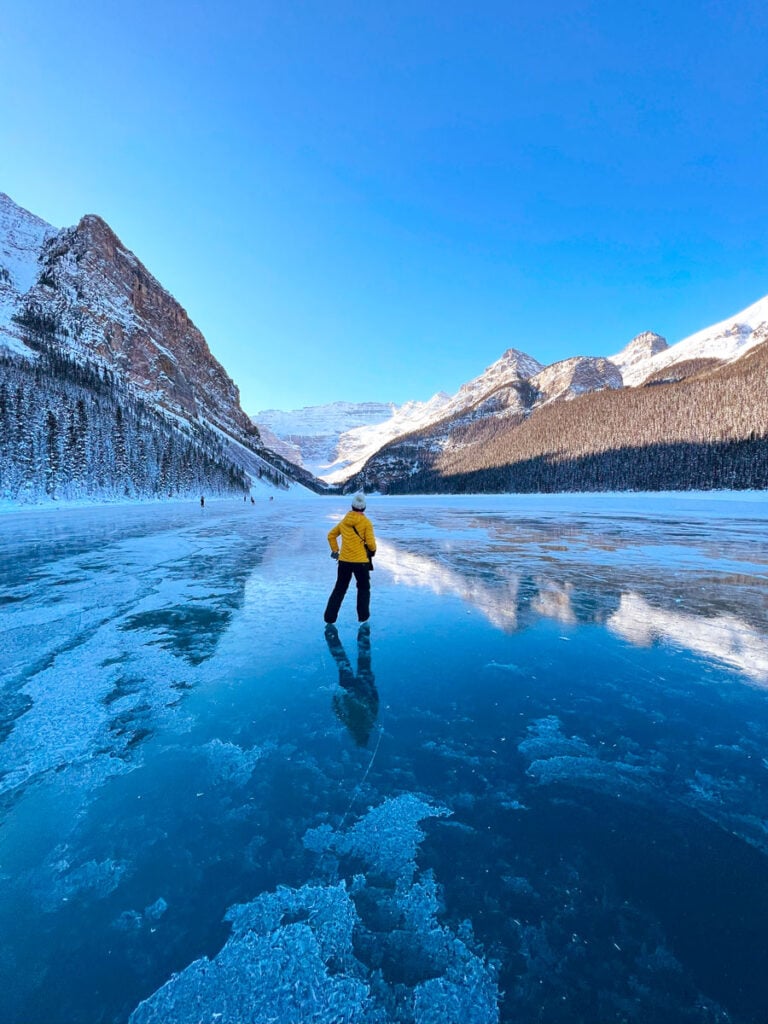
Johnson Lake is one of the better-known places to skate when conditions cooperate, and there are occasionally other lakes around Banff where locals head out on clear ice. Our guide to ice skating in Banff covers the best places to skate, along with what to know about conditions, equipment and safety.

If you are looking for inexpensive ways to enjoy winter in the national park, skating can also be one of the best free things to do in Banff, especially if you already have your own skates.
Good to Know: Natural lake ice is never guaranteed to be safe. Ice thickness and conditions can vary across the same lake, so always check current conditions before heading out and never assume that seeing other people on the ice means it is safe.

4. Ride the Banff Gondola
The Banff Gondola is one of the easiest ways to get high into the mountains in winter without skiing or snowshoeing. The gondola takes you up Sulphur Mountain, where you are rewarded with wide views over the Banff townsite, Bow Valley and surrounding peaks.

At the summit, you can spend time inside the interpretive centre, take in the views from the observation areas and walk along the boardwalk toward Sanson’s Peak when conditions allow. It is an easy winter sightseeing experience that works especially well for families, mixed-ability groups and anyone looking for a break from more active days.

For travellers who do not ski, the gondola is one of several good things to do in Banff for non-skiers. It gives you the mountain scenery people come to Banff for, without requiring any special equipment or experience.
Good to Know: Winter conditions at the summit can be much colder and windier than in the Banff townsite, so dress warmly even if the weather feels mild below.
5. Take a Winter Icewalk
Walking through a frozen canyon is one of the most unique winter activities around Banff. There are two excellent places to do an icewalk: Johnston Canyon in Banff National Park and Grotto Canyon in Kananaskis Country, just outside the national park near Canmore.
Both can be done independently, but icy trails are part of the experience. We always carry microspikes for winter hikes like these, and we strongly recommend having proper winter traction devices rather than relying on regular hiking boots alone.

Johnston Canyon Icewalk
We’ve hiked Johnston Canyon in every season, but winter is one of our favourite times to visit. The canyon is usually much quieter than it is in summer, and seeing the Lower and Upper Falls transformed into huge walls of blue ice makes the familiar trail feel completely different.
The trail follows the same elevated catwalks through the canyon that you use in summer, but winter conditions can make them very icy. We always pack our microspikes, and we recommend continuing all the way to the Upper Falls. We’ve often watched ice climbers making their way up the frozen falls while we’re there, which is an added bonus.

You can easily visit independently if you have the right gear. Our complete guide to hiking Johnston Canyon covers the Lower and Upper Falls, trail distances, parking, winter conditions and everything else you need to plan your visit.
Johnston Canyon Icewalk Tours
If you’d rather have someone else take care of the winter driving and equipment, a guided icewalk is a great option.
Johnston Canyon Icewalk
This popular four-hour tour includes transportation from Banff, ice cleats, hiking poles and a certified guide who leads you through the canyon to the frozen Upper Falls. The small-group format also gives you the benefit of learning about the canyon while enjoying the scenery, rather than simply walking the trail on your own.
Johnston Canyon Evening Icewalk
For something a little different, the evening tour takes you through Johnston Canyon after dark using a headlamp, with the frozen Lower Falls as the destination. It’s also shorter at about 2.5 hours and includes transportation, ice cleats and hiking poles, making it an easy winter evening activity from Banff.

Grotto Canyon Icewalk
For a very different icewalk experience, head east of Banff to Grotto Canyon in Kananaskis Country. Instead of walking on elevated catwalks, much of this hike takes you right along the frozen canyon floor, which can become a long sheet of blue ice when conditions are right.
We’ve done the Grotto Canyon ice walk many times, and conditions can look completely different from one visit to the next. Some years we’ve walked on beautiful blue ice for much of the canyon, while other visits have had considerably more snow covering the ice.

Once you enter the narrow canyon, you’ll experience high rock walls, an icy canyon floor and frozen waterfalls at the far end. There are also ancient pictographs along the canyon walls, although they are surprisingly easy to miss. It took us years of visiting Grotto Canyon before we finally spotted them.
As with Johnston Canyon, you can do Grotto Canyon independently with proper winter footwear and traction. If you don’t have the gear or would rather go with someone who knows the canyon, there is also a guided option.
Grotto Canyon Icewalk Tour
This four-hour guided tour includes transportation from Banff, ice cleats, hiking poles and a certified guide, so you don’t need to buy or rent your own equipment. The tour follows the frozen canyon past icefalls and rock formations in a small group, with the guide adding context about the canyon’s history and landscape along the way.
6. Go Snowshoeing in Banff
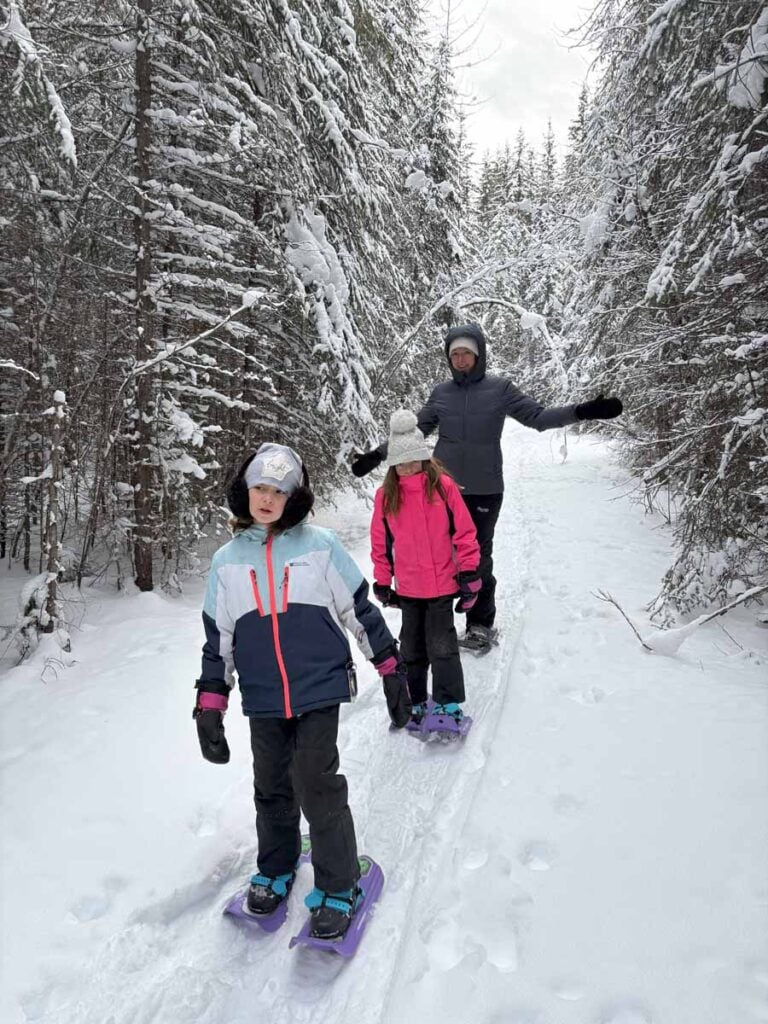
Snowshoeing is one of our favourite ways to spend a winter day in Banff National Park. It gets you out into the snowy landscape without needing any special skills, and there are good options for everyone from complete beginners to families and more experienced hikers.
Snowshoe on Your Own
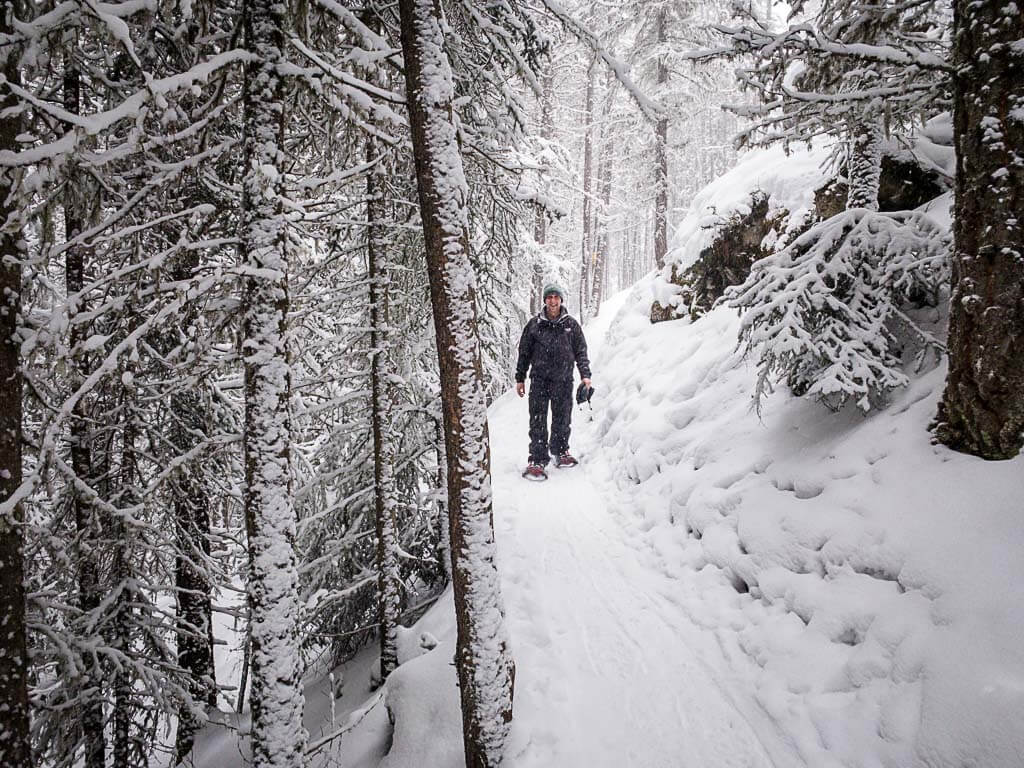
We’ve been snowshoeing around Banff and Lake Louise for years, and one thing we’ve learned is that you do not always need snowshoes. Popular trails can get packed down quickly after a snowfall, so we usually bring both snowshoes and microspikes and decide what makes the most sense once we see the trail conditions.
Some of our favourite easier options include Johnson Lake, the Lake Louise Lakeshore and Fairview Lookout. We’ve also enjoyed longer outings such as the Ink Pots via Moose Meadows and Upper Stoney Lookout, which we’ve done with our kids. The downhill section on Upper Stoney is always a good reward after the climb.

Our guide to the best snowshoe trails in Banff includes ten routes with distances, elevation gain, difficulty and practical tips for each one. It is the best place to start if you want to choose a trail that fits your group.
If you are staying in Lake Louise or want to spend a full winter day there, we also have a separate guide to the best snowshoe trails in Lake Louise. It covers several of our favourite routes around the village and lakeshore area, with options ranging from easy outings to more challenging snowshoe trips.
One important caution is that not every summer hiking trail is appropriate in winter. Some routes enter avalanche terrain, so stick to established winter trails unless you have the appropriate avalanche training and equipment.

Read More
For even more snowshoeing trails in the Canadian Rockies, check out our list of the best snowshoe trails in Kananaskis Country.
Take a Guided Snowshoeing Tour
A guided snowshoe tour is a great option if you do not have your own equipment, are new to snowshoeing or simply want someone else to choose the route and handle the logistics.
Snowshoeing to the Paint Pots
This four-hour, family-friendly tour is a good introduction to snowshoeing, with an easy route through the Vermilion River Valley to the Paint Pots. Snowshoes, poles, hotel transportation and a guide are included, along with some very Canadian extras like maple taffy, hot chocolate and sledding.
Among the Trees Winter Adventures
Among the Trees is a good choice if you want a smaller, more personalized experience. Their winter options include private and family snowshoe adventures around Banff, Kananaskis, Yoho and Kootenay, with the route tailored to your group’s pace and interests.
Sunshine Meadows Snowshoeing Experience
For something more adventurous, this four-hour tour uses the Sunshine Village gondola and chairlift to reach the backcountry near Sunshine Meadows before heading out on snowshoes. It is a great option if you want deeper snow, big mountain views and an experience that would be difficult to recreate on your own.
7. Go Dog Sledding
Looking for a uniquely Canadian winter activity in Banff National Park? Look no further than dogsledding in Banff or Lake Louise. Even young children can go dog sledding on some tours, making this a fun family activity. Just make sure everyone dresses extra warmly, to keep the experience as enjoyable as possible.
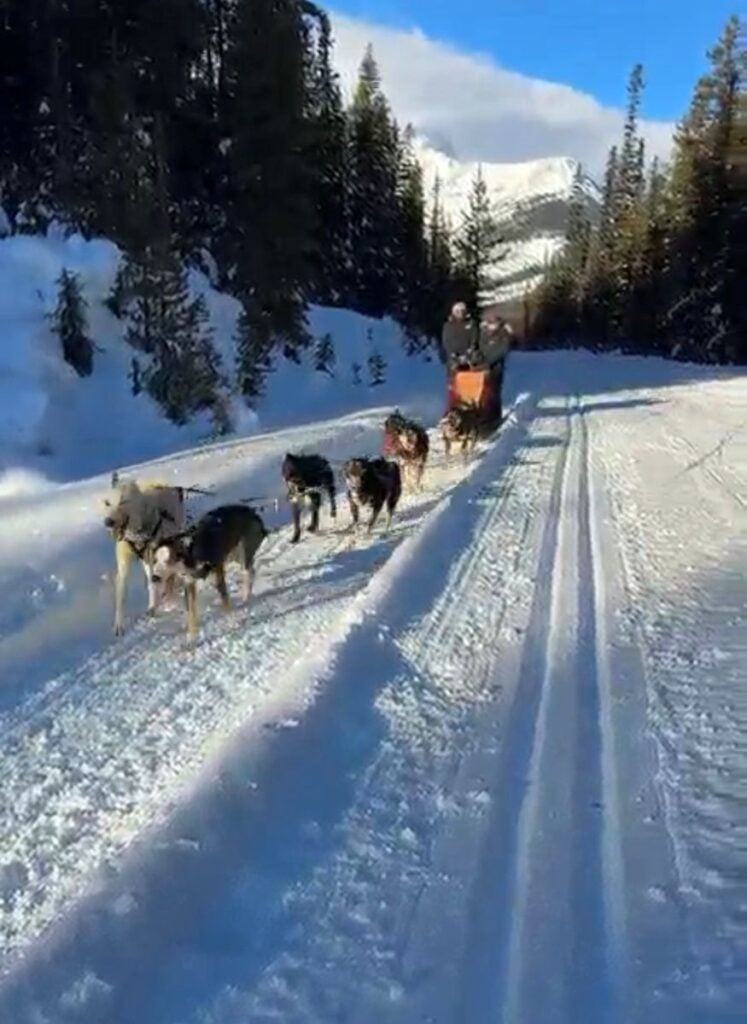
There are several companies that offer dog sledding in Banff, Lake Louise and Canmore/Kananaskis:
8. Take a Horse-Drawn Sleigh Ride
There are few winter activities in Banff National Park more magical than a horse-drawn sleigh ride. There are two incredible backdrops you can choose for your Banff winter sleigh ride:
Bundle up under a blanket and take in the incredible scenery at Lake Louise with a horse-drawn sleigh ride. Whether you book a private sleigh ride for two or join a group ride, you’ll sit in awe at the towering snow-capped mountains and the ice falls at the end of the Lake Louise lakeside trail.

This is a quintessential thing to do at Lake Louise in the winter that will make everyone in the family happy. Kids especially will love this Lake Louise winter activity.
It’s recommended to make reservations for a Lake Louise sleigh ride in advance. This can be done through Brewster Adventures.
You may also enjoy a horse-drawn sleigh ride in the meadows near the Town of Banff. Enjoy the views of the majestic snow-covered Cascade Mountain and Mount Rundle, while you cozy up to your loved ones. End your sleigh ride with a warm drink next to a crackling campfire.
Local Tip
Looking for discounts on Banff tours and attractions? We have negotiated a wide variety of discounts on many top Banff tours and attractions. For more details, hop on over to our Banff Deals page.
9. Soak in the Banff Upper Hot Springs
After all that time playing out in the snow, give your body a soak in the Banff Upper Hot Springs. As you sink deeper into the water, you can say goodbye to all those aches from playing hard on the ski hill or exploring the Banff snowshoe trails. Not only will your muscles thank you, but you won’t forget the incredible experience of sitting in the steamy hot water as snow falls down around you.

10. Go Winter Hiking
You don’t need skis or snowshoes to enjoy Banff’s trails in winter. Many popular trails become well packed as the season goes on, and with warm winter boots and the right traction, winter hiking is one of the easiest ways to get out into the mountains.
It’s also one of our favourite free things to do in Banff. Aside from your Parks Canada pass and the winter gear you already have, there is no admission fee or expensive equipment rental required.
Easy Winter Walks
If you want something short and low commitment, there are several easy winter walks that still give you excellent mountain scenery. The Lake Louise Lakeshore Trail is nearly flat and lets you walk along the edge of frozen Lake Louise, while the Fenland Trail is a peaceful forest loop right from the Banff townsite.
Another favourite is the short walk to the Peyto Lake viewpoint. The trail is covered in snow in winter, but it is only about 1.1 km return with minimal elevation gain. We wouldn’t drive the Icefields Parkway just for this walk, but it makes an excellent stop as part of a winter sightseeing day.
These easy walks are especially good things to do in Banff for non-skiers who still want to spend time outside and experience the mountains in winter.

Winter Hikes
If you want something with a little more effort, there are several winter hikes around Banff that give you a great payoff without requiring a big mountain day.
Tunnel Mountain is one of our favourites. The climb is steady, but at 4.6 km return it is manageable for many hikers, and you’re rewarded with excellent views over the Banff townsite and Bow Valley. We’ve done Tunnel Mountain many times as a family, and it’s a great choice for kids who are comfortable with some uphill hiking.

We also really like the Surprise Corner to Hoodoos Trail when we want a longer winter outing without a huge amount of climbing. You start with a beautiful view of the Fairmont Banff Springs, then follow the trail above the Bow River toward the Hoodoos with views of Mount Rundle along the way.

Another option is Upper Stoney Lookout near Mt. Norquay. We’ve done this winter hike countless times while our kids were taking ski lessons at Norquay. Most of the climb is through the forest, but the viewpoint over Cascade Mountain and the Bow Valley makes the uphill worthwhile.
For all the details, our guide to the best easy winter hikes in Banff includes twelve of our favourite trails, with distances, elevation gain, difficulty and tips from our own winter hikes.
Good to Know: Even an easy trail can be much more difficult in winter. Snow, ice and changing weather can affect conditions quickly, so check the trail before you go and bring appropriate traction for icy sections.


Need Help Planning Your Banff Winter Itinerary?
The Banff & Jasper Planning Hub includes our 7-Day Banff Winter Itinerary, built from years of exploring Banff in winter to help you plan a realistic, well-paced trip.
More Outdoor Winter Activities in Banff
11. Cross-Country Ski in Banff National Park
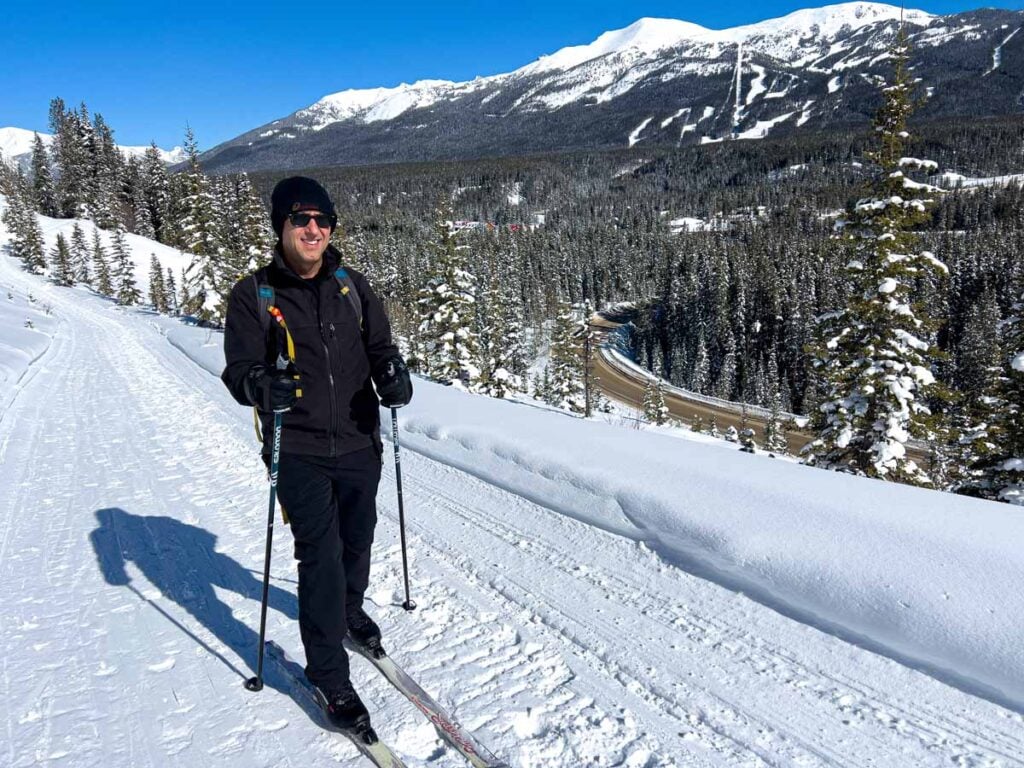
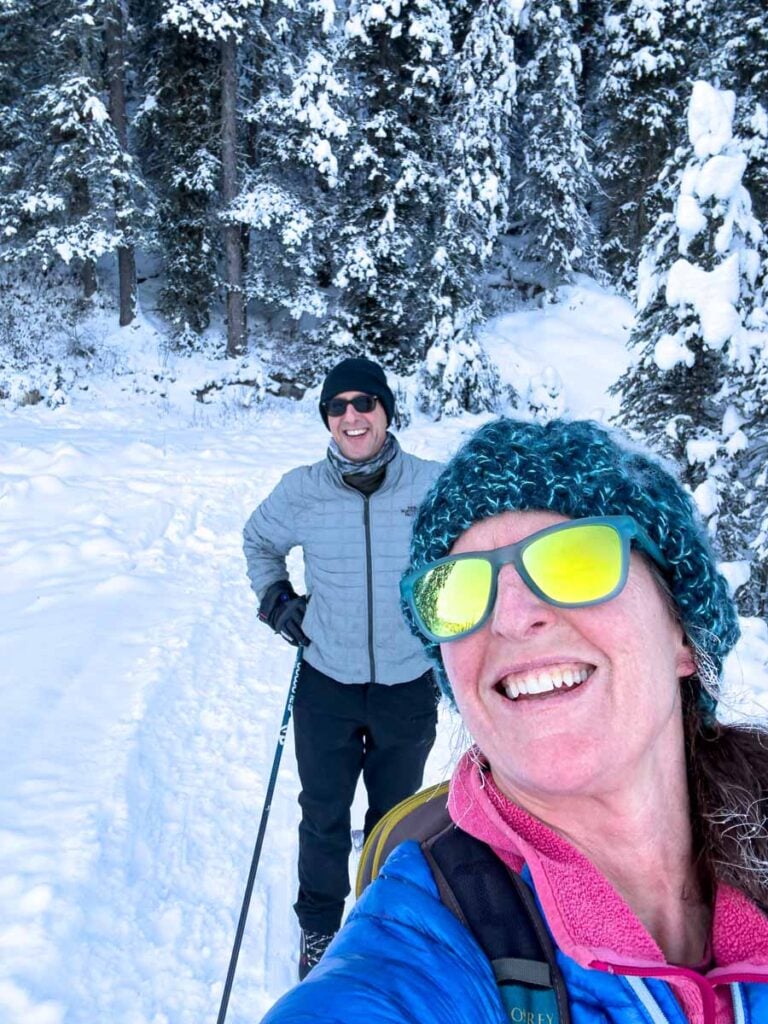
Cross-country skiing is one of our favourite Banff winter activities. There are excellent options around both Banff and Lake Louise, from short, mostly flat loops to longer outings with more climbing.
For beginners, the Lake Louise Campground Loop is a great place to practise, while the Great Divide Trail is one of our favourite early-season options because Lake Louise often gets skiable snow before the Banff townsite.
We also really enjoy the Cascade Valley Trail near Lake Minnewanka. It is longer, but the gradual climb on the way out means you are rewarded with a much easier return, and the mountain views make the effort well worth it.
For more ideas, our guide to the best cross-country ski trails in Banff includes 10 easy and moderate routes with distances, elevation gain, difficulty and our first-hand tips for each one.
12. Go Snow Tubing
Snow tubing is one of the easiest Banff winter activities to add to your trip, especially if you are travelling with kids or have non-skiers in your group. There is no special skill required, and both Mt. Norquay and Lake Louise Ski Resort have dedicated tube parks.
We’ve tried both, and they feel quite different. Mt. Norquay has the bigger tube park with longer runs and more variety, so we like it when tubing is the main activity for the afternoon. When we went on a warm Saturday after a cold snap, it was very busy and the lines were long, but the lanes were still a lot of fun.

At Lake Louise, the Sunny Tube Park is smaller and more relaxed. We often add it onto a ski day there, and because the hill is short, we usually just walk our tubes back up instead of waiting for the magic carpet. In our experience, it has also been much less crowded than Norquay.

Our complete guide to snow tubing in Banff compares Mt. Norquay and Lake Louise, including what each tube park is like, who they are best for and our first-hand tips for planning your visit.
Local Tip: If you want to avoid the biggest crowds, try to go midweek. Weekends and warmer days after a cold spell can be noticeably busier.
13. Try Fat Biking
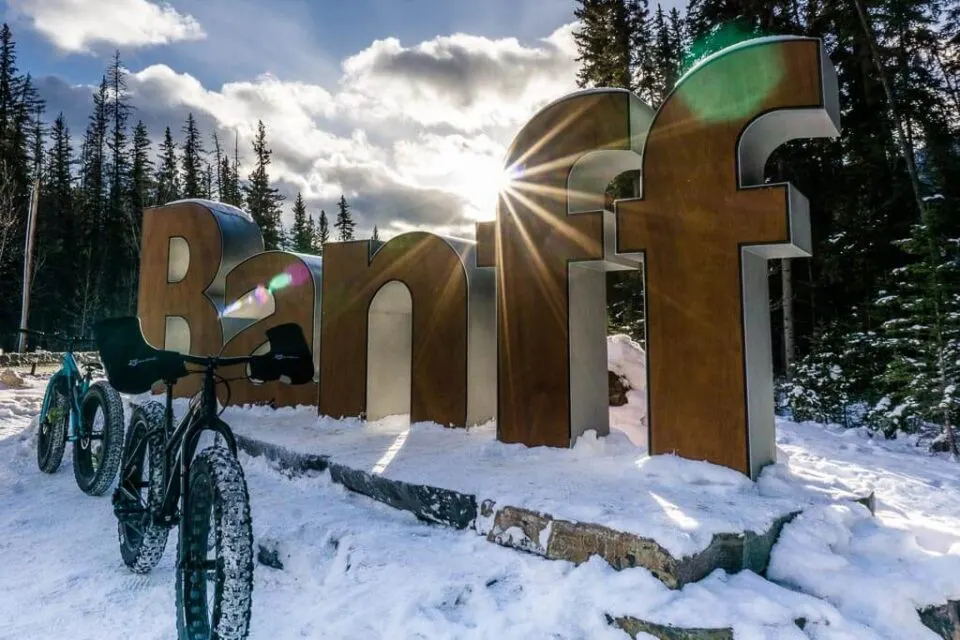
Fat biking is a fun way to explore Banff in winter, especially if you already enjoy mountain biking. The oversized tires give you much more grip on packed snow than a regular bike, but conditions still matter. Fresh snow can make the riding much harder, while firm, well-packed trails are much more enjoyable.
We’ve fat biked around Banff, Canmore and Kananaskis, and some of our favourite rides are the ones that let you cover more ground without committing to a huge day. Around Banff, the Fenland Trail and Vermilion Lakes area are good places to start, while stronger riders can look at longer routes around the Bow Valley.

If you are new to fat biking, renting a bike or joining a guided tour can make the experience much easier. A good guided option is the Bikescape winter fat bike tour. It’s a great choice if you want to try fat biking without worrying about choosing a route, renting the right bike or figuring out winter trail conditions on your own.
You can find our favourite routes, rental ideas and first-hand tips in our guide to fat biking in Banff, Canmore and Kananaskis.
Good to Know: Fat biking is very dependent on snow conditions. If the trail is soft enough that your tires are leaving deep ruts, it is usually better to choose a different route or wait for firmer conditions.
14. See Frozen Waterfalls
Frozen waterfalls are one of the easiest ways to see how dramatically Banff changes in winter. You don’t need to be an ice climber to enjoy them either, with several impressive frozen falls accessible by short walks or easy winter hikes.
Louise Falls is one of the best examples. The waterfall at the far end of the Lake Louise Lakeshore Trail freezes into a huge wall of blue and white ice, and the walk along the frozen lakeshore gives you plenty of mountain scenery along the way. It’s an easy addition to a winter visit to Lake Louise and one of the most rewarding short walks in the area.

You can also see frozen waterfalls at Johnston Canyon, where both the Lower and Upper Falls become heavily iced over in winter. We cover Johnston Canyon in more detail in the icewalk section above, but even if you are not taking a guided tour, it is well worth seeing the frozen falls with proper winter traction.
Another good option is Troll Falls in nearby Kananaskis Country. The short, family-friendly hike leads to a frozen waterfall tucked against the cliffs, making it a great choice if you want an easy winter outing with a good payoff.

Good to Know: Ice buildup can look very different from week to week depending on temperatures and recent snow. Later winter often brings thicker ice formations, but fresh snowfall can cover some of the blue ice.
15. Try Ice Climbing
Ice climbing is one of the more adventurous things to do in Banff in winter, but beginners can give it a try with an experienced guide who provides the technical equipment and instruction. This guided ice climbing tour in Banff is designed for both first-time and experienced climbers, making it a great option if you want to try climbing a frozen waterfall without needing your own gear or previous ice-climbing experience.

16. Go Tobogganing
Tobogganing is a simple, family-friendly way to add some fun to a winter day in Banff, especially if you are travelling with younger kids. Good options include the hill near Fairmont Chateau Lake Louise, which is especially well suited to younger children, and the Banff Recreation Grounds, where there is space for winter play close to town.
You don’t need much time or special equipment, so it can be an easy activity to fit between sightseeing stops. Just be sure to check the hill and run-out area before you start, as snow and ice conditions can change quickly.

17. Go Stargazing
Stargazing is an easy way to enjoy Banff after dark. Clear winter nights can be excellent for seeing the stars, especially once you get away from the brighter lights of the Banff townsite, and it pairs well with a quieter evening after skiing, hiking or sightseeing.
If you’d rather make more of an experience out of it, this Banff sunset and stargazing tour is a good option. It combines an easy guided evening walk with sunset views and time outside after dark, making it a nice choice for travellers who want something low-key but still memorable.

Let me Help with Your Banff Itinerary?
We have a suite of Banff Travel Planning services that can take all the guesswork out of planning your trip! Book a 1 hour travel consultation or let me create a custom Banff Itinerary for you!
Winter Sightseeing & Relaxing Things to Do in Banff
18. Explore the Banff Townsite
Banff Avenue is well worth some time on a winter trip, even if you have a full schedule of outdoor activities. You can wander through the shops and galleries, stop for coffee or something warm to eat, and enjoy the mountain views right from the middle of town.
The townsite is especially nice later in the day, when the lights come on and the streets feel a little more relaxed after the daytime crowds thin out. Around Christmas and during the winter festival season, you’ll also find seasonal lights and decorations throughout downtown Banff, which make an evening walk feel that much more festive.

If you have extra time, branch off Banff Avenue onto Bear Street and some of the quieter side streets. It’s an easy, low-effort way to spend part of an afternoon or evening, especially on a colder day when you want to mix sightseeing with time indoors.
19. Take a Scenic Winter Drive
One thing we love about winter in Banff is that you don’t have to go far to find incredible scenery. Even a simple drive through the national park can be rewarding, but if you have time, the Bow Valley Parkway and Icefields Parkway are two of our favourite scenic drives in Banff.
The Bow Valley Parkway is the easier option if you want a relaxed half-day outing. It runs between Banff and Lake Louise and has a slower pace, plenty of places to stop and a good chance of seeing wildlife along the way. We often use it when we have extra time rather than taking the Trans-Canada Highway, especially if we are already planning a stop at Johnston Canyon.
The Icefields Parkway is a much bigger commitment, but the winter scenery is hard to beat. We’ve driven it many times in every season, and in winter the snow-covered peaks and quieter road make it feel especially dramatic. Just remember that services are limited, there is no cell coverage for long stretches, and winter driving conditions can change quickly, so this is not a drive to take lightly when the weather is poor.
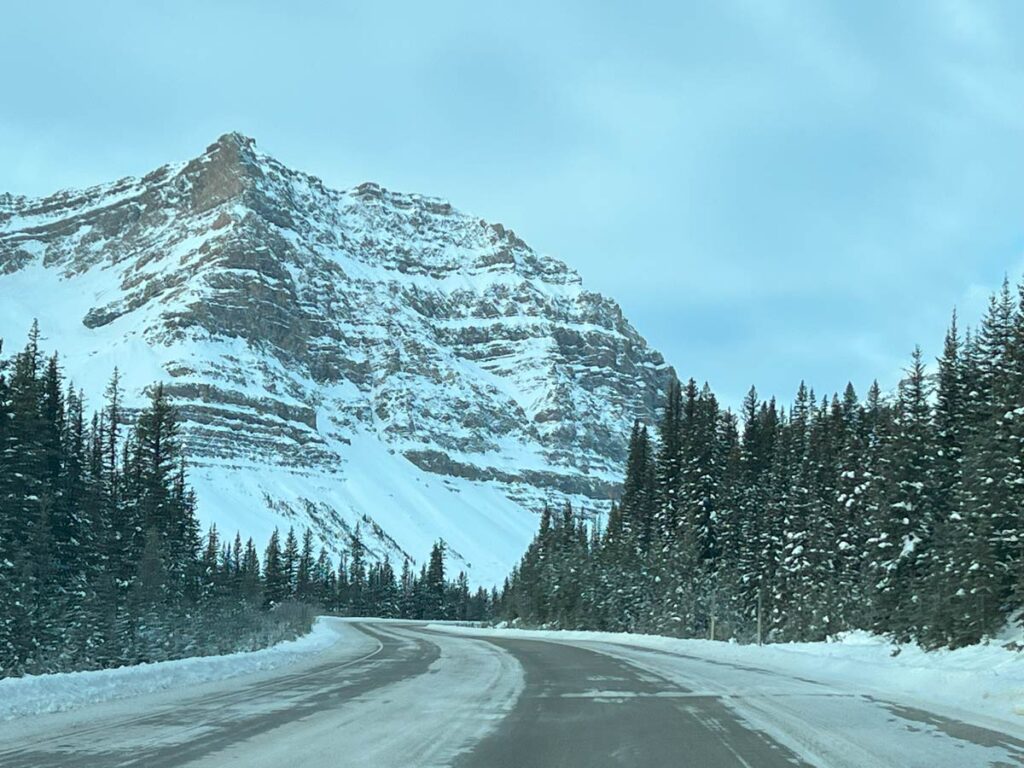
Our guide to the best scenic drives in Banff covers twelve routes, including the Bow Valley Parkway, Icefields Parkway, Lake Minnewanka Scenic Drive, Tunnel Mountain Road and several shorter drives around Banff.
We also really like using the GuideAlong Canadian Rockies audio tour on driving days. It works with GPS as you travel, so you get stories, history and recommendations at the right points along the route without having to constantly look things up.

Recommended App
This GPS activated Canadian Rockies Audio Driving Tour is the perfect companion to your Banff vacation. It’s both entertaining and educational and will greatly enhance any drive in Banff National Park. Get 15% off with our Banff Discounts.
20. Visit Banff’s Best Viewpoints
You don’t need a long hike to enjoy some of the best winter views in Banff. A few of our favourite viewpoints are easy to reach by car or a short walk.
Morant’s Curve can be especially impressive in winter when a train comes through with snow-covered mountains in the background. Surprise Corner and the Hoodoos Viewpoint are also worth visiting, and we like combining them into a winter hike when conditions are good. Cascade Ponds is another easy stop, not only for the mountain views but also because it can be a fun place to add some sledding if you are travelling with kids.
Our guide to the best viewpoints in Banff includes more of our favourite stops, with practical tips on where to go, how much time to allow and which viewpoints are easiest to combine into the same outing.

21. Ride the Lake Louise Sightseeing Gondola
If you are spending time in Lake Louise but are not skiing, the Lake Louise winter sightseeing gondola is an easy way to get high into the mountains and take in the views. The ride gives you a completely different perspective over the Lake Louise area, with wide views of the surrounding peaks and glaciers.
Unlike the Banff Gondola, there are no facilities at the top in winter, so this is much more about the gondola ride and mountain views than spending a long time at the summit. Dress warmly, especially on colder or windy days, and plan this as a relatively easy sightseeing stop rather than a full half-day experience.

22. Look for Wildlife
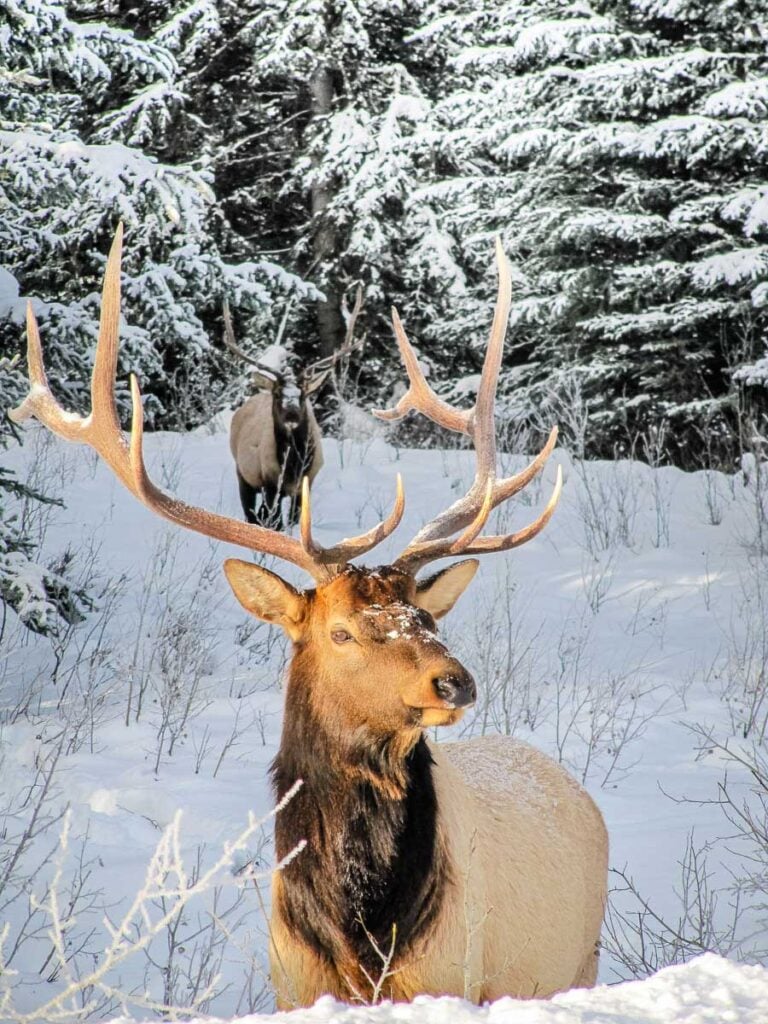
Seeing wildlife is always a highlight of a Banff trip, but winter sightings can be very different from summer. Elk, deer and bighorn sheep are among the animals you are more likely to see, while wolves, coyotes and foxes are possible but much less predictable. Bears are generally hibernating through the heart of winter, so don’t plan your day around trying to see one.
We’ve had some of our best wildlife sightings simply by being patient, driving slowly when it is safe to do so and paying attention to the edges of forests and open areas. Our guide to where to see wildlife in Banff includes our favourite locations, tips from a local wildlife photographer and important advice for watching animals safely without disturbing them.
If wildlife is high on your wish list, the Banff Evening Wildlife Safari is well worth considering. The two-hour tour includes Banff hotel pickup and a certified guide who chooses the route based on recent wildlife activity, so you benefit from local knowledge rather than simply driving around hoping to spot something. Wildlife is never guaranteed, but the tour is timed for the evening when animals are often more active and involves little to no walking.
Please respect all animals by keeping your distance and never feeding an animal or trying to entice it closer.
23. Take Winter Photos in Banff
Winter is a great time for photography in Banff, with snow-covered peaks, frozen lakes, wildlife and much softer light than you get during the long summer days. You don’t need to be a serious photographer either. Some of the easiest places for photos are Lake Louise, Vermilion Lakes, Two Jack Lake, Cascade Ponds and viewpoints around the Banff townsite.
We often plan short photography stops into regular sightseeing days rather than setting aside an entire day. Sunrise and sunset are also much easier to catch in winter, and fresh snow can completely change a familiar viewpoint from one day to the next.

Book a Professional Photo Shoot
If you would rather come home with photos that include everyone in your group, a professional photo shoot can be well worth it. We recently booked a Flytographer session at Lake Minnewanka and really liked having someone else handle the locations, posing and timing while we could simply enjoy the experience as a family.
A winter photo shoot can work especially well for couples, families or anyone celebrating a special trip to Banff, and the snowy mountain backdrop does most of the work for you.

CAPTURE YOUR BANFF TRIP
Turn your Banff memories into photos you’ll actually want to frame. Save $25 on your first Flytographer photoshoot.
24. Warm Up Somewhere Cozy
After a few hours outside, there is nothing wrong with building a warm-up stop into your Banff winter day. Grab a coffee or hot chocolate, find a fireplace or comfortable hotel lounge, and give yourself time to thaw out before heading back outside.
Good options include Whitebark Cafe on Banff Avenue for coffee and hot chocolate, Rundle Bar at the Fairmont Banff Springs if you want somewhere a little more relaxed to sit for a while, or Chimney Corner at Sunshine Village if you are already spending the day on the mountain.
If you are visiting between mid-November and early February, you will also see the Hot Chocolate Trail pop up throughout Banff and Lake Louise, with participating cafés, restaurants and hotels creating special seasonal hot chocolates. We cover that in more detail in the winter festivals section below.

24. Visit a Banff Museum
A museum is a great option when you want a break from the cold or have a quieter afternoon to fill. The Whyte is open year-round and focuses on the art, culture and history of the Canadian Rockies, while the Buffalo Nations Museum shares the cultures, traditions and history of the First Nations peoples of the Northern Plains and Canadian Rockies. Both are right in Banff and easy to fit into a day in town.
You can also visit the Cave and Basin National Historic Site in winter, which is open Thursday through Monday in winter. It is not technically a museum, but it is one of the best places to learn more about the history of Banff National Park and makes a good indoor stop on a cold day.

| TRAVEL BANFF CANADA
────────────── • ──────────────
Have so many Banff ideas…
but not sure how they fit together?
You can save every post, read every comment, and still not know what’s realistic in one day. The Banff & Jasper Planning Hub helps you connect the lakes, hikes, shuttles, scenic drives, restaurants, and Jasper days into one clear plan.
Workshops
Itineraries
Shuttle help
Restaurants
Discounts
Explore the Banff & Jasper Planning Hub
Banff Winter Festivals & Seasonal Events
25. Experience SnowDays in Banff
If you are visiting Banff in late January or early February, the SnowDays Festival is well worth building into your plans. For 2027, SnowDays runs from January 21 to February 7, with snow sculptures, family activities, evening events and other winter experiences happening around Banff and Lake Louise.
We’ve taken our kids to SnowDays many times over the years, and it’s a fun way to add something different to a winter trip to Banff. Our complete guide to the Banff SnowDays Winter Festival covers the main events, where to find them and our tips from attending the festival as a family. If your trip falls in January, our guide to visiting Banff in January also has plenty of practical advice for planning around the coldest part of winter.
See the Snow Sculptures
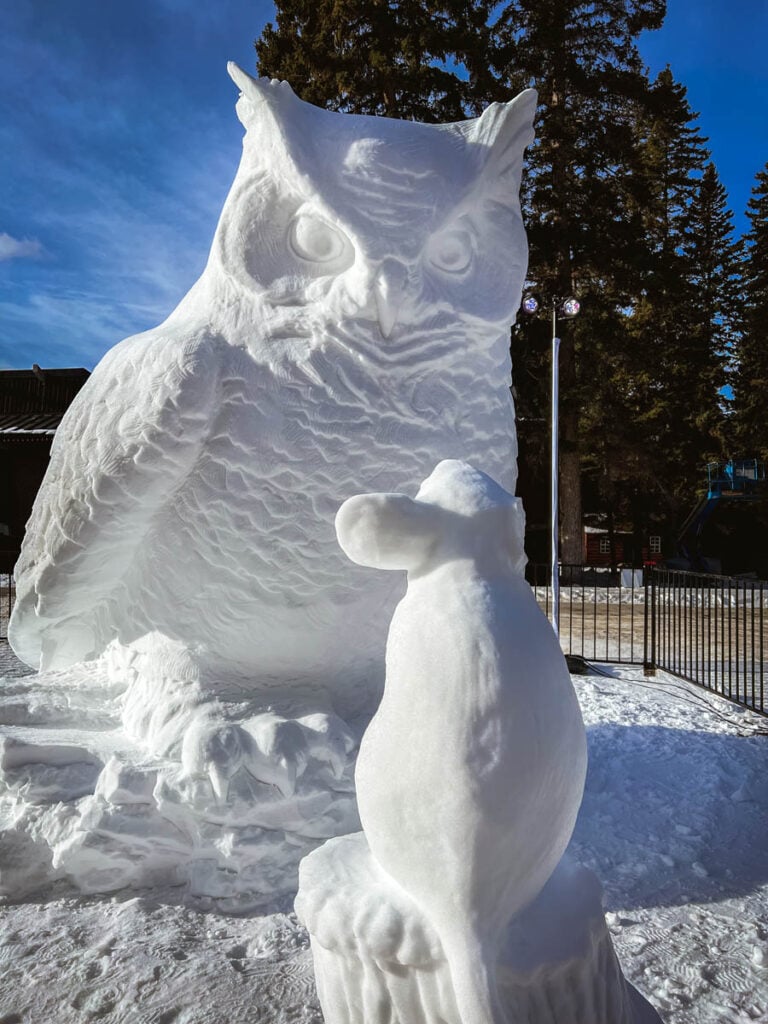
The giant snow sculptures around downtown Banff are one of our favourite parts of SnowDays. We’re always impressed by the variety, and in past years we’ve seen everything from animals to elaborate snow globes carved from huge blocks of snow.
The sculptures are typically displayed at several locations around Banff, including Central Park, Mason Hall and Bear Street. They are free to see throughout the festival and are lit at night, so this is an easy activity to combine with dinner or an evening walk through town.
Visit the SnowDays Play Zone
Families should also make time for the SnowDays Play Zone in Central Park. We’ve brought our kids in previous years, and the activities change from one festival to the next. In the past they have been able to try things like skiing, snowboarding, fat biking, tubing and other winter activities without committing to a full day or renting equipment separately.
For 2027, the Play Zone is open on select Thursdays through Sundays, with activities including classic Canadian games, fat biking and curling. Admission is free, making it one of the easiest family-friendly SnowDays activities to add to your itinerary.
SnowDays also includes evening programming, the Bear Street Hub and the Hot Chocolate Trail, which runs from November 12, 2026 to February 7, 2027. If you are already exploring downtown Banff, it is worth checking the current festival schedule to see what else is happening that day.

26. See Ice Magic at Lake Louise
Ice Magic is one of the most impressive winter events at Lake Louise. We’ve been going for years, and it is always fun to see huge blocks of ice transformed into detailed sculptures with Lake Louise and the surrounding mountains as the backdrop. Our guide to the Lake Louise Ice Magic Festival explains what to expect, when to go and how the event works.
Access is now much more restricted than it used to be. For 2027, Ice Magic runs February 3 to 7, tickets are required, and access is limited to guests of participating Lake Louise hotels and local community members from Mînî Thnî to Field.

27. Experience Christmas in Banff
Christmas is one of our favourite times to be in Banff. By December, the town is fully into winter, Banff Avenue is lined with lights and decorated storefronts, and there are seasonal events happening throughout Banff and Lake Louise.
A walk along Banff Avenue after dark is an easy way to enjoy the atmosphere, but there are also several special events worth planning around. For 2026, In Search of Christmas Spirit runs on select dates from November 12 to January 3, the Banff Christmas Market runs on select dates from November 19 to December 13, and A Very Vintage Mountaintop Christmas at the Banff Gondola runs on select dates from November 21 to December 31.
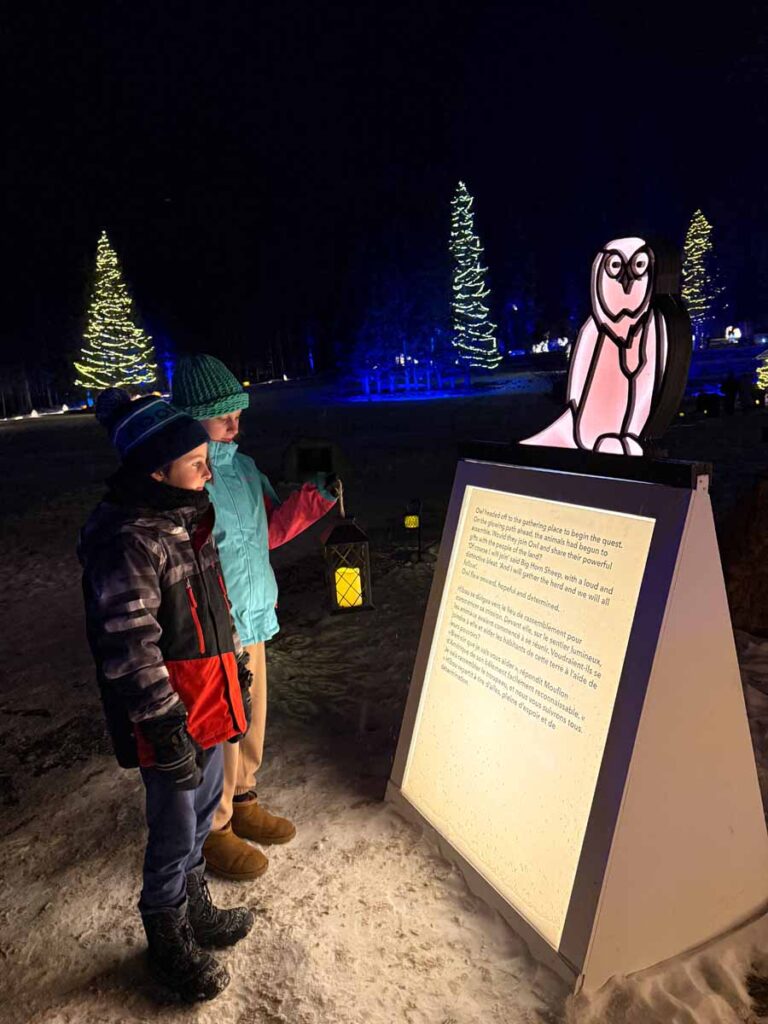
The Fairmont Banff Springs is also especially festive at this time of year. We’ve stayed there during the Christmas season several times, and the decorations alone make it worth stopping by. For 2026, Christmas at the Castle runs from December 14, 2026 to January 5, 2027, with festive activities and dining offered for hotel guests.
If you are visiting earlier or later in the month, our guide to Banff in December is the better place to start. It covers December weather, winter activities, driving, where to stay and what to expect throughout the month, not just over Christmas week.
Our guide to Christmas in Banff covers the best Christmas activities, markets, Santa experiences, festive dining and practical tips for planning a holiday visit.

28. Banff Mountain Film Festival
The Banff Centre Mountain Film and Book Festival sits right at the edge of Banff’s winter season, but it is worth mentioning if you are visiting in late October or early November. The 2026 festival runs from October 31 to November 8 and includes adventure films, guest speakers, authors, exhibitions, live music and other mountain-themed events at Banff Centre and around town.
You can check the current schedule and buy tickets through the Banff Centre Mountain Film and Book Festival. If your trip falls around the festival, our guide to Banff in November will also help you plan around early-winter weather, seasonal closures and which winter activities are likely to be operating.
29. Banff Winter Carnival at the Cave and Basin
The Banff Winter Carnival takes place at the Cave and Basin National Historic Site. It’s full of fun for the entire family with mini curling, box hockey and other fun winter games and activities. This Banff winter carnival first started in 1917, so don’t miss the opportunity to see vintage films and photos from those early days of the carnival!
The Banff Winter Carnival typically takes place daily from 11 am to 5 pm from late November to late March 30. It’s free as part of your admission. Dates for the 2026/27 Banff Winter Carnival have not been announced yet.
Plan Your Banff Trip With Locals -> Free
78k+ travellers & locals swap real‑time tips inside our Travel to Banff Facebook community.
• Ask any question & get answers in hours
• See updates for Banff & area
• Share your draft itinerary for feedback
Winter Things to Do Near Banff
30. Spend a Winter Day in Canmore
Canmore is only a short drive from Banff, and it’s well worth spending part of a winter day here if you have room in your itinerary. We live in Canmore and love that you can combine an easy walk, mountain views, good food and a little shopping without needing to spend the whole day driving between activities.
Start with a walk along Main Street, where you’ll find local shops, art galleries and plenty of places to stop for coffee or lunch. From there, it’s easy to wander down toward the Bow River, where the riverside paths give you beautiful views of the surrounding mountains, including the Three Sisters.

If you want to add an easy winter activity, Canmore has plenty of options nearby, including skating, fat biking, snowshoeing in Kananaskis and cross-country skiing at the Canmore Nordic Centre. You can also keep things simple with a walk through town followed by lunch or dinner at one of Canmore’s many restaurants.
Our guide to the best things to do in Canmore in winter includes all of our favourite winter activities, indoor options, family-friendly ideas and local tips for planning a day here.
31. Have a Spa or Wellness Day
What’s better than a spa day after a week of winter activities? My favourite in the area is the Kananaskis Nordic Spa. Though it’s a bit of a drive from Banff, it’s well worth it with the series of hot, warm, and cold plunge pools, along with steam rooms, saunas, and relaxation areas, all set against the backdrop of the stunning natural beauty of the Kananaskis region.
32. Go Ice Fishing in Kananaskis
Interested in a truly Canadian experience? Give ice fishing a try! As a child, my dad used to take me out on the frozen lakes in winter to fish. I’m glad to see that ice fishing these days is much more comfortable in warm shelters than it was when I used to go!
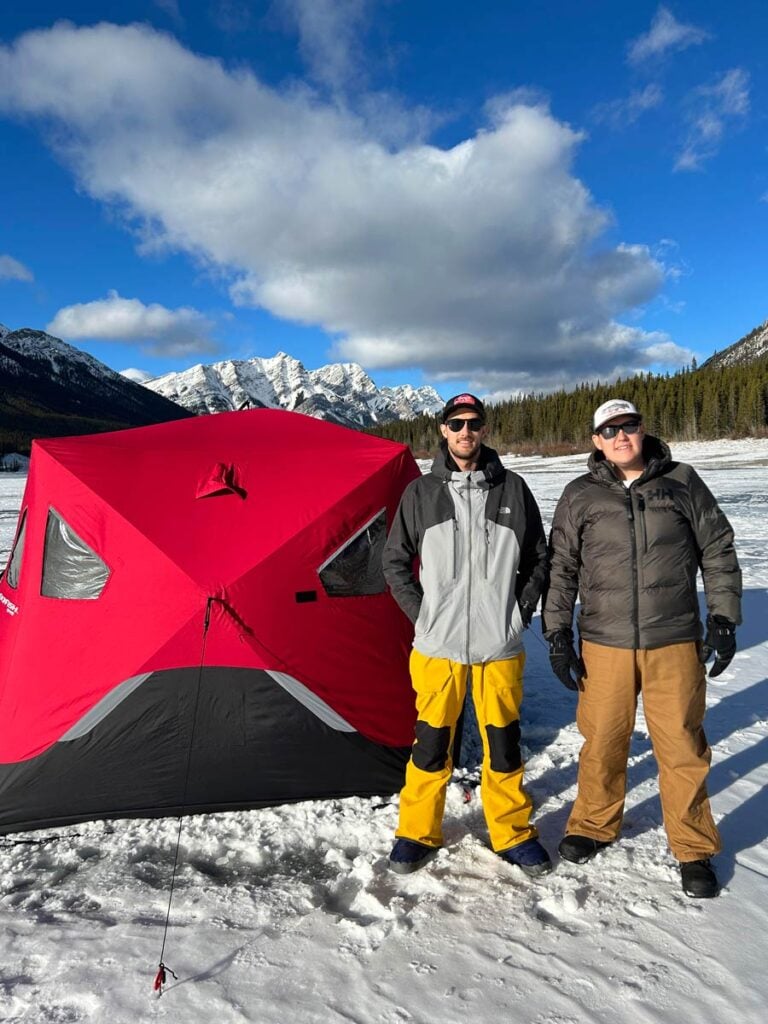
While you’ll need to go into Kananaskis for ice fishing, it will be worth the trip! Make sure you dress warmly for the day (including winter boots, snow pants, winter jacket, toque and mitts).
Ice fishing adventures can be booked with Fish On Adventures.
Banff Winter Weather
Winter weather in Banff can have a big impact on your trip, but don’t let the cold temperatures scare you off. We spend a lot of time outside throughout the winter, and with the right clothing, even cold days can be very enjoyable.
The bigger challenge is that conditions can change quickly. A mild afternoon can be followed by a very cold morning, so check the forecast regularly and plan some flexibility into your Banff winter activities.
How Cold Does Banff Get in Winter?
December, January and February are typically the coldest months in Banff. Daytime temperatures are often below freezing, and overnight temperatures can get much colder. During a cold snap, temperatures can drop below -30°C.
Thankfully, those extreme temperatures usually don’t last all winter. We also get plenty of beautiful winter days when the sun is shining, the wind is calm and being outside is surprisingly comfortable.
The key is dressing properly. Layers, insulated winter boots, warm mittens and a toque make a huge difference, especially if you are planning outdoor activities where you won’t be moving constantly.
Not sure how to dress in layers for Banff winter weather? Our Banff winter packing list explains what to wear to stay warm and comfortable throughout your trip.
Chinooks and Changing Winter Weather
One of the interesting things about winter in the Canadian Rockies is how quickly the temperature can change. Chinook winds can bring dramatically warmer air into the region, sometimes pushing temperatures above freezing even in the middle of winter.
We’ve had winter days where it feels bitterly cold in the morning and considerably warmer by afternoon. The opposite can happen too, so we never rely too heavily on a forecast from several days earlier when planning outdoor activities.
This changing weather is another good reason to pack layers. It’s much easier to remove a layer when you warm up than to discover halfway through the day that you didn’t bring enough.
Daylight Hours in Winter
Winter days in Banff are much shorter than summer, especially around December and early January. Rather than thinking of this as a drawback, we find it makes sunrise and sunset much easier to enjoy without getting up extremely early or staying out late.
The amount of daylight increases noticeably as winter progresses, so a March trip gives you considerably more time for outdoor activities than a December trip. No matter when you visit, check the sunrise and sunset times for your actual travel dates rather than relying on one set of winter times.
Shorter days also mean it pays to start longer winter hikes, scenic drives and other outdoor adventures earlier than you might in summer. We always leave ourselves a comfortable margin to finish before dark, especially when trail or road conditions could slow us down.
Read More
Learn more about visiting Banff in winter in our guide to visiting Banff by season.
How to Pack for Banff in Winter
Packing properly can make a huge difference to how much you enjoy Banff in winter. You’ll want warm layers, insulated boots, a good winter jacket, mittens, a toque and traction for icy trails, but rather than repeat the full list here, we’ve put everything into one detailed guide.
Our complete Banff winter packing list covers what to wear, what footwear works best, which winter accessories are worth bringing and the extra gear we recommend for outdoor activities. It’s the best place to start if you’re unsure what you’ll actually need for your trip.

Skijoring in Banff: Gone, But Not Forgotten
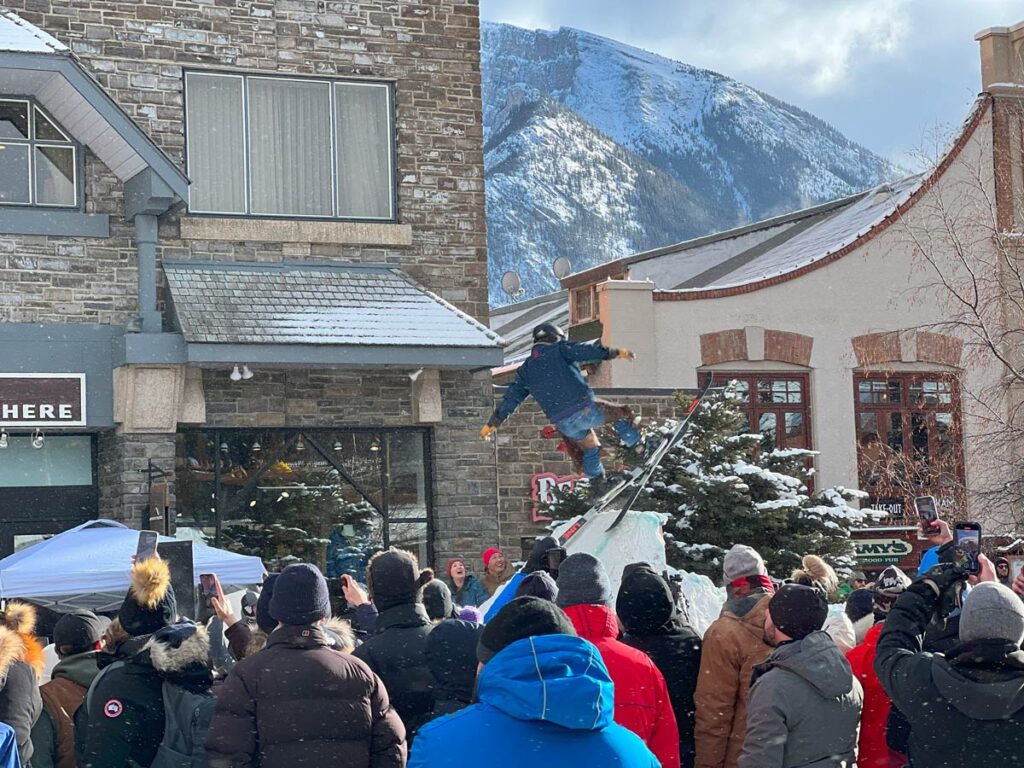
Don’t know what skijoring is? That’s ok, most people don’t! As part of the SnowDays Festival in Banff, you can bear witness to this fun activity! While there’s probably a lot more to it, from an inexperienced observer the skiers are pulled at high speeds where they’ll impress you with their jumps.
Unfortunately, Banff & Lake Louise Tourism decided not to continue skijoring in Banff after the event became too popular for the townsite to manage safely.
Support Human Created Content

Hi, we’re Dan & Celine Brewer, locals from just outside Banff National Park. Every article, itinerary, and recommendation we share is rooted in our real experiences and love for this place. If you’ve found our content helpful, please consider supporting us:
- Make a small donation: Your support directly fuels our work and keeps our stories genuine.
- Purchase a guide or itinerary: Essential tools that help plan your trip and support local creators at the same time.
- Book lodging or tours through our affiliate links: You pay the same price, but we earn a small commission that helps us keep producing content.
Thank you for valuing authentic, human-created content. Your support allows us to help even more Banff travellers!

Dan Brewer, a life-long Alberta resident, calls Canmore home along with his wife and two kids. He is the co-owner of Travel Banff Canada, where he gets to share his passion for the Canadian Rocky Mountains. Dan, along with his family, love being outdoors doing one of the many activities they enjoy in the mountains: hiking, mountain biking, paddleboarding, skiing, snowshoeing and cross-country skiing.
When he's not in Canmore enjoying one of his favourite local hikes, you can find him hopping on a plane to explore a new country with his family or working on one of their other two travel sites: Family Can Travel and Baby Can Travel.